An AQL inspection for custom sweaters needs more than the phrase “AQL 2.5.” Before production, identify the governing sampling standard and edition, lot definition, inspection severity and level, sampling type, defect classes, product specification and shipment disposition. AQL is an index used to select an acceptance-sampling plan; it is not permission to ship a stated percentage of defective sweaters.

Start with the current standard, not a recycled table
ISO published ISO 2859-1:2026 in January 2026, replacing the withdrawn 1999 edition and its amendments. ISO describes the new edition as a system of acceptance sampling plans for inspection by attributes, including AQL-indexed single, double and multiple sampling schemes. It also adds updated application guidance and skip-lot procedures.
That update matters because many online garment guides still cite the 1999 edition or reproduce isolated numerical rows without stating edition, inspection level, normal or tightened status, or sampling type. A buyer should name the agreed standard and edition in the purchase order or inspection brief. Obtain licensed tables through the standard owner, inspection company or qualified quality professional rather than copying a web graphic.
Understand what an AQL decision can prove
Acceptance sampling examines selected units from a defined lot and uses an agreed plan to make a lot decision. It reduces inspection effort compared with checking every piece, but it does not certify that every unexamined garment is conforming. ASQ defines acceptance sampling as inspecting a sample from a lot to decide whether to accept that lot.
AQL is therefore not the same as “the factory may ship 2.5% defective goods.” The selected AQL works with lot size, inspection level, sampling scheme and the plan’s acceptance and rejection numbers. Changing any of those inputs can change the decision. Product performance tests, measurements and legal checks may also use different sample quantities or rules.
| Inspection input | What the buyer must state | Risk if omitted |
|---|---|---|
| Lot | Styles, colors, sizes, order quantity and cartons included | Inspector samples the wrong population |
| Plan | Standard/edition, level, severity and single/double/multiple route | Sample size or decision rule is disputed |
| Defect classes | Order-specific critical, major and minor examples | Same finding receives different classifications |
| Product standard | Approved sample, tech pack, POMs, tolerances and packing file | Appearance and measurements lack a benchmark |
| Disposition | Pass, hold, sort, repair, re-inspect, concession or reject authority | A failed lot ships without controlled approval |
Define the inspection lot before choosing a sample
Write which purchase order, style, colorways, sizes, yarn or finish lots and carton range form the lot. Combining visibly different products can dilute a concentrated problem; splitting one process lot after results are known can distort the original decision. The inspector should record the available quantity, packed quantity and how units were selected across cartons and variants.
For sweaters, stratification matters. A random draw should represent high- and low-volume sizes, colors, yarn lots and finishing batches as required by the plan. A pale undyed style and a dark sprayed style may carry different shade and finishing risks even when they share a purchase order. Decide whether they belong in one inspection lot before booking the visit.
Classify defects around customer and compliance risk
Build a defect library tied to the actual product. Critical findings usually involve an agreed safety or legal risk; major findings can make a garment unfit for intended sale or use; minor findings depart from the standard without the same commercial impact. Those descriptions are a framework, not an automatic classification for every brand or market.
Sweater-specific examples to classify before inspection include holes or dropped stitches, open linking seams, incorrect fiber or care labels, severe shade variation, measurements outside tolerance, wrong yarn or trim, uneven rib recovery, stains, needle lines, loose ends and packing errors. Define location and severity. One loose end inside a garment may not carry the same impact as an open shoulder seam.
Keep defect counts separate from defective units and state which the plan uses. One sweater can contain several findings. Also decide how repeated identical defects, paired components and measurement failures are recorded so the report cannot be reinterpreted after inspection.
Attach a complete sweater inspection checklist
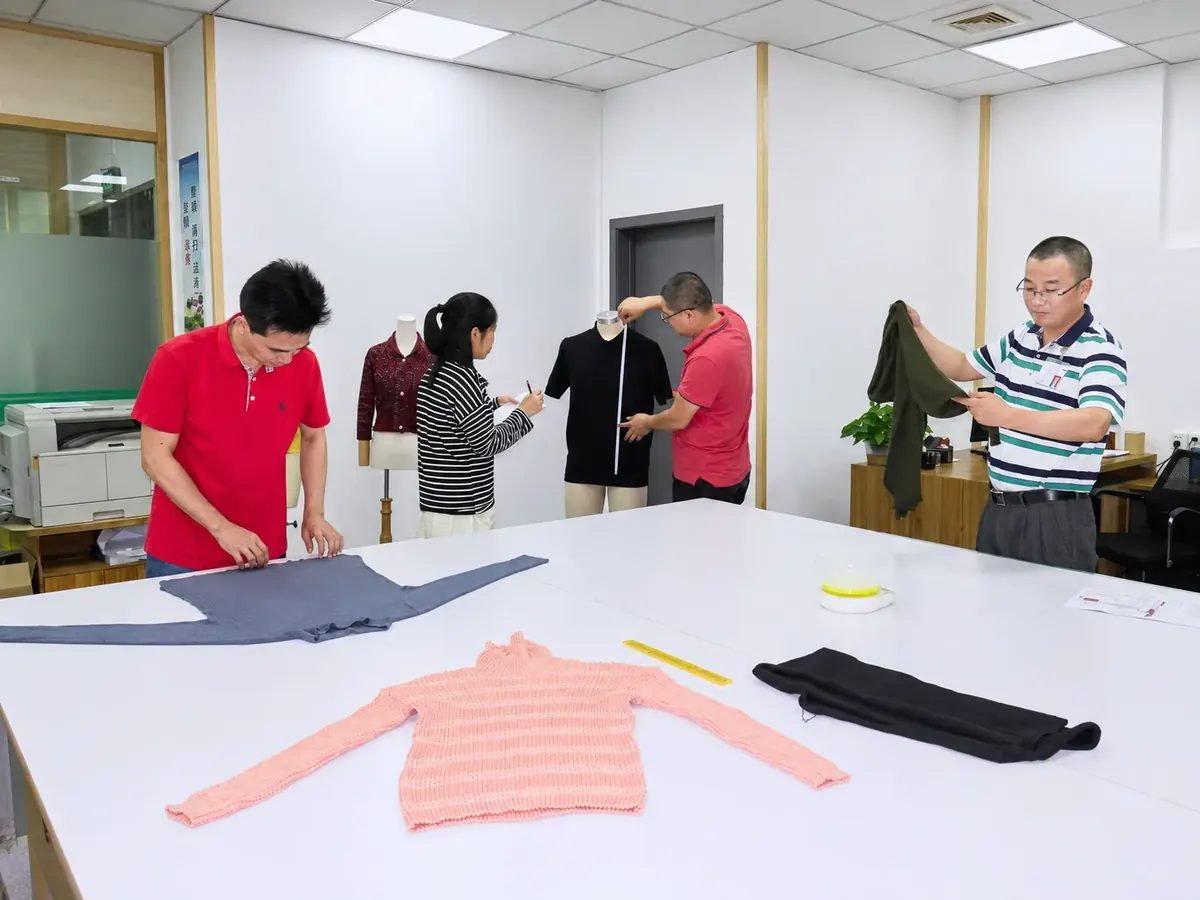
The AQL plan tells the inspector how to make a sampling decision; it does not automatically define what to inspect. Attach the latest approved tech pack, pre-production sample identity, measurement chart, points of measurement, tolerances, color references, trim and label approvals, packing instructions and defect manual.
Separate checks that apply to every sampled garment from checks performed on a smaller, defined subset. Workmanship and appearance may be reviewed across the main sample, while measurements, garment weight, barcode scans or functional checks may use another quantity agreed with the buyer. Laboratory tests for fiber content, colorfastness, dimensional stability or pilling need their own named method, specimen plan and acceptance criteria.
Do not let final inspection replace process control
A final random inspection can detect and quantify visible nonconformity, but it arrives late. Yarn identity, knitting density, panel measurements, linking security, wash response and shade control should be checked at relevant production stages. An inline checkpoint can reveal a repeating cause while unfinished goods are still available for containment.
For specialty-washed or spray-dyed knitwear, trace findings to finishing batches rather than relying only on a mixed final sample. For coarse or elastic structures, define conditioning and relaxed measurement handling. A measurement made immediately after unpacking, steaming or stretching may not be comparable with the approved method.
Write the failed-lot response before the inspector arrives
Name who may authorize shipment and what happens after rejection. Options can include holding all affected goods, investigating scope, sorting, controlled repair, replacing units, accepting a documented concession or rejecting the lot. A supplier’s corrected photo does not prove that the remaining population has been corrected.
If re-inspection is required, define whether it follows the original plan, a tightened plan or another buyer-approved protocol. Record rework quantities, removed units, replacement cartons and revised packing lists. Never negotiate a looser AQL after viewing the first result; any deviation should be an explicit commercial concession with responsible approval.
Buyer checklist for an actionable AQL brief
- Name the sampling standard and current edition.
- Define the lot before results are known.
- State inspection level, severity and sampling route.
- Select order-specific AQL settings with qualified quality guidance.
- Define critical, major and minor findings for the product.
- Distinguish defects from defective units.
- Attach approved sample, tech pack, POMs and tolerances.
- List visual, measurement, functional, label and packing checks.
- Separate laboratory testing from final visual inspection.
- Write hold, rework, concession and re-inspection authority.
Yushengda supports customer-nominated third-party inspection for custom knitwear projects. Its confirmed production scope includes wool, cotton, acrylic, viscose, cashmere and blends across 3GG–16GG, subject to the order. Use the sweater defect-classification guide, the failed-inspection response guide, or send your style list, quantities, target market and inspection requirements for an RFQ discussion.
Authoritative references: ISO 2859-1:2026, the current international standard for AQL-indexed lot-by-lot acceptance sampling by attributes, and the ASQ Quality Glossary definitions for AQL and acceptance sampling. This article does not reproduce licensed sampling tables or prescribe universal AQL values; select the plan with qualified quality guidance for the actual product and risk.