Before paying a custom sweater deposit, lock a dated quotation to one product revision, yarn specification, gauge, weight target, size and color split, finishing route, quality plan, packaging and Incoterms® rule with a named place. Record inclusions, exclusions, validity and exact repricing triggers. A deposit should authorize a defined production baseline, not an editable price built on silent assumptions.
Freeze one RFQ baseline before the deposit
Give every supplier the same dated tech pack and request that the quote name that revision. Include style drawings, measurements, size range, colorways, quantity by color and size, yarn composition and count, gauge, stitch structure, target garment weight or approved sample, trims, labels, wash or specialty finish, testing, inspection and packaging.
Separate confirmed requirements from alternatives. If the yarn is not final, ask for clearly labeled Option A and Option B rather than allowing each supplier to choose a different substitute. A quote for a lighter acrylic blend cannot be ranked against one for the requested wool blend as though only the factory margin changed.
| Quote field | Comparable input | Red flag |
|---|---|---|
| Yarn | Composition, count/ply, supplier or quality level, color route | “Wool blend” without percentages or yarn identity |
| Construction | Gauge, stitch, panels, linking, trims and finished weight | Gauge or weight omitted |
| Quantity | Total, per-style, per-color and size split | MOQ stated without color minimum |
| Finishing/QC | Wash, press, testing and inspection scope | “Standard QC” without an agreed plan |
| Delivery | Currency, Incoterms® rule, named place and timing | “FOB price” with no port or edition |
Check the physical sweater behind each number
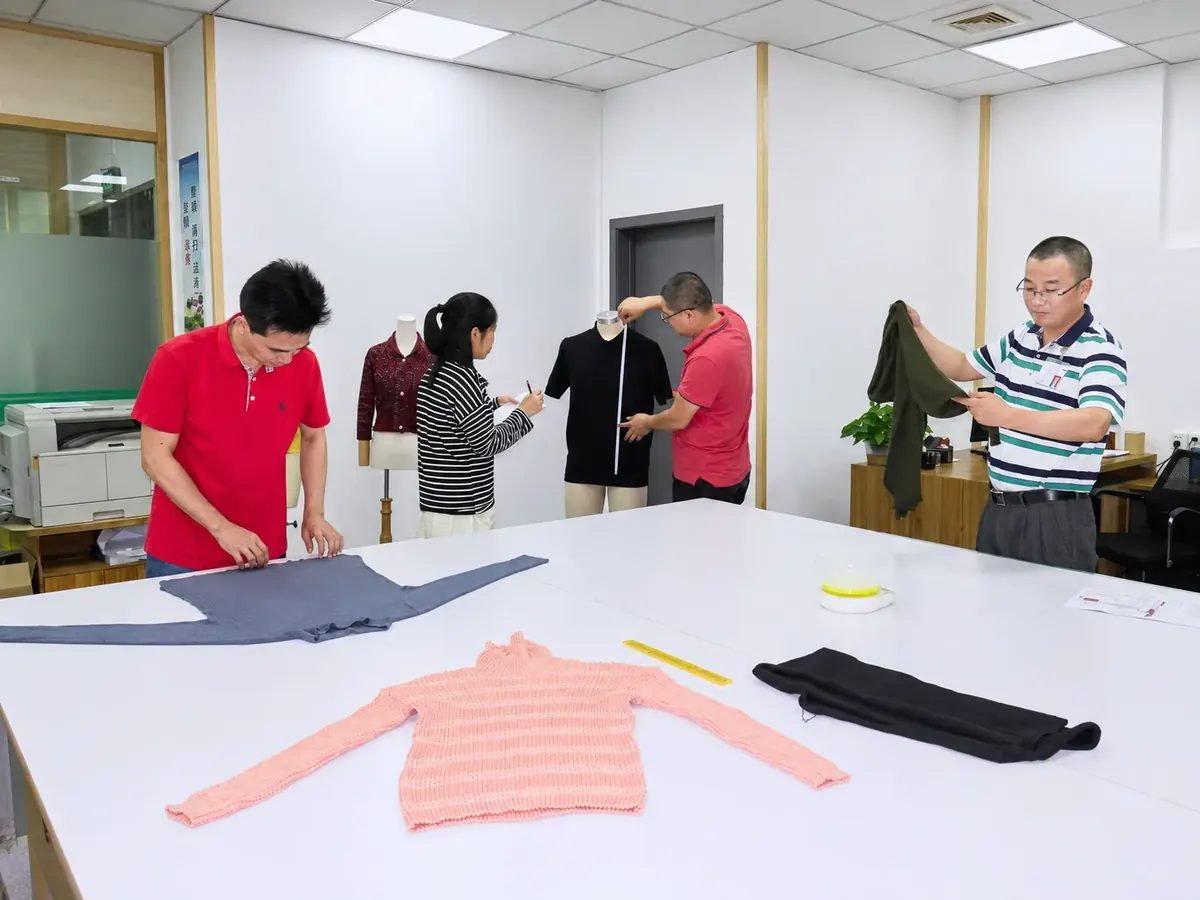
Yarn consumption is affected by finished garment weight, size mix, stitch structure, gauge, waste and finishing. Ask whether the quoted weight is a target, estimate or measured approved sample. Confirm whether rib, pocket, placket, jacquard floats, embroidery backing and other components are included.
Record knitting method, panel construction, linking or sewing assumptions and any hand operations. A simplification can legitimately reduce price, but it is a design change, not an invisible saving. Require supplier alternatives to state the expected effect on appearance, hand, dimensions, performance and lead time for buyer approval.
Expose the quantity assumptions
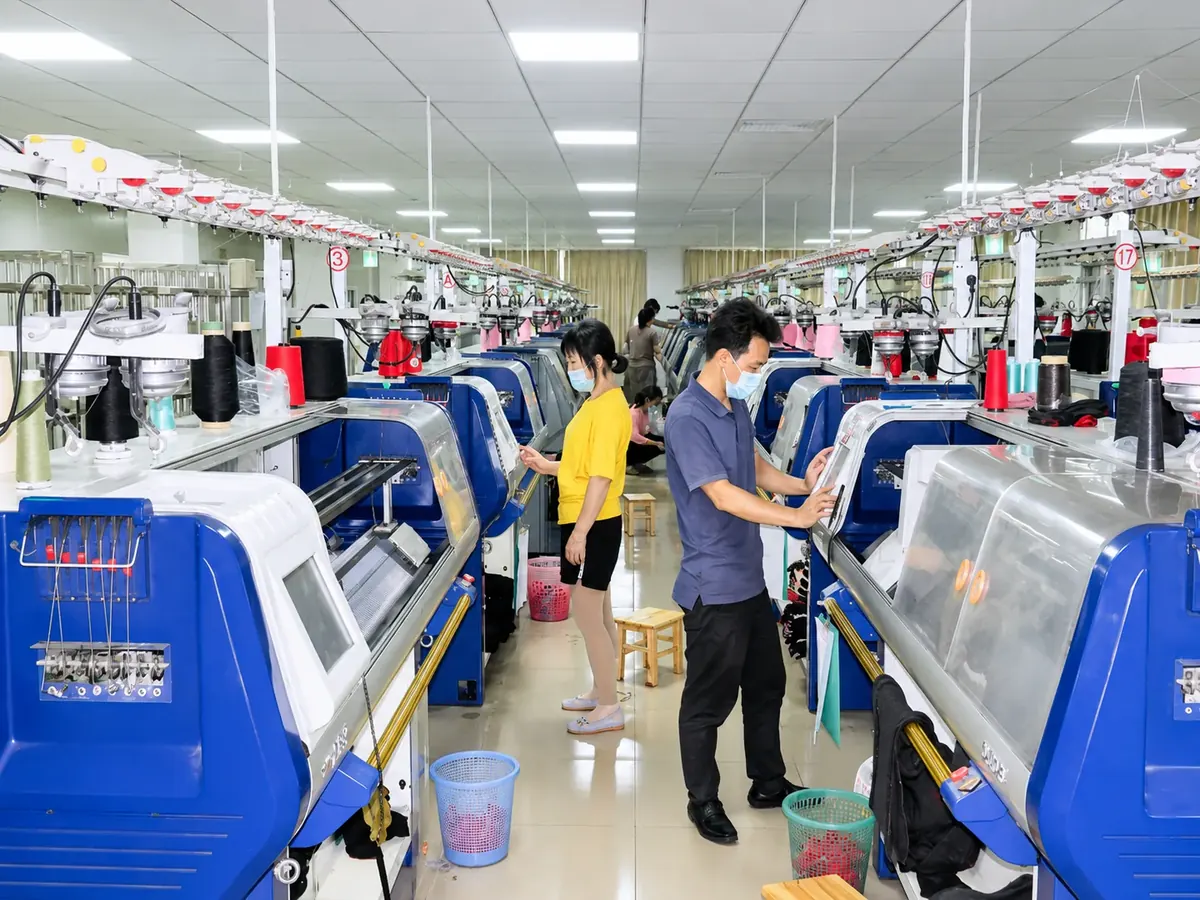
One total MOQ can hide minimums per style, color, yarn dye lot, trim color or size. Ask whether the unit price remains valid for the exact assortment. Record surcharges for small color lots, leftover custom yarn, special trim minimums and under- or over-delivery tolerance.
Request quantity tiers using the same specification, such as the intended launch order and a realistic reorder. Do not compare Supplier A at 1,000 pieces with Supplier B at 200 pieces. For low MOQ, spread one-time development, programming, lab dip, label and testing costs across the actual sellable units to see their per-piece effect.
List every charge outside the unit price
Create separate lines for tech-pack or pattern work, knit-downs, sample rounds, courier, lab dips, yarn booking, programming, grading, testing, third-party inspection, labels, hangtags, barcodes, polybags, cartons, export documents and bank charges. State whether a sample fee is refundable, creditable against bulk or non-refundable, and under what conditions.
Do not demand confidential factory margins as a condition of transparency. Buyers need clear assumptions, inclusions, exclusions and change rules. A precise total can be more decision-useful than an invented percentage breakdown that cannot be verified.
Normalize Incoterms and the named place
ICC Incoterms® 2020 rules allocate specified delivery obligations, costs and risks between seller and buyer. They do not by themselves determine product ownership, payment timing or every contract term. Write the rule, named place or port and edition—for example, “FCA [named place], Incoterms® 2020”—instead of using a three-letter label alone.
Move all quotes to one comparison boundary. If one supplier quotes EXW, add the buyer's estimated origin collection, export handling where applicable, freight, insurance, destination charges, duties, taxes and delivery to the chosen endpoint. Mark estimates as estimates; do not present them as supplier commitments.
Compare timing on the same starting event
“Thirty-day lead time” is ambiguous unless the clock starts from a defined event. Ask suppliers to state whether bulk timing begins after deposit, yarn arrival, color approval, pre-production sample approval or complete artwork. Record sampling time, buyer approval allowance, testing, inspection, booking and transit separately.
Also record quote validity and what may trigger repricing: yarn market change, exchange rate, specification revision, quantity split, rush request or expired validity. A low quote that cannot reserve yarn or capacity may not support the required delivery window.
Create the quotation baseline and change log
Use one row per cost or assumption and classify every cell as confirmed, estimated, excluded or unanswered. Calculate factory total, one-time cost per ordered unit and estimated landed total separately. Resolve unanswered commercial items before remitting money; the purchase order and pro forma invoice should reference the same specification and quotation revisions.
After sampling, record each buyer or supplier change, its reason, price effect, timing effect and approval date. Request a revised quote rather than overwriting the original evidence. The buyer should approve a cost change before the supplier applies it to bulk, while the supplier should not be expected to absorb a buyer-requested scope increase that was outside the locked baseline.
Buyer pre-deposit quotation checklist
- Every supplier names the same RFQ revision.
- Yarn composition, count/ply, color route and substitution are explicit.
- Gauge, construction and finished-weight assumption are recorded.
- MOQ and price apply to the exact color and size split.
- Sampling, testing, inspection and packaging are included or priced.
- One-time fees are amortized across actual sellable units.
- Incoterms® rule, named place, currency and edition are stated.
- Lead-time start event and buyer approvals are defined.
- Quote validity and repricing triggers are written.
- Unknowns remain visible rather than treated as zero.
Yushengda develops custom knitwear in wool, cotton, acrylic, viscose, cashmere and blends across 3GG–16GG, subject to the project. Use the yarn count and ply guide, the trade-terms guide, or send one tech-pack revision, quantity split, target material, finish and delivery destination for an RFQ discussion.
Primary reference: International Chamber of Commerce, Incoterms® 2020 Checklist and Flowcharts. Competitor quotation guides were reviewed only to identify missing pre-deposit controls and unsupported percentage gaps; no competitor prices, percentages, cases or wording are reproduced here.