Review U.S. customs value for a custom sweater order from the complete commercial transaction, not the factory unit price alone. Map every payment and buyer-supplied input connected with production, identify possible packing costs, selling commissions, assists, royalties or resale proceeds, and give the evidence to the importer and customs adviser. Reconcile the approved decision with the commercial invoice before entry.
Keep price, customs value and landed cost separate
The supplier's unit price states the agreed commercial charge for its scope. Customs value is determined under applicable valuation law. Landed cost adds buyer-side freight, duty, taxes, brokerage, handling and other expenses used for commercial planning. These figures may overlap, but they answer different questions.
U.S. Customs and Border Protection explains that transaction value generally begins with the price actually paid or payable when merchandise is sold for export to the United States, with specified additions when not already included. Do not declare the U.S. resale price, choose a nominal sample value or copy the purchase-order subtotal without review.
Map the sale and every related payment
Identify the seller, buyer, importer of record, payees, currency, payment dates, credits, rebates and relationship among the parties. Connect each payment to the sweater order. Include money paid to the factory and amounts paid to another party for the seller's benefit where the facts may matter.
| Value input | Evidence to collect | Question for the importer |
|---|---|---|
| Garment price | Contract, PO, invoice, payment and credit records | What is the price actually paid or payable? |
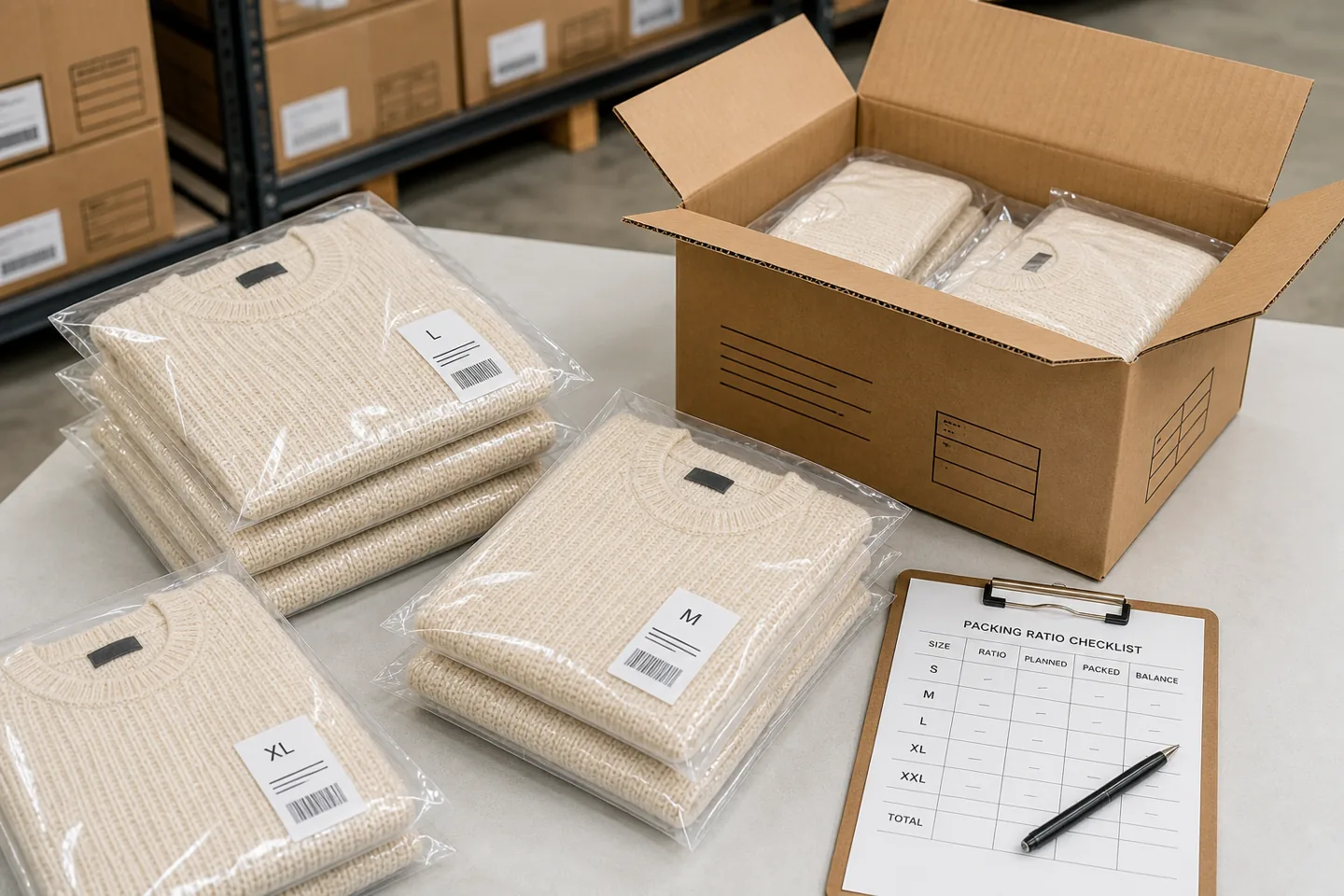
| Packing | Polybags, cartons, inserts and packing charges | Is the relevant amount already included? |
| Buyer inputs | Yarn, trims, labels, tools, artwork or design costs | Could an item be an assist, and how is it valued? |
| Commissions | Agent role, agreement, payee and calculation | Is it a selling or buying commission? |
| Royalties | Licence, trademark and purchase agreements | Is payment related to the goods and a condition of sale? |
| Proceeds | Resale or use payment flowing to the seller | Must an amount be added? |
Build an assist register for custom development
CBP identifies categories of buyer-supplied goods or services that can be assists when provided free or at reduced cost for producing or selling imported merchandise. Relevant sweater facts may include yarn or trims delivered to the factory, knitting or linking tools, items consumed in production, and certain engineering, development, artwork, design work, plans or sketches undertaken outside the United States and necessary for production.
Do not label every tech pack, reference garment or logo file an assist automatically. CBP's apparel rulings show that the analysis is fact-specific. Record who created or purchased the input, where work occurred, its cost, what the manufacturer could produce without it, how it was used, which styles benefited and whether the factory paid fair value.
Give each possible assist an ID and review status. Preserve purchase invoices, payroll or allocation support where relevant, shipping to the place of production, production quantity and unused balance. The importer or qualified adviser should choose a reasonable apportionment method and document it rather than adding a guessed amount to one convenient shipment.
Test packing, commissions and royalties independently
Show whether individual packaging, master cartons, packing labor and buyer-funded packing are already inside the garment price. Keep international freight and insurance separately identified. Incoterms® allocate defined delivery costs and risks; they do not by themselves decide U.S. customs value.
For an agent fee, document what the intermediary actually does and for whom. Calling a fee a “buying commission” does not settle its treatment. For a royalty or licence fee, provide the licence, supply agreement, parties, calculation and payment condition. A trademark fee should not be added or excluded solely because it is paid to a party other than the factory.
Reconcile changes, free samples and credits
Track sample fees, refunds credited after bulk order, tooling or artwork charges, price adjustments, damaged-goods allowances and post-order rebates. Explain them on the transaction timeline. A zero-price replacement or free commercial sample still needs an appropriate value supported under the applicable method; “no charge” is not a valuation method.
If quantity, unit price or payment changes after the original invoice, update the controlled records and tell the customs broker before entry where possible. Do not use two inconsistent invoices—one for payment and one for customs—without a lawful, documented reason and professional review.

Prepare an entry-ready value worksheet
For each invoice line, show style, description, quantity, unit price, currency and extended price. Add a separate schedule of reviewed adjustments, stating amount, source, allocation basis and whether already included. Reconcile the worksheet to payments, packing list, Incoterms® rule and named place, while keeping tariff classification and origin as separate legal analyses.
Provide the importer and broker with contracts and supporting evidence early enough to ask questions. Related-party sales, uncertain assists, complex royalties, retrospective pricing or insufficient information may require specialist advice or a CBP ruling. This article cannot determine which valuation method applies to a particular transaction.
Maintain a post-entry reconciliation trail
After shipment, retain the entry summary, final invoice, payments, assist allocations, broker instructions and any corrections. Compare estimated allocations with actual production quantities and cost. If new information changes the declared value, the importer should obtain advice on the correct disclosure or correction process rather than waiting for the next order.
Buyer customs-value checklist
- The bona fide sale and sale-for-export facts are documented.
- All direct and indirect payments are mapped by payee.
- Customs value is separate from retail price and landed cost.
- Packing costs are visible and checked for double counting.
- Buyer-supplied materials, tools and design inputs have a register.
- Possible assists have supported cost and allocation records.
- Commission roles and royalty agreements are reviewed from facts.
- Samples, credits and price changes are reconciled.
- The commercial invoice agrees with the approved value worksheet.
- Final entry records and later corrections remain auditable.
Yushengda can provide order-level quotations, production descriptions, packing data and commercial documents for confirmed custom knitwear projects; it is not the U.S. importer or customs adviser and does not determine the buyer's declared value. Use the invoice and packing-list guide, HS classification guide and Incoterms® comparison, or send the style, quantity, commercial scope and requested shipment documents for supplier-data coordination.
Primary references: U.S. Customs and Border Protection, What value should be on the commercial invoice?, for its current summary of price and potential additions; CBP, Importing into the United States, for transaction value, packing, assists, commissions, royalties and proceeds. Exact treatment depends on the facts, agreements and applicable law; consult the importer, broker or trade counsel. Competitor material was reviewed only to identify buyer questions and content gaps; no calculations, cases, service claims, wording or images were reused.