Verify a custom sweater manufacturer against your actual style—not a generic factory presentation. Buyers should confirm legal identity, relevant knitwear capability, yarn and gauge fit, sample-to-bulk controls, quality records, subcontracted processes, capacity assumptions and commercial terms. The strongest evidence is a consistent chain from specification to physical sample to documented production plan, followed by a controlled trial order when appropriate.
Start with identity and business-role clarity
Confirm the legal company name used for the quotation, contract, payment and export documents. Ask whether your contact represents a direct factory, a trading company, an agent or a group that coordinates several production partners. None of these models is automatically unsuitable, but the buyer needs to understand who controls development, materials, production, quality and corrective action.
Check that bank and invoice information follow the agreed contracting entity, and investigate unexplained last-minute changes through a verified communication channel. If independent corporate, sanctions, credit or legal checks are required, use qualified providers appropriate to the buyer’s country and risk level. A website, social account or video call can support verification but should not be treated as formal due diligence by itself.
Test capability against one real product
Generic questions such as “Can you make sweaters?” usually produce generic answers. Send a controlled brief for a representative style and ask the supplier to explain the proposed yarn, gauge, stitch, construction, finish, sample route, likely risks and information still needed. A useful response connects technical choices to the target silhouette, handfeel, price and delivery date.
Review recent examples that are technically relevant, while respecting other customers’ confidentiality. A factory experienced in basic fine-gauge pullovers may not automatically be the best choice for chunky cables, complex jacquard or specialty garment washing. Conversely, a supplier does not need to display another brand’s confidential product to demonstrate that it understands the required process.
Verify yarn, gauge and development control
Ask how yarn options are identified, approved and reserved for bulk. Confirm what happens when the sampled yarn becomes unavailable, when a custom color has a minimum, or when a new dye lot differs from the approved sample. The factory should be able to separate the approved specification from a proposed substitute and describe how the change would be re-evaluated.
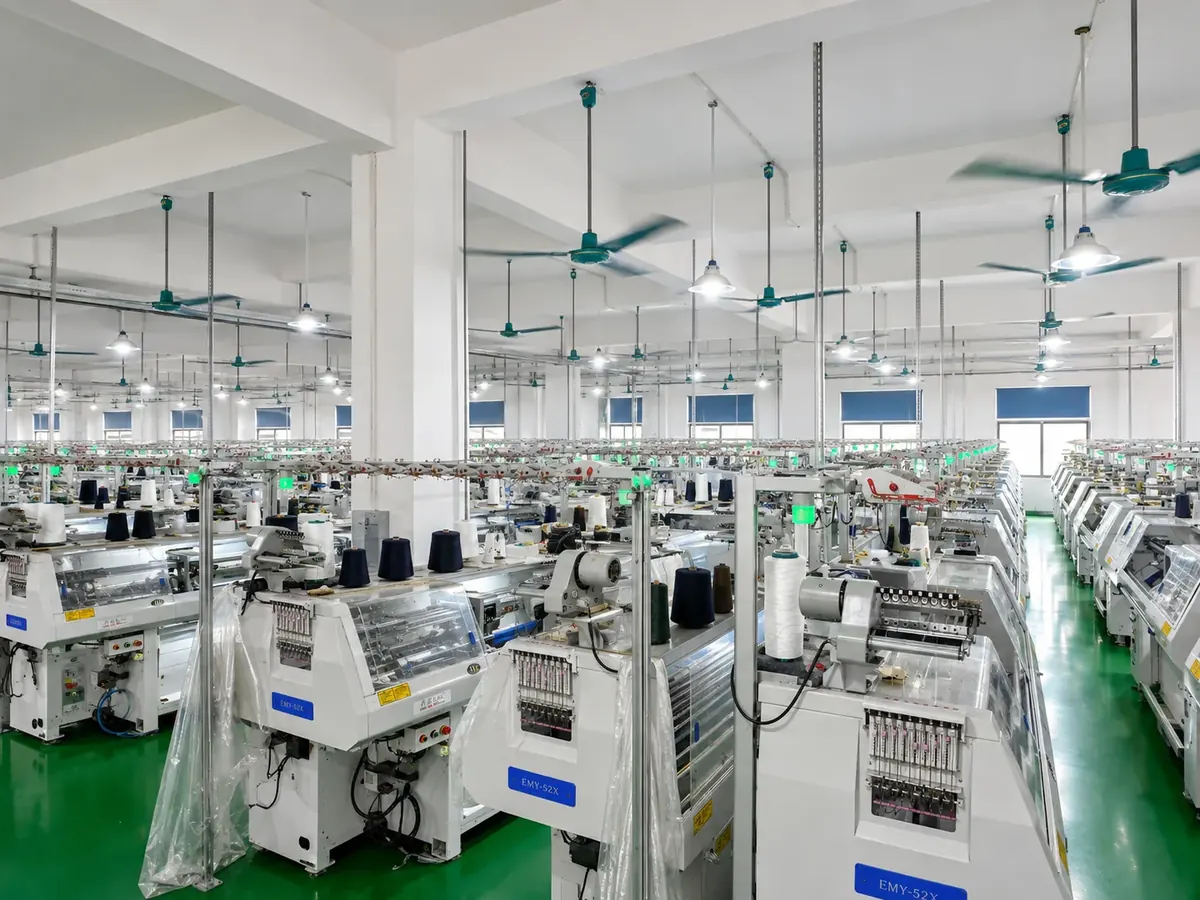
For knitting, discuss the gauge range relevant to your project, programming or pattern-development process, representative swatches and the way measurements are translated into panels. Machine brand and quantity can be useful context, but they are not a substitute for a successful sample. Yushengda works from 3GG to 16GG; the appropriate route still depends on yarn count, stitch structure, garment shape and finishing.
Follow the sample into bulk production
The critical verification question is not only whether the factory can make one attractive sample, but how that approved sample becomes a repeatable production standard. Ask how tech-pack revisions, buyer comments, measurements, yarn references, color standards, trims and finishing instructions are released to production. Confirm how superseded versions are removed or marked.
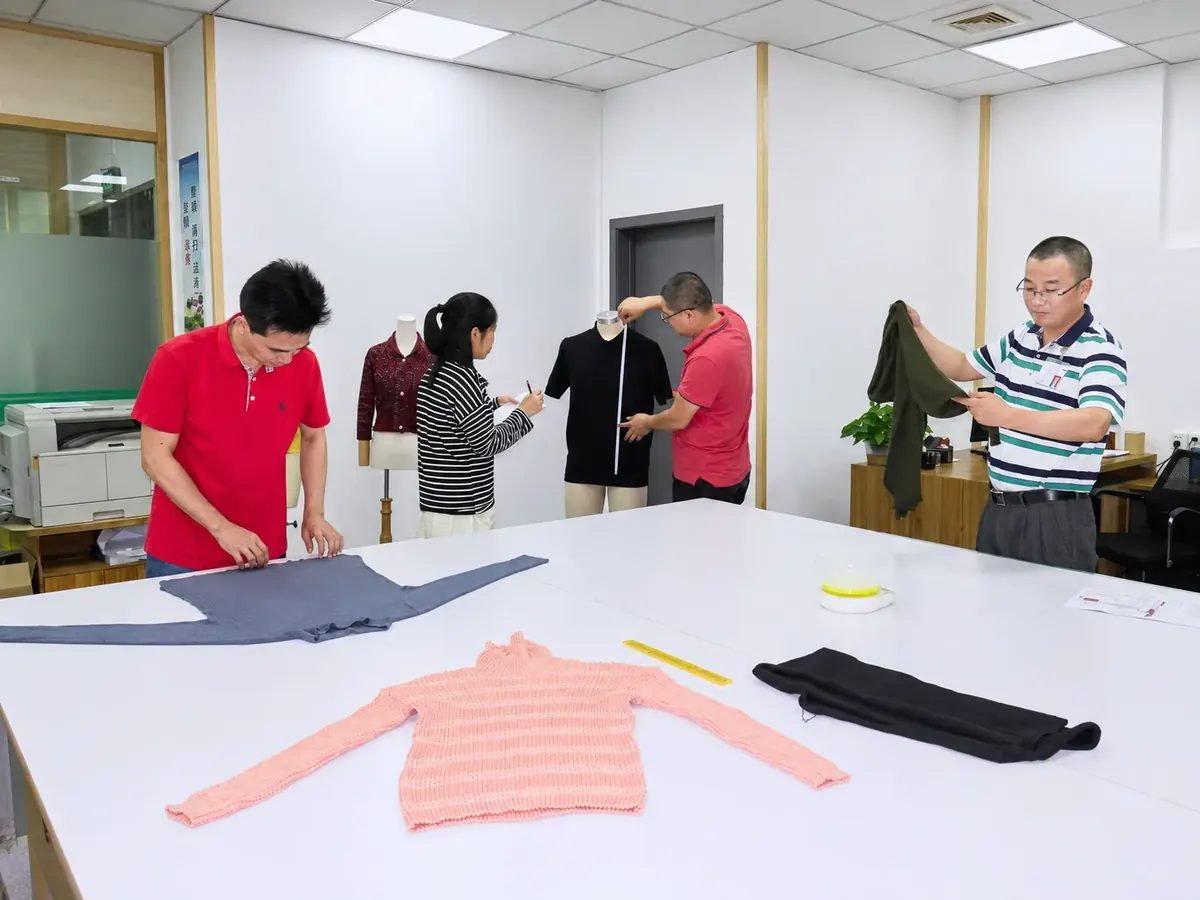
Request an explanation of checkpoints before and after knitting, linking and finishing. The answer should identify what is checked, which reference is used and how out-of-range work is handled. Avoid expecting one universal workflow for every style: a plain cotton crewneck and a spray-dyed cable cardigan need different risk controls. What matters is whether the supplier can adapt the plan while keeping decisions documented.
Ask what is subcontracted
Special washing, printing, embroidery, testing, packaging or other processes may be performed by external partners. Subcontracting is common in many supply chains and is not automatically a problem. The risk comes from undisclosed responsibility, uncontrolled material movement or an approval standard that does not follow the goods.
Ask which important processes are internal and external, who approves the partner, how specifications and samples are transferred, and who owns corrective action. If the buyer restricts subcontracting or requires disclosure, write that requirement into the agreement. Do not infer an entirely in-house process from marketing language or a short factory video.
Review quality evidence, not quality adjectives
Terms such as strict QC or premium quality are not measurable. Ask to see blank or appropriately redacted examples of measurement records, inspection checklists, shade or finish approvals and corrective-action documentation that relate to comparable products. Confirm how the factory distinguishes visual inspection, laboratory testing, material documentation and a social or quality-system audit; these activities answer different questions.
Define your own project requirements before judging the system. The approved sample, measurement chart, tolerances, defect rules, test methods, packaging standard and inspection stage should be agreed in writing. Yushengda supports customer-nominated third-party inspection, but the buyer and inspection provider should establish the scope and acceptance rules.
Challenge capacity and lead-time assumptions
Headline monthly capacity does not guarantee a slot for one order. Ask when yarn can be ready, which approvals must be complete, whether your gauge and finish have seasonal bottlenecks, and what quantity or color split was used for the estimate. Build a milestone calendar from sample approval through material preparation, knitting, linking, finishing, inspection and shipping.
Yushengda’s normal sampling time is 7–15 working days and bulk production is normally 25–45 days after receipt of deposit, subject to confirmed yarn, construction, finish, quantity and approval timing. Buyers should treat these as project parameters to confirm—not promises detached from a final specification.
Use a trial that tests the relationship
Before a large or strategically important program, consider a controlled development and trial order that is commercially realistic for both sides. Evaluate technical interpretation, response quality, sample accuracy, change control, timing, inspection results, packaging and issue resolution. An unrealistically tiny trial may not reproduce the material or production conditions of the planned bulk order, so ask what will differ.
Record the outcome in a supplier scorecard. Separate design taste from execution, and distinguish a correct warning from poor service. A manufacturer that identifies a genuine limitation early may be safer than one that agrees to every request and explains the conflict only after the deposit.
Manufacturer verification checklist
- Contracting, invoicing and payment entities are consistent.
- The supplier’s business role and production responsibility are clear.
- Capability is evaluated against a representative style.
- Yarn, gauge, sample and substitution controls are documented.
- The sample-to-bulk release process is explained.
- Important subcontracted processes are disclosed.
- Quality evidence matches the buyer’s specification.
- Capacity and lead time are tied to real milestones.
- Third-party verification is arranged where risk requires it.
- A controlled trial order confirms execution and communication.
Learn about our factory and quality approach, use the custom sweater RFQ checklist, or send a representative design for a practical capability review.