A quotation-ready custom sweater RFQ should explain what the product is, how many pieces are needed per color, the preferred yarn and gauge, measurements, specialty finish, branding, target price, delivery date and destination. If some details are unknown, label them clearly and ask for recommendations. A factory can respond more accurately when it knows which requirements are fixed and which are flexible.
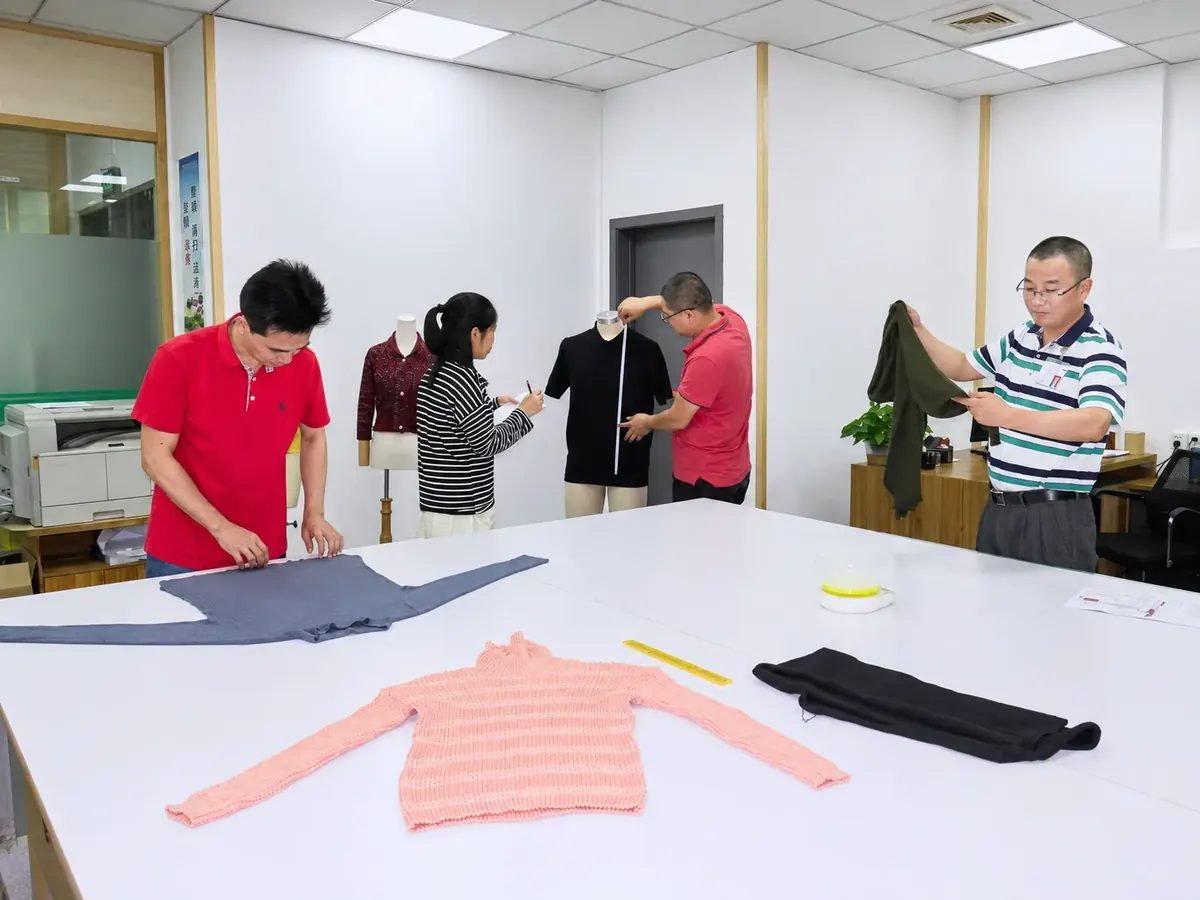
Start with product identity and references
Name the product type, intended customer and season. Attach front and back sketches, a tech pack or clear reference images. Explain which features matter: silhouette, neckline, stitch, surface, wash, artwork or handfeel. If a reference garment is available, state whether it can be sent. Avoid sending a mood board without identifying the exact elements to develop.
Give a real quantity breakdown
State estimated pieces per style and per color, plus size range if known. MOQ is affected by yarn, dye lots, setup, finishing, labels and packaging, so total collection quantity alone can be misleading. Yushengda’s MOQ starts from 100 pieces per color for suitable developments. Ask for feasibility if the range includes many colors at the minimum.
Describe material, gauge and finish
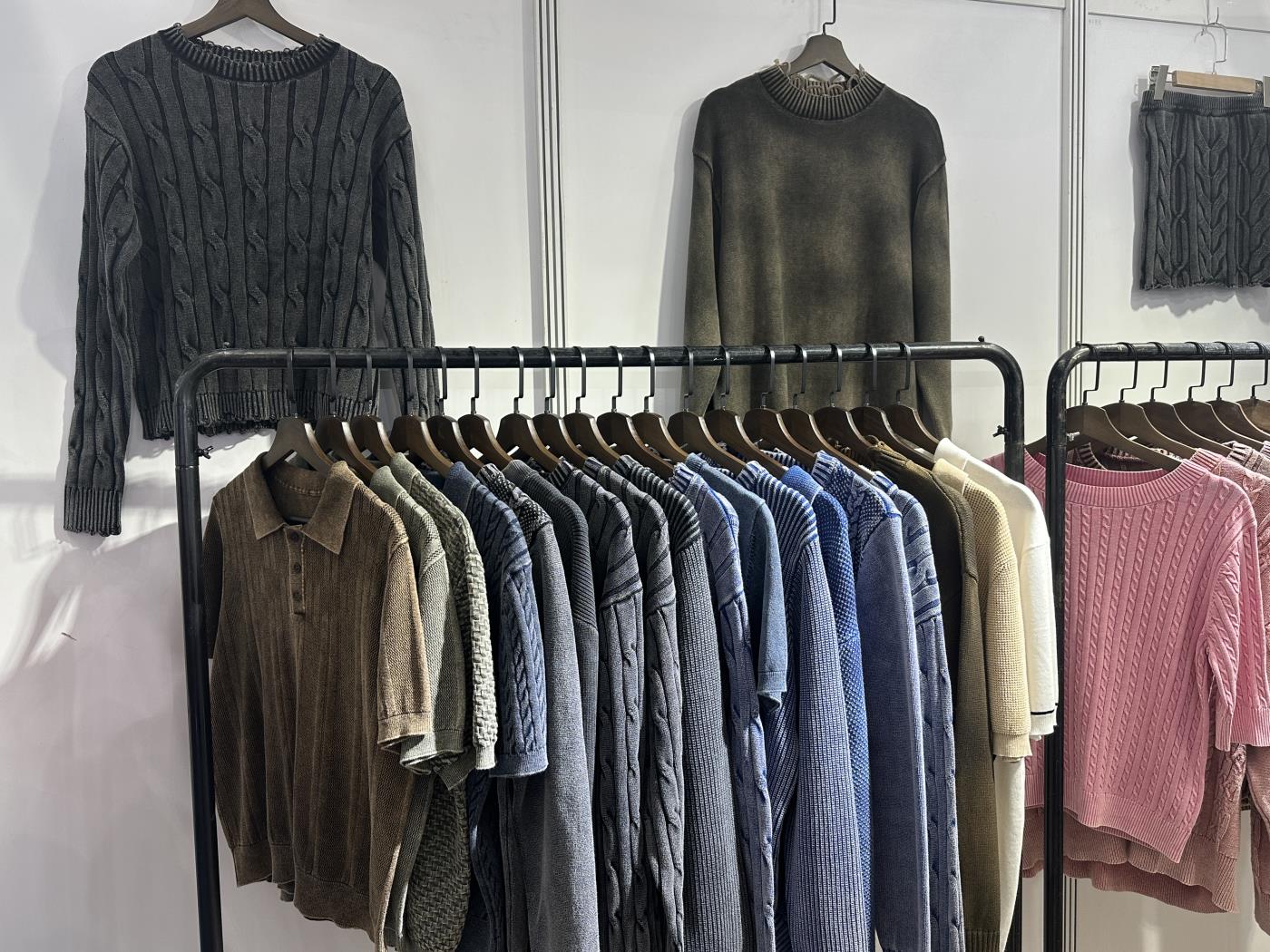
List preferred fiber, yarn direction, gauge or target weight and stitch structure. If you need advice, give the desired handfeel, season, price position and visual reference. Identify garment wash, spray dye, tie dye, brushing or other finishing. A standard solid sweater and a specialty-finished sweater should not be quoted from the same short description.
Include measurements and branding
Attach a measurement chart or at least the base size and key dimensions. Show artwork size and placement. List main label, size label, care label, hangtag, buttons, zipper, embroidery and packaging requirements. If files are pending, state when they will be ready. Unknown trims can be quoted as excluded or provisional instead of being silently assumed.
State commercial and timing needs
Share target price as guidance, required delivery date, destination country and preferred EXW, FOB or DDP term. Separate factory completion from warehouse arrival. Mention inspection requirements and payment constraints early. Yushengda normally works with a 30% deposit and 70% balance before shipment, subject to the confirmed order.
Ask focused questions
Request confirmation of feasibility, MOQ, sample cost, sample lead time, bulk lead time, quotation assumptions and the biggest technical risks. Invite an alternative route if the target price or date conflicts with the design. A useful RFQ starts a production conversation; it does not force the factory to guess every missing specification to return a fast number.
Apply the decision to a real order
Use simple attachment names and one revision date. Put the commercial summary in the message and controlled details in the tech pack. If reference images come from different garments, label the exact feature each represents so the supplier does not combine them incorrectly.
Evaluate the response as part of qualification. A useful reply confirms understanding, identifies missing information, states assumptions and proposes a next step. If a supplier prices without addressing an obvious finish or quantity conflict, clarify it before comparison. The quality of RFQ questions often predicts communication during sampling.
Buyer checklist
- Sketch, tech pack or clear references
- Quantity per style and color
- Yarn, gauge, stitch and finish direction
- Measurements, trims and packaging
- Target price, date, destination and trade term
- Questions, unknowns and flexible points labeled
Yushengda develops custom knitwear from 3GG to 16GG with an MOQ starting from 100 pieces per color for suitable projects. Sampling normally takes 7–15 working days and bulk production normally takes 25–45 days after the deposit, subject to the confirmed yarn, construction and finish. Review our OEM/ODM process, explore our custom knitwear range, or send your project for a practical quotation.
Copy-and-complete RFQ brief
This blank template is a suggested buyer tool, not a real customer order. Replace each bracket with a requirement or write “open for recommendation.” Do not invent a yarn specification simply to fill a field.
- Style reference and revision: [style / date / attached file names]
- Product and fit: [pullover or cardigan / intended fit / base size]
- Order matrix: [each style, color and size quantity separately]
- Material and structure: [fiber / yarn reference if known / gauge or reference swatch]
- Finish: [desired effect / physical reference availability / unacceptable variation]
- Branding and packing: [approved files / pending items / required packaging]
- Commercial basis: [currency / trade term / named destination / target price if available]
- Timing: [sample review deadline / required factory-ready date / required arrival date]
- Approval owner: [person consolidating comments / unresolved decisions]
- Requested response: [feasibility / exclusions / sample scope / material availability / next step]
How missing information changes a quotation
| Missing item | Ask the factory to state | Buyer action |
|---|---|---|
| Final yarn | The provisional yarn and whether substitution changes price or sampling | Approve the material route before comparing final prices |
| Quantity per color | Which color breakdown the price assumes | Supply a matrix, not only a collection total |
| Wash reference | Whether finishing trials are included | Separate an exploratory estimate from a confirmed finish quote |
| Delivery destination | Whether transport and import costs are excluded | Compare offers on the same named delivery basis |
| Unfinished artwork | Which labels and trims are provisional | Set a file-approval date and request an impact review |
Request a usable reply, not just a unit price
Ask the supplier to mark each requirement confirmed, provisional, excluded or needing clarification. Keep the response beside the dated brief and resolve differences before a deposit or material commitment. The U.S. International Trade Administration's pricing guidance identifies costs beyond the product itself; a factory unit price should not silently be treated as the buyer's delivered cost.
This RFQ brief opens the commercial discussion. It does not replace the detailed tech pack or authorize bulk production. Explore Yushengda's OEM/ODM process and washed-knitwear development, then send the completed brief and references.