The lowest custom sweater quotation is not necessarily the lowest-cost option. Buyers should first confirm that every supplier priced the same yarn, gauge, measurements, finish, labels, packaging, inspection scope and trade term. A useful comparison separates product cost from missing assumptions, because excluded development or quality requirements often reappear later as sample revisions, surcharges or delays.
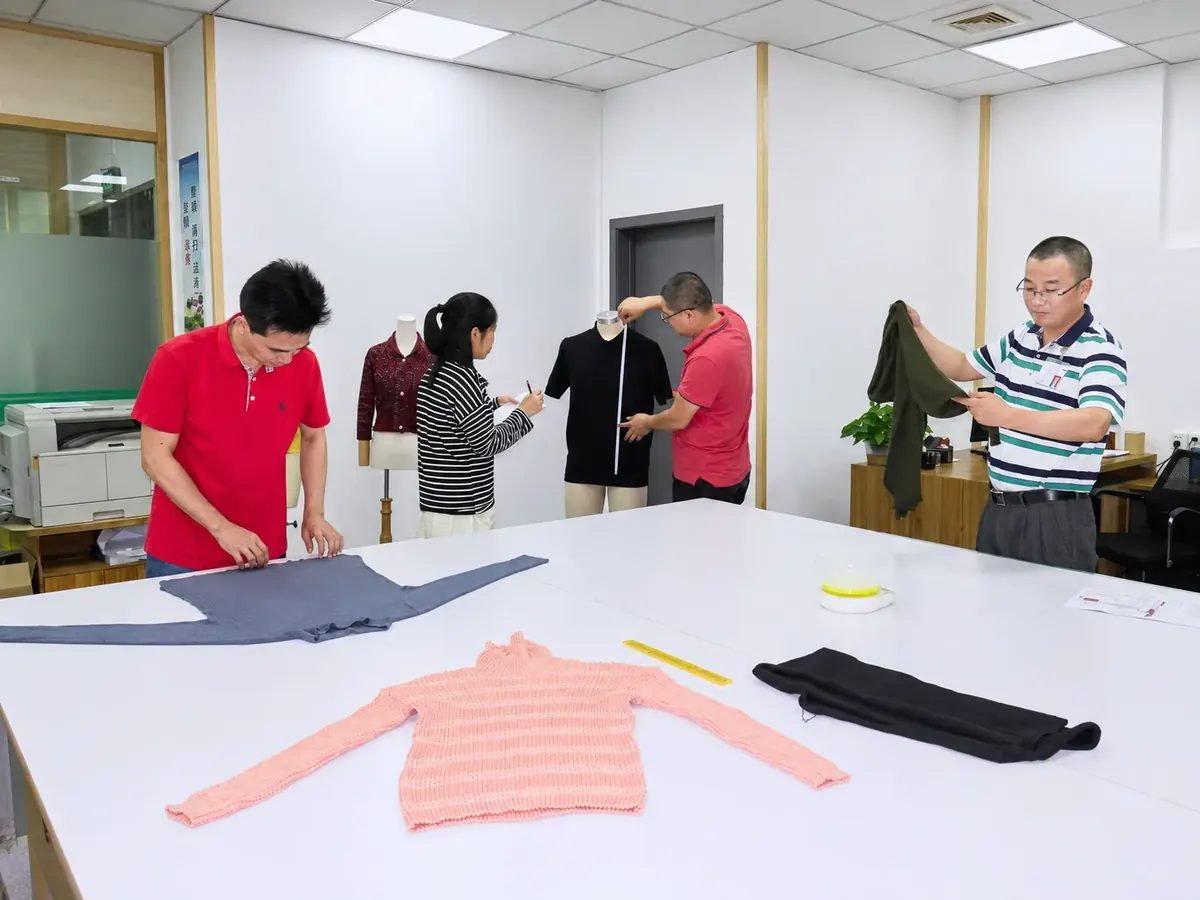
Make every supplier quote the same product
Send one controlled RFQ package to every factory: current tech pack revision, fiber direction, gauge or weight target, quantity by color, size range, finish reference, labels, packaging, destination and required date. Mark unknown items as open questions rather than allowing silent assumptions. If one supplier priced stock yarn while another priced a custom color, the totals are not comparable. Ask each factory to list its assumptions and quotation validity so changes in yarn price or exchange rate are visible.
Separate unit price from development cost
Record sample fees, courier charges, yarn or stitch trials, lab dips, wash trials, artwork setup and refundable amounts outside the bulk unit price. A complex washed or spray-dyed style may need more than one physical trial. The important question is not whether development is free, but whether the quoted development route is sufficient to approve fit, shade, handfeel and construction before bulk production.
Check yarn, gauge and construction
A phrase such as cotton sweater is too broad for price comparison. Confirm composition, yarn count or approved alternative, ply, gauge, stitch structure and finished garment weight direction. Cable, jacquard, intarsia, engineered ribs, fashioning and special linking change knitting time and yarn consumption. Ask the supplier to identify which specification drives the price and what would change if the target budget requires an alternative.
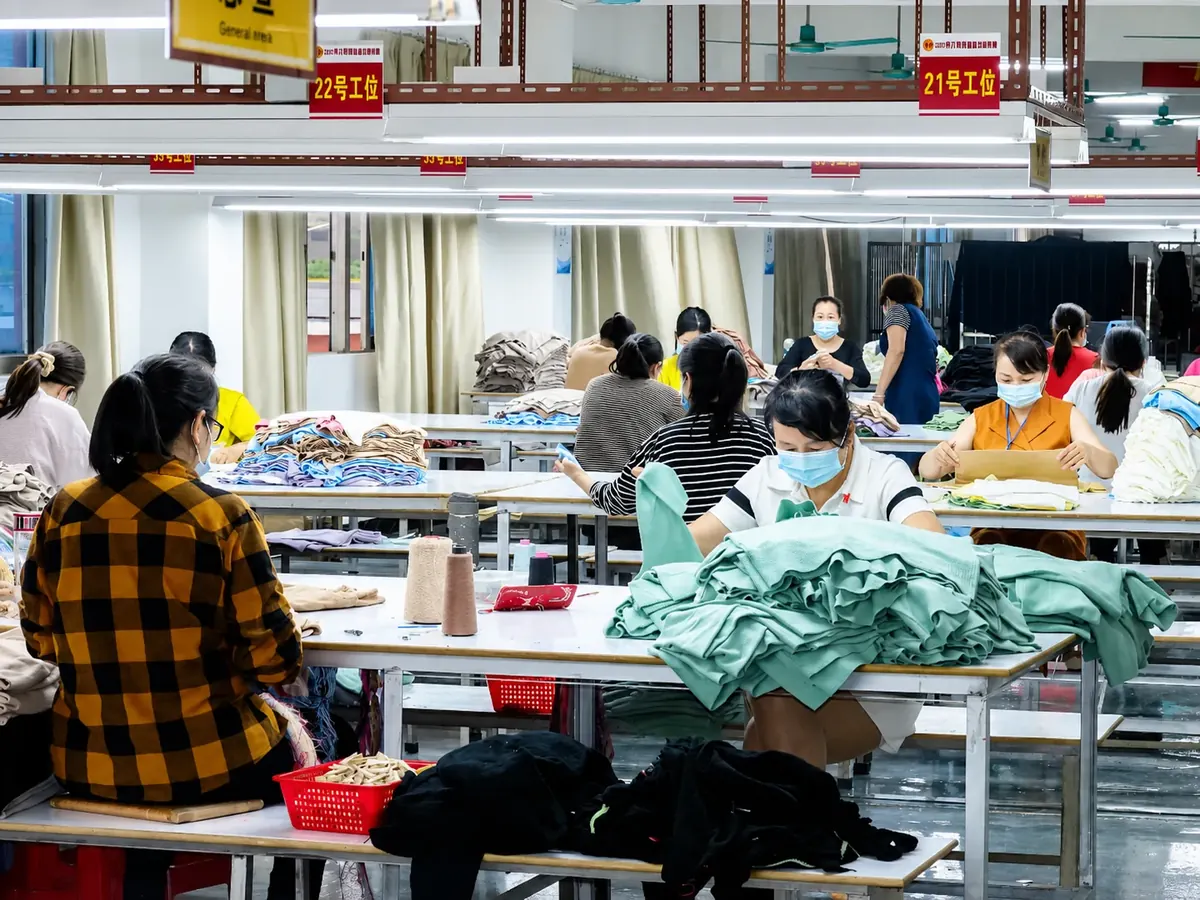
Compare finishing and tolerance assumptions
Garment washing, spray dyeing and tie dyeing add both process cost and controlled variation. The quotation should state which finish is included, how many colors or placement areas are covered and whether trial approval is required. Confirm measurement tolerances, shade boundaries and the point at which the finished garment is measured. A price based on an undefined vintage effect may not include the work needed to reproduce the buyer’s reference.
Review MOQ, payment and delivery on one basis
Compare MOQ per style, per color and per size rather than one headline number. Check deposit, balance timing, sample refund rules, EXW or FOB scope, packaging, inspection and delivery destination. A lower EXW price can appear attractive beside a DDP figure while excluding freight, import handling and delivery. Use a landed-cost column and a calendar column so the commercial decision reflects both cash and launch risk.
Score communication quality before choosing
A strong supplier asks precise questions, flags technical conflicts and explains what must be approved. Fast agreement without clarification is not always a positive signal. Score response accuracy, revision control, risk disclosure and whether the factory can describe the path from sample to bulk. The best quotation is a documented production proposal, not a single number sent before the product is understood.
Apply the decision to a real order
Create a comparison sheet with one row for every approval or cost item and one column for every supplier. Mark each cell included, excluded, provisional or unanswered. Give extra weight to yarn, gauge, finished weight, specialty finish, measurement tolerance and color standard because those choices directly shape the garment.
Run a scenario check before selection: what changes if one color is removed, quantity moves, the yarn is unavailable or another sample is needed? Keep the winning quote, clarifications and final specification together. That record prevents later disagreement about whether a requirement was priced or merely assumed.
Buyer checklist
- Same tech pack revision and quantity breakdown
- Comparable yarn, gauge, stitch and finish
- Sample, courier and trial costs identified
- Labels, packaging and inspection included
- Trade term, destination and payment timing aligned
- Assumptions, exclusions and validity recorded
Yushengda develops custom knitwear from 3GG to 16GG with an MOQ starting from 100 pieces per color for suitable projects. Sampling normally takes 7–15 working days and bulk production normally takes 25–45 days after the deposit, subject to the confirmed yarn, construction and finish. Review our OEM/ODM process, explore our custom knitwear range, or send your project for a practical quotation.
A worked comparison: when the lower unit price costs more
This is an invented arithmetic example for learning, not a Yushengda quote, market-price benchmark or customer order. Assume two technically equivalent offers for 200 sweaters in the same currency and on the same delivery basis. Verify those assumptions before applying the calculation to real suppliers.
| Cost line | Offer A, USD | Offer B, USD |
|---|---|---|
| Unit price | 20.00 | 21.00 |
| Garments, 200 pieces | 4,000 | 4,200 |
| Required finishing surcharge | 300 | Included |
| Required packaging surcharge | 100 | Included |
| Comparable subtotal | 4,400 | 4,200 |
On these assumptions, Offer B is USD 200 lower despite its higher unit price. This subtotal excludes development, freight, insurance, duties and taxes for both offers; it is not a landed-cost total. If any excluded item differs, add it to the comparison before deciding. Do not count an included charge twice.
Keep unresolved amounts out of a false total
If finishing is “to be confirmed,” mark the comparison incomplete rather than entering zero. Ask for a priced base case and a separate alternative. For example, compare the requested finish against an approved simpler finish as two scenarios, not as two supposedly identical supplier offers. A cheaper substituted yarn is a different product proposal until the buyer approves it.
Reconcile the selected offer to the order document
Before acceptance, match the supplier's quotation revision, quantity matrix, specification revision, currency, price validity, delivery basis and payment milestones to the order paperwork. Record any agreed credit separately and confirm when it applies. The International Trade Administration's pro forma invoice guidance is a useful reference for the commercial information to document. It does not validate a supplier or establish your product's compliance.
For a real comparison, start with our RFQ brief and MOQ and sampling conditions. Send the requested specification and quantity breakdown so Yushengda can explain its own scope and exclusions.