Create custom sweater care instructions only after testing the complete finished garment—including yarn, color, trims, labels, seams and specialty finish—through the proposed cleaning and drying route. Record dimensional change, color transfer, appearance, hand feel, pilling, trim function and shape. Then choose market-appropriate words or symbols that describe a safe regular-care procedure and any necessary warnings.
Do not copy a care label from a similar-looking sweater
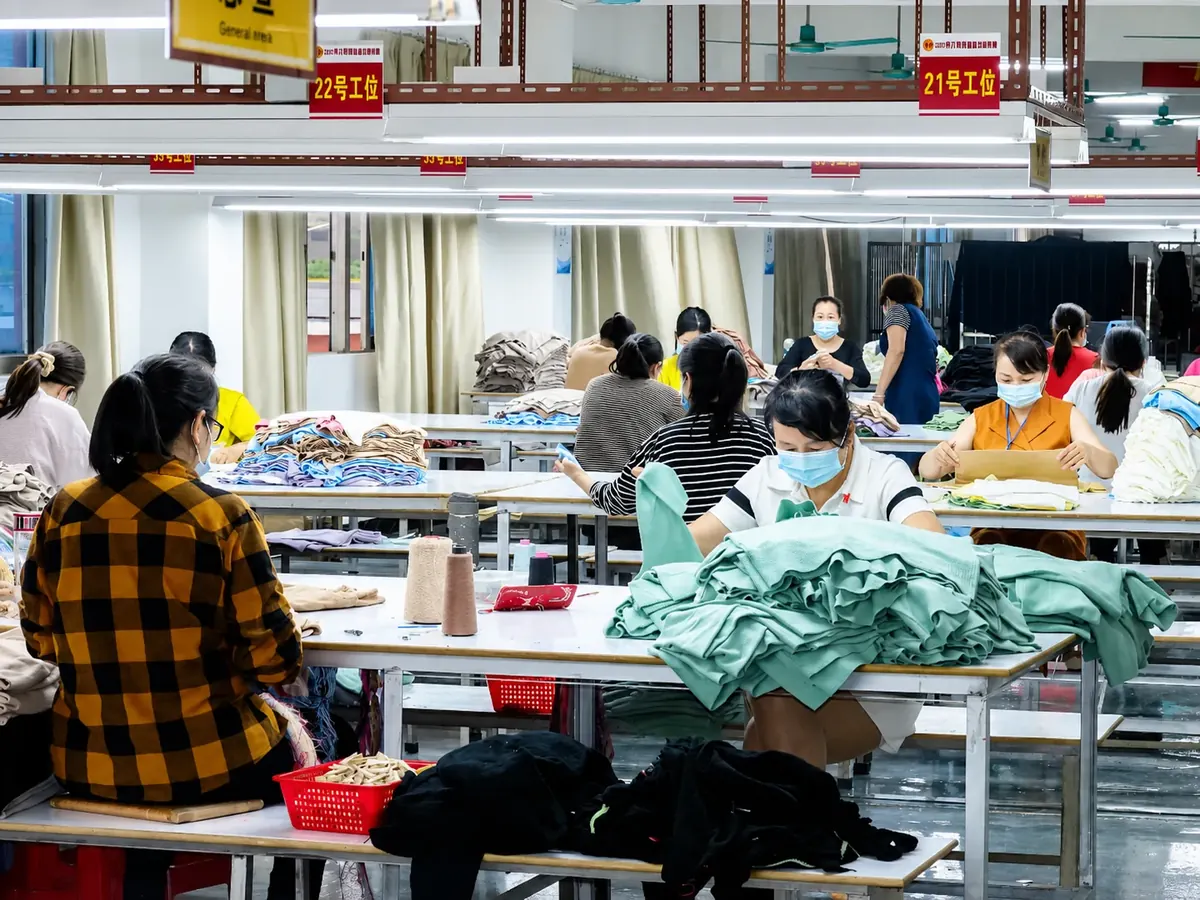
Two sweaters with the same fiber percentages can respond differently because yarn construction, colorants, gauge, stitch, dimensions, seams, elastic, buttons, zippers and finishing differ. A brushed surface, spray effect or garment wash can add another failure route. The care claim belongs to the specific finished product and approved production route.
Start with the most practical treatment expected by the target customer, then test whether the product tolerates it. “Dry clean only” should not be used simply to avoid development work, and “machine washable” should not be printed because the yarn supplier described a yarn as washable. The whole garment must support the claim.
| Care element | Evidence to review | Typical sweater risk |
|---|---|---|
| Washing | Method, temperature, agitation and cycles | Shrinkage, felting, growth, dye transfer |
| Bleaching | Allowed or prohibited bleach route | Fiber, color or finish damage |
| Drying | Tumble, flat, line or drip conditions | Distortion, stretch, heat damage |
| Ironing/pressing | Temperature and steam restrictions | Flattened texture, shine, trim damage |
| Professional care | Named dry- or wet-cleaning process | Solvent, moisture or mechanical damage |
Build a test package around the proposed claim
Send the laboratory or qualified quality team the finished garment, proposed instructions, fiber composition, colors, trims, print or decoration, finish, target market and acceptance criteria. Identify sample size, size/color coverage, conditioning, number of care cycles and the exact procedures used. A report that says only “wash test passed” is not enough.
Measure defined points before and after care using one method. Assess overall appearance, twisting, seam behavior, rib recovery, surface hairiness, pilling, color change and staining, print or coating damage, labels and fastener operation. Check whether the garment remains wearable and saleable, not only whether one chest measurement stays within range.
Test the complete garment and its interactions
FTC guidance says US manufacturers and importers need a reasonable basis for care instructions. It specifically explains that component testing may support a claim only when reliable evidence also supports the garment as a whole: testing individual parts is insufficient if one component bleeds onto another during cleaning.
Include contrast yarns, intarsia, jacquard floats, embroidery, appliqués, buttons, zippers, elastic thread, printed labels and decorative coatings in the evaluated garment. For specialty-washed or spray-dyed styles, examine local color movement, stiffness, abrasion and uneven appearance after care.
Separate dimensional change from acceptable fit
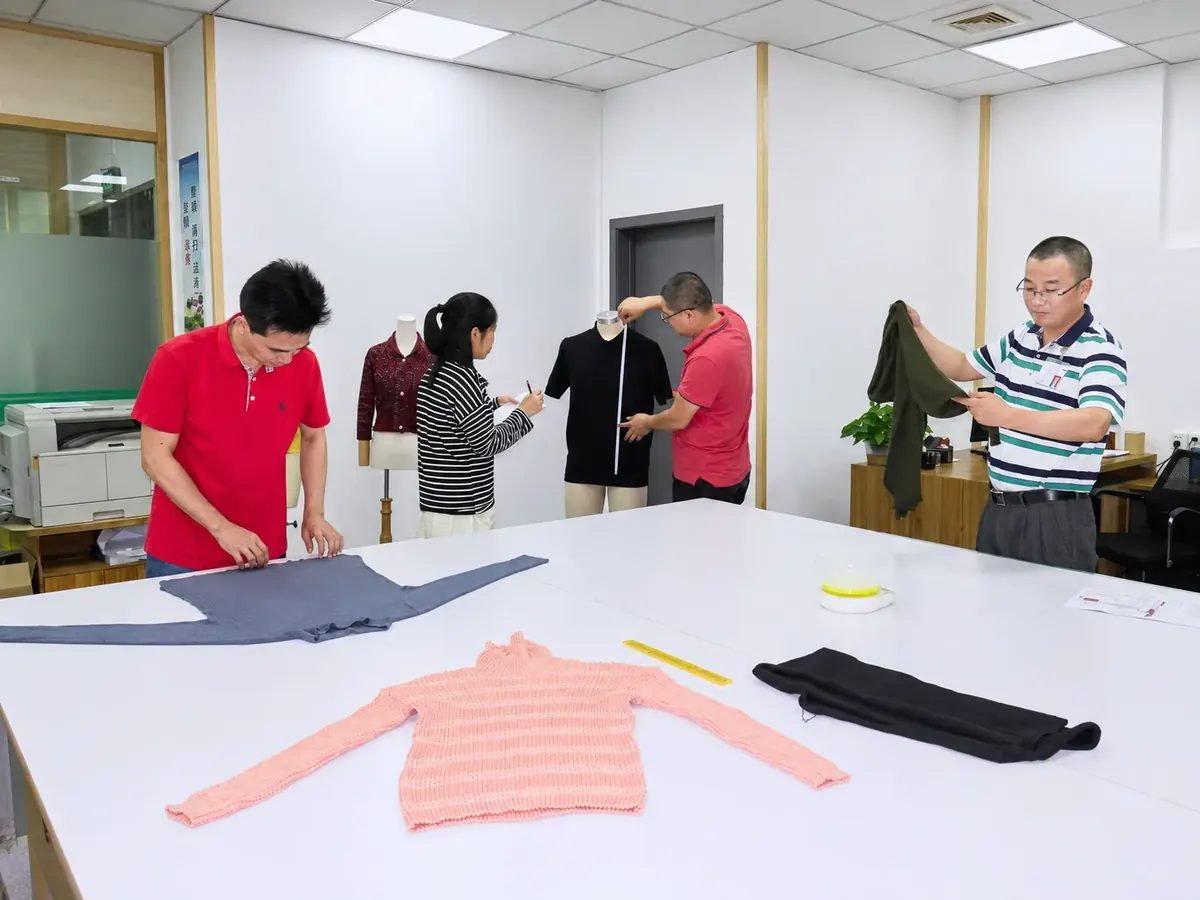
Record length and width changes at the agreed points of measure after conditioning. Percentage change alone does not show whether the final garment remains inside its finished measurement tolerance or fits the intended wearer. Review both the numeric change and the resulting size, balance and silhouette.
Flat drying may protect shape but requires a clear consumer instruction. Hanging a wet heavy sweater can create length growth and shoulder distortion. Tumble heat may change fibers, elastic, coatings or trims. Select the drying instruction from verified product behavior rather than retail convenience alone.
Convert evidence into the correct label language
For the US, the FTC Care Labeling Rule requires regular care instructions and warnings that consumers can refer to through the product’s useful life, with a reasonable basis held before sale. The FTC permits more than one care route when each is substantiated. It also warns that a label should disclose related procedures that consumers may reasonably assume are safe but would damage the product.
ISO 3758:2023 establishes graphic symbols for the most severe textile-care treatments that do not cause irreversible damage. It covers washing, bleaching, drying, ironing and professional textile care. Use the licensed current symbol system and destination-market guidance; do not mix symbol families casually or assume international symbols automatically satisfy every local rule.
Choose the least restrictive proven regular procedure
Review the tested options with the brand’s compliance and quality team. A more restrictive instruction can reduce consumer convenience and still be misleading if unsupported. A less restrictive instruction can create returns or damage. Select a regular procedure the complete product tolerates, plus necessary warnings such as avoiding tumble drying or ironing a decoration.
If both washing and professional cleaning are supported, the label may state both where permitted. If no tested route leaves the garment acceptable, do not solve the problem with vague wording; revise yarn, color, trim, construction or finish and repeat the relevant evaluation.
Transfer the approved care route into production
Lock label artwork, wording or symbols, language, material, print durability, placement and revision in the BOM. Match the care label to the exact style/color program and test file. Prevent an old label version from reaching production after yarn, trim or finish changes.
During bulk, verify label identity and attachment, then repeat care checks across representative yarn, color and finishing lots according to risk. Any substitution or process change that can affect care performance should trigger technical review and renewed evidence before shipment.
Buyer care-label checklist
- The proposed consumer care route is defined before testing.
- The complete finished garment—not only yarn—is evaluated.
- Dimensions, appearance, color, hand and trims are reviewed.
- Test method, cycles, conditioning and criteria are recorded.
- Instructions and warnings have a reasonable evidential basis.
- Words or symbols follow destination-market requirements.
- Label artwork is tied to the current BOM and test file.
- Changes in yarn, color, trim or finish trigger review.
- Representative bulk lots receive risk-based confirmation.
Yushengda develops custom knitwear in wool, cotton, acrylic, viscose, cashmere and blends across 3GG–16GG, subject to the project. Use the measurement tolerance guide, the trim approval guide, or send your composition, design, trims, target market and proposed care route for an RFQ discussion.
Official references: the US FTC Care Labeling Rule business guidance and 16 CFR Part 423 rule text; and ISO 3758:2023, Textiles—Care labelling code using symbols. Obtain current qualified advice for each destination market.