Sweater gauge describes needle density, but it does not determine quality by itself. Lower gauges generally support chunkier yarns and more dimensional surfaces, while higher gauges generally create finer, smoother fabrics. The correct choice depends on yarn count, stitch, silhouette, target weight, opacity, season and finish, so buyers should approve a physical swatch rather than selecting only from a number.
Use the design goal as the starting point
Define whether the garment should feel chunky and architectural, soft and everyday, or fine and layerable. Add the desired drape, warmth and visual stitch scale. A cable intended as a bold feature may lose impact at a very fine gauge, while a fitted lightweight top may become bulky at a coarse gauge. Photographs help communicate direction, but a target handfeel or reference garment is more useful.
Match yarn count to machine and stitch
Gauge, yarn count, number of ends and stitch length work as one system. A factory may recommend more than one technically possible route, each with a different surface and weight. Ask for the reasoning and compare representative swatches. Do not assume that moving to a higher gauge automatically makes a lighter or cheaper garment; density, knitting time and yarn consumption can offset the apparent fineness.
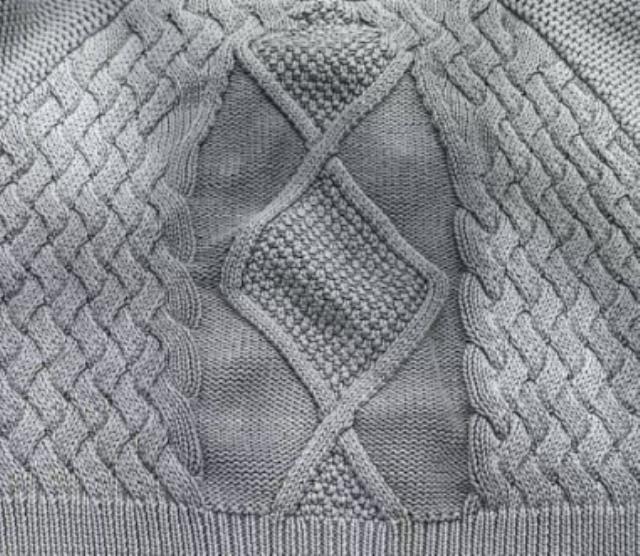
Consider structure and artwork
Rib, cable, tuck, pointelle, jacquard and intarsia each change the fabric. Artwork resolution and motif scale also depend on available needles and courses. Review the actual repeat and garment size, particularly for logos or engineered placements. If the design combines structures, check transitions and panel balance rather than approving only the most decorative area.
Review silhouette and measurements
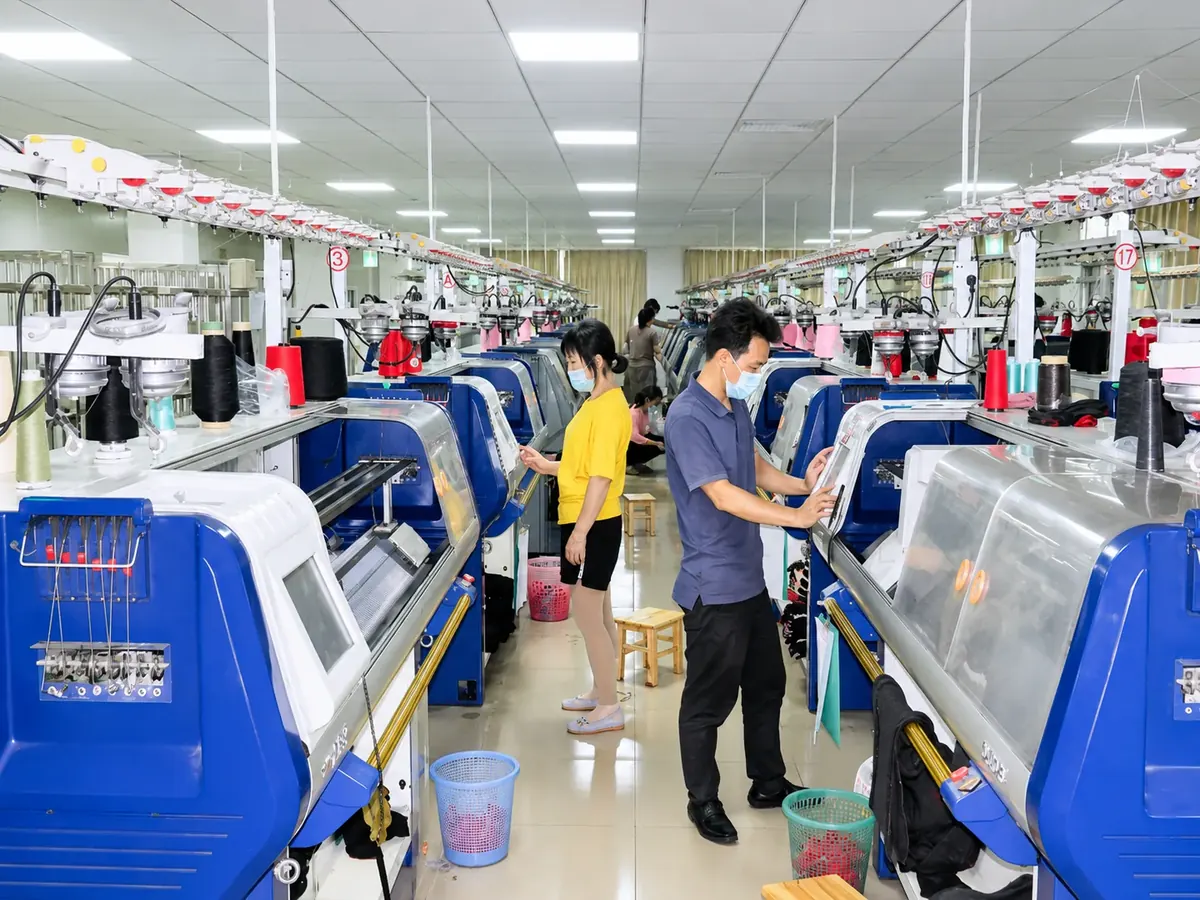
Gauge affects how a panel holds shape and how much it relaxes. Oversized shoulders, fitted waists, long cardigans and narrow sleeves place different demands on the fabric. After finishing the swatch, confirm stitch and row behavior before finalizing panel calculations. The approved garment should be measured after its intended finishing route.
Include finishing in the decision
Garment washing can soften, relax or visually open a knit surface; spray dyeing can read differently across textures. A gauge that looks correct before finishing may become too loose, dense or distorted afterward. For specialty-finished knitwear, develop knitting and finishing together. Approving them as separate services increases the chance that the final surface misses the design intent.
Compare options on a decision sheet
For each proposed gauge, record yarn, stitch, finished weight direction, handfeel, opacity, visual effect, likely cost and development risk. Choose based on the product brief, not a universal hierarchy. Yushengda works from 3GG to 16GG, allowing the technical route to be selected around the design rather than forcing every product into one machine category.
Apply the decision to a real order
When two gauges are feasible, compare swatches using the same notes: season, silhouette, stitch definition, weight, handfeel, opacity, finish and price. A coarse gauge can communicate volume and texture; a fine gauge can support layering and a smoother surface. Neither is automatically more premium.
Record more than the selected gauge. Retain yarn reference, number of ends, stitch structure and finished swatch. Gauge alone cannot reproduce a fabric. The fuller standard becomes important when adding colors, approving a substitute or reordering the style.
Buyer checklist
- Target silhouette and season defined
- Yarn count and number of ends reviewed
- Representative stitch swatch finished
- Artwork scale checked
- Measurements assessed after finishing
- Cost and risk compared across options
Yushengda develops custom knitwear from 3GG to 16GG with an MOQ starting from 100 pieces per color for suitable projects. Sampling normally takes 7–15 working days and bulk production normally takes 25–45 days after the deposit, subject to the confirmed yarn, construction and finish. Review our OEM/ODM process, explore our custom knitwear range, or send your project for a practical quotation.