Prepare a third-party sweater inspection by booking the correct inspection stage, identifying the complete lot, sending one controlled specification pack, defining sampling and defect criteria, and confirming that the required quantity is finished, packed and accessible. Give the inspector approved physical or digital references and a decision contact. The inspection report supplies evidence; the buyer still needs a written rule for pass, fail, hold and corrective action.
Choose the inspection stage that answers the risk
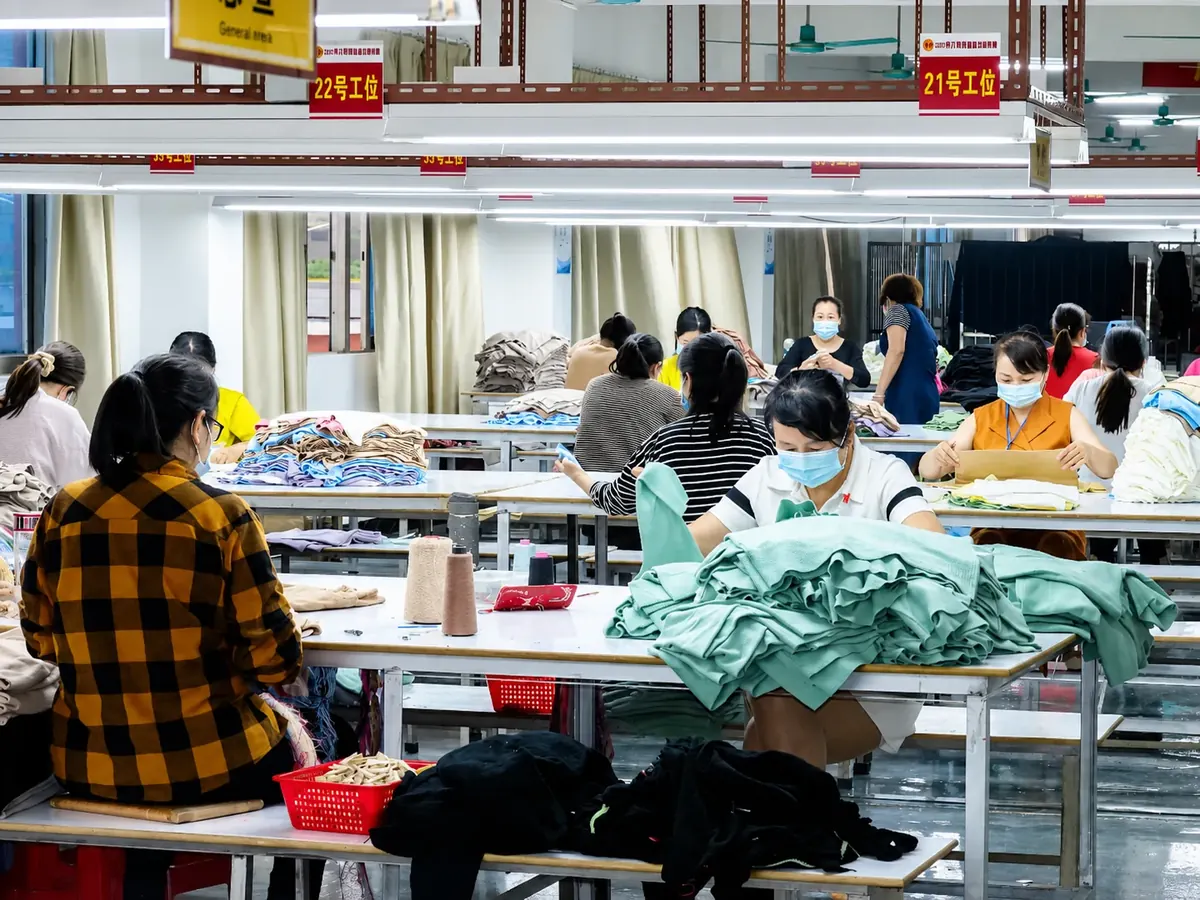
A pre-production check can verify material and readiness. During-production or inline inspection can expose knitting, linking, measurement or finishing problems while correction remains practical. A final random or pre-shipment inspection evaluates finished goods near shipment. Intertek's published inspection guidance describes pre-shipment inspection as taking place when merchandise is completed, packed and ready for shipment.
Do not book a final inspection to answer an unresolved development question. If shade consistency or a specialty wash is the main risk, an earlier check may be more useful than discovering the issue in sealed cartons. State whether the visit is initial inspection, reinspection, container loading supervision or another defined service.
Define the inspection lot precisely
List PO, style, color, size, ordered quantity, available quantity, packed quantity, carton count and factory address. Explain split shipments, separate dye lots, subcontracted finishing or goods stored in more than one location. The sample must come from the population the buyer intends to release.
| Preparation item | Buyer/factory input | Risk if missing |
|---|---|---|
| Lot identity | PO, SKU quantities and carton map | Wrong or incomplete population sampled |
| Product standard | Tech pack, BOM and approved sample | Inspector must guess intent |
| Acceptance plan | Sampling, defect classes and decision rule | Report cannot support release |
| Measurements | POM method, sizes and tolerances | Inconsistent results |
| Packing | Ratio, labels, barcode and carton marks | Commercial errors overlooked |
| Testing/tools | Required checks and available equipment | Scope cannot be completed |
Send one controlled inspection pack
Provide the current PO, tech pack, BOM, size chart, measurement method, approved sample identity, yarn and color references, artwork, trim and label approvals, care instructions, packing specification and relevant test requirements. Put revision and date on each file and include a short revision register. Clearly mark superseded documents.
Translate ambiguous design comments into checkable criteria. “Neat linking,” “soft hand” or “match sample” needs the actual reference and boundary. List known approved deviations so an accepted sample imperfection does not silently become a bulk allowance—or get incorrectly reported as an unknown defect.
Agree sampling and defect classification before the visit
If using ISO 2859-1 or another sampling scheme, identify the scheme, inspection level, lot size treatment and AQL values by defect class. Do not write only “AQL 2.5”: that does not by itself define sample size, critical-defect treatment or the acceptance numbers. Product safety or legal identity issues may require a separate zero-tolerance or escalation rule defined by the buyer.
Prepare a sweater-specific defect list: wrong yarn or color, mixed dye lots, needle lines, barré, holes, dropped stitches, weak or open linking, distorted ribs, measurement failures, shade differences, stains, excessive loose ends, decoration errors, wrong trims, labels, barcodes, ratios and carton marks. State which are critical, major or minor for this order.
Make measurements repeatable
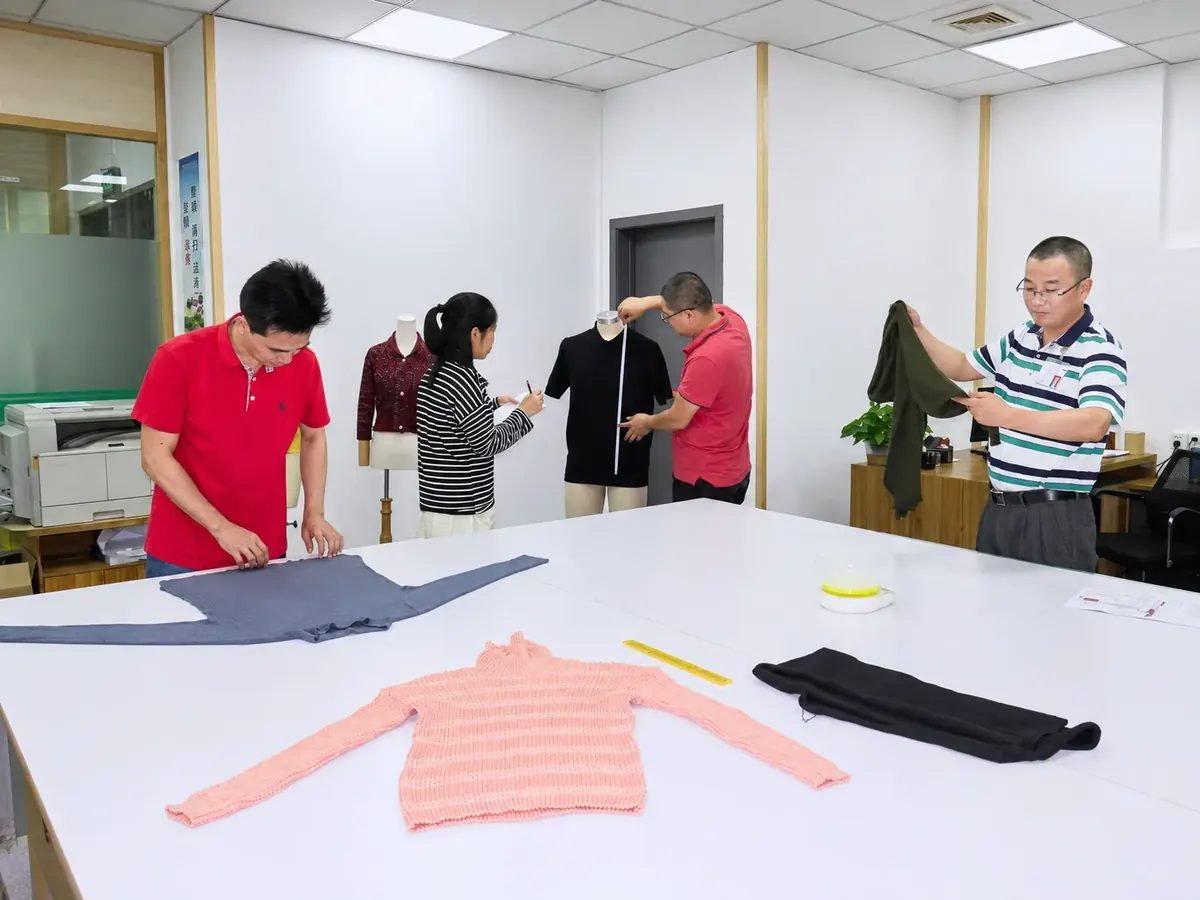
Identify garment condition, relaxation or conditioning time, surface, fastening state, points of measure and whether readings are taken before or after the specified finish. Include diagrams for curved or easily misread dimensions. Define sample allocation across sizes and colors instead of measuring only the easiest cartons.
Knits can change through handling, steam and packing. The inspector should not stretch or press a garment into tolerance. If a disputed result arises, record the method, garment identity and reading, then follow the agreed escalation rather than silently remeasuring until it passes.
Prepare goods, space and equipment
Confirm the booking readiness threshold with the inspection company and report actual completion honestly. Cartons should be numbered, countable and randomly accessible; do not preselect “inspection cartons.” Provide safe space, adequate lighting, a flat measurement table, calibrated tools where required, power and staff only for handling—not for directing sample selection.
Have packing materials available for restoration after checks. Ensure barcodes can be scanned in final packaging. If functional, metal-detection, moisture or other checks are in scope, confirm the specified equipment and records before the inspector arrives.
Set communication and report rules
Name factory and buyer contacts, but preserve inspector independence. Define when the inspector must call for a critical issue, inaccessible goods, quantity mismatch or standard conflict. Never ask the inspector to invent a tolerance or approve a substitution. Unresolved criteria should be reported and escalated.
Require the report to show inspected quantities, sampled cartons and SKUs, defect counts and images, measurement results, packing findings, tests performed, unavailable checks and lot status. Review findings against the contract; a third-party “pass” does not replace legal compliance, and a report does not guarantee every unit is defect-free.
Buyer readiness checklist
- The service and inspection stage match the risk.
- PO, styles, colors, sizes, quantities and locations are declared.
- Goods meet the agreed readiness condition and remain randomly accessible.
- Only current controlled specifications reach the inspector.
- Approved samples, colors, trims and deviations are identified.
- Sampling plan and defect classes are agreed in advance.
- Measurement method and size/color allocation are explicit.
- Required tools, lighting, space and packing restoration are ready.
- Escalation contacts and decision authority are available.
- The report feeds a written release, hold or corrective-action decision.
Yushengda develops wool, cotton, acrylic, viscose, cashmere and blended knitwear across 3GG–16GG, subject to project requirements, and supports customer-nominated third-party inspection. Use the AQL inspection guide, defect-classification guide and failed-inspection guide, or send your PO scope, specifications, inspection stage and target date for coordination.
Primary reference: Intertek, Inspection Services guidance, for the timing and purpose of final random/pre-shipment inspection. The buyer's contract, current inspection-company protocol and destination requirements control the actual order. Competitor content was reviewed only for common preparation gaps; no wording, prices, cases, images or numerical acceptance limits were reused.