A useful custom sweater production status report shows one dated position for each PO and SKU: planned milestone, actual accepted quantity, work in progress, blocking issue, evidence source, responsible owner and next decision date. Read it from shipment backward and reconcile quantities across knitting, linking, finishing, inspection and packing. Treat “in production,” percentages and selected photos as signals—not proof—until their scope and counting basis are defined.
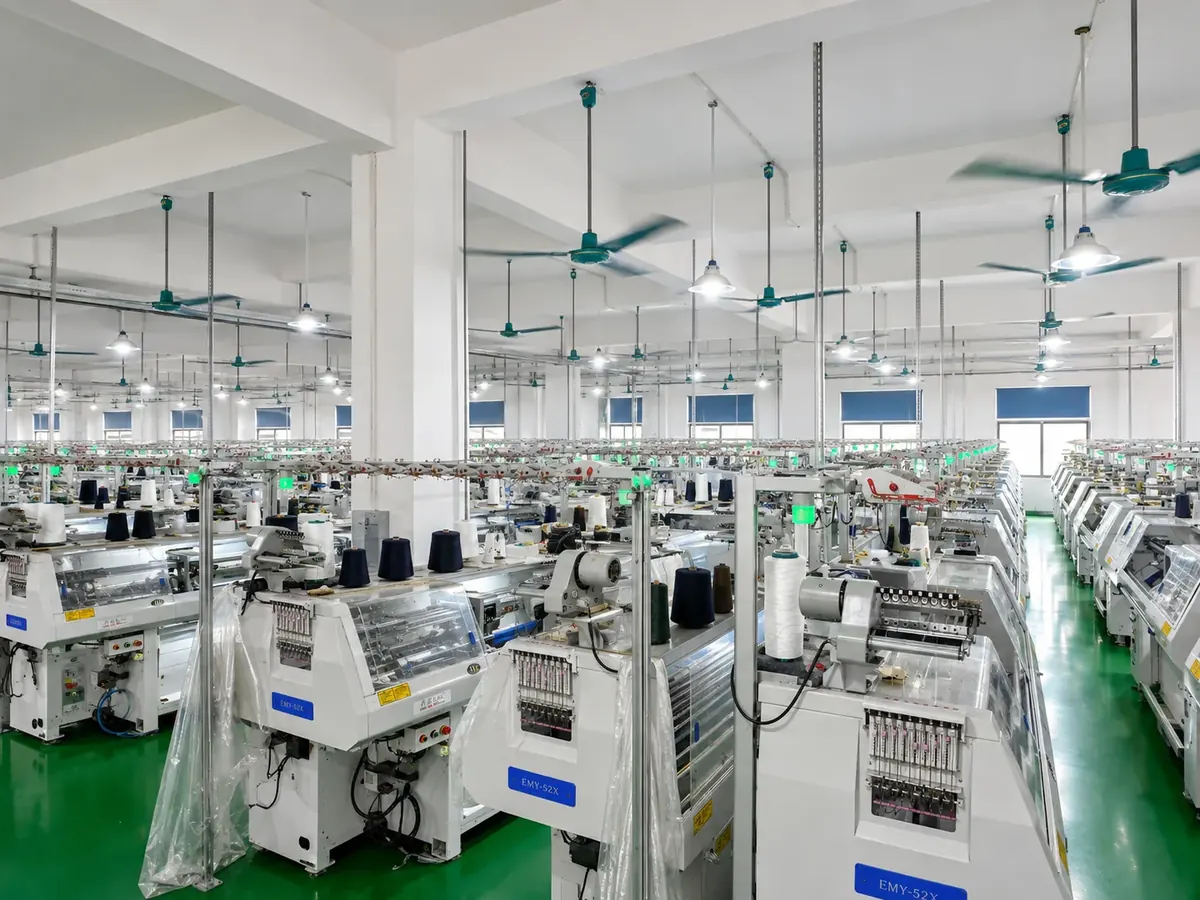
Lock the report identity and cutoff time
Every report should name the supplier, factory where relevant, PO, style, revision, color, size range, ordered quantity, requested shipment date, Incoterms® milestone and reporting cutoff with time zone. A spreadsheet updated over several days can mix positions that never existed at the same time. Preserve the previous report instead of overwriting history.
Separate factory completion, inspection release, carrier handover, departure and warehouse arrival. “Ready date” is meaningless unless it names the event. Read status against the date that controls the buyer's commercial decision, then work backward through packing, final quality, finishing, linking, knitting, yarn and approvals.
Replace one percentage with stage quantities
“Production 80% complete” may refer to panels knitted, garments linked or units packed. It may use pieces, sets, panels, weight or planned labor. Ask for the numerator, denominator, unit and stage. For sweaters, knitting output is not finished-garment output because linking, washing or specialty finishing, conditioning, measurement, repair, inspection and packing remain.
| Status field | Minimum evidence | Buyer question |
|---|---|---|
| Material ready | Exact yarn/trim, lot, quantity, location and release status | Is all production material physically available and approved? |
| Knitting | Accepted panels or garment sets by SKU, dated | Does the count exclude rejected or incomplete components? |
| Linking/assembly | Accepted garment quantity and current WIP | Are matched components available for every claimed unit? |
| Finishing | Finished, conditioned and measured quantity | Has the intended wash or effect process actually occurred? |
| Quality | Checked, passed, held, repaired and rejected quantities | Which population does the result represent? |
| Packing | Packed SKU/carton matrix and release status | Are packed goods both complete and authorized to ship? |
Reconcile flow instead of adding every number
Stage figures are usually cumulative or overlapping, so adding knitted, linked and packed quantities would double-count the same goods. For each stage, record opening WIP, new input, accepted output, hold or rejection, transfer and closing WIP under a consistent definition. The result should explain where the ordered quantity currently sits.
Size and color matter. A report can show 900 of 1,000 units finished while the missing 100 are all core sizes or one launch color. Require an SKU-level exception view even if the normal summary is PO-level. Also show allowed order tolerance separately from unexplained shortage or overproduction.
Compare plan, actual and forecast
Keep the approved baseline date, current planned date and actual completion date as different fields. If a milestone moves, record the change date, reason, authorized owner and downstream effect. Replacing the old promise with a new date hides schedule erosion and prevents useful supplier review.
A forecast should identify its assumptions: daily accepted output, remaining working days, available gauge-specific capacity, buyer approval timing, finishing queue and quality yield. Extrapolating from one strong shift or counting overtime that is not confirmed creates false precision. Show a range or confidence boundary when evidence is incomplete.
Connect progress to quality status
Gross production is not accepted production. Report first-off or pilot approval, inline findings, rework queue, testing status, final-inspection plan and release authority. A quantity can be physically complete yet remain on hold for shade, measurement, labeling, testing or buyer decision.
Use clear categories: produced, checked, accepted, repairable, rejected, held and released. Do not silently move repaired goods into accepted output without the agreed reinspection. When the report cites an AQL or test result, link the complete report to the represented SKU, lot and stage.
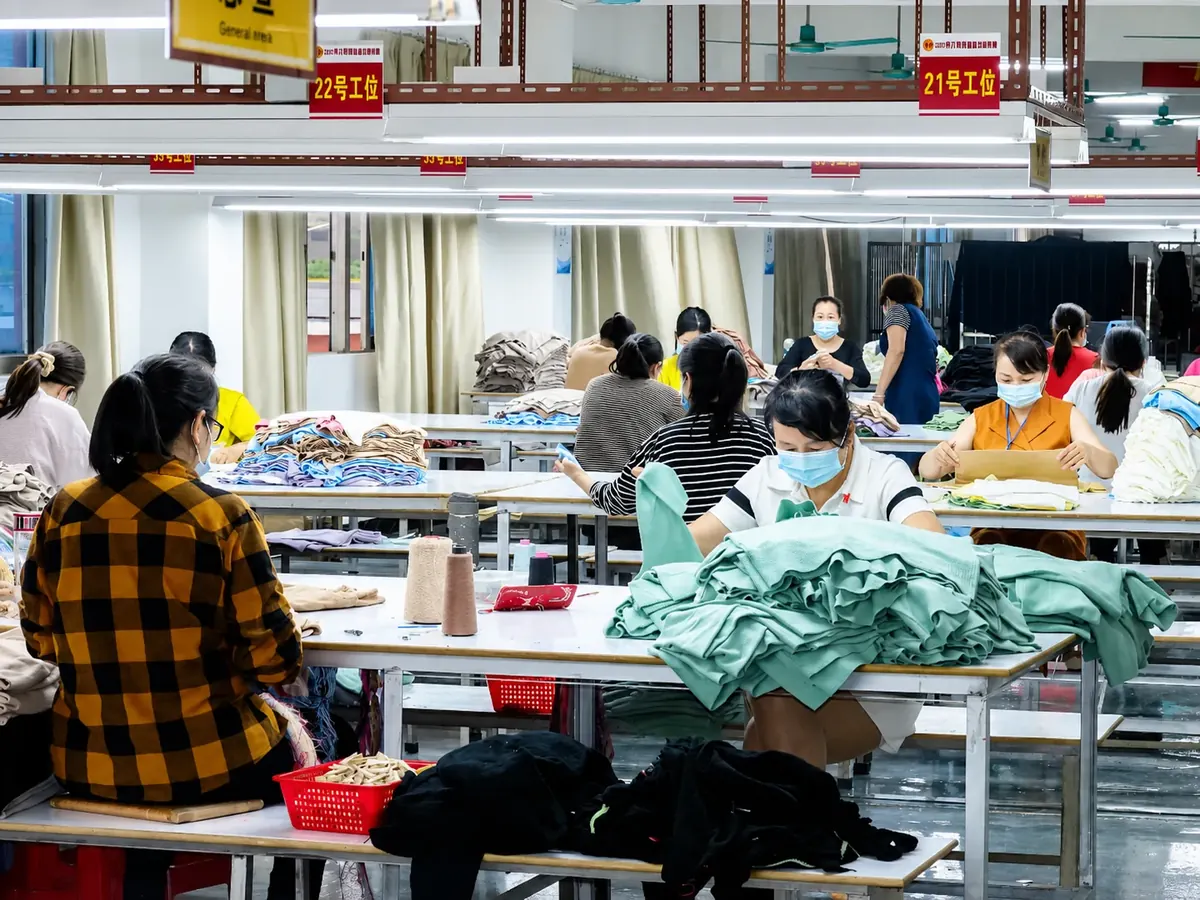
Define what photographs can prove
A useful update image includes date context, PO or controlled identifier where appropriate, stage, overview and detail. A video sweep may show activity or a quantity group, but it cannot by itself establish fiber content, hidden workmanship, total accepted units or shipment readiness. Protect confidential information and other buyers' products when requesting evidence.
Ask for photos when they answer a defined question, not as decoration. Examples include exact yarn received, first finished unit after wash, carton-mark application or sealed inspection sample. Reusing one undated image across weekly reports should trigger verification rather than an accusation.
Turn red status into an action record
Every exception needs the affected SKU and quantity, first known date, cause status, containment, owner, action, evidence due date and next decision. Distinguish a confirmed root cause from a working hypothesis. State whether buyer input is required and the latest response time before the shipment forecast changes.
Set escalation rules before trouble: for example, a missed approval, unconfirmed yarn date, material mismatch, repeated quality hold, milestone slip or forecast that enters the shipping buffer. Escalation should bring a decision and updated evidence, not merely copy more people onto the same vague message.
Buyer production-status checklist
- PO, style, revision, SKU quantity and report cutoff are fixed.
- The required shipment or arrival event is named.
- Percentages disclose numerator, denominator, unit and stage.
- Accepted quantities are separate from gross output and WIP.
- Stage flow reconciles without double-counting garments.
- Core size and color shortages remain visible.
- Baseline, current plan, actual and forecast are distinct.
- Quality hold, repair, rejection and release status are included.
- Photos answer defined questions and have traceable context.
- Every exception has an owner, evidence date and escalation rule.
Yushengda's confirmed reference ranges are 7–15 working days for sampling and 25–45 days for bulk after deposit, subject to yarn, construction, finish, quantity, approvals and capacity; a status report should track the confirmed project plan rather than treat these ranges as a shipment promise. Use the time-and-action calendar, pre-production meeting guide and inspection-stage comparison, or send the PO, SKU matrix, current milestone and required delivery event for a project-specific review.
Primary reference: International Labour Organization, Tracking Production: Sewing Room Operations, for daily production reporting, WIP and order-level production tracking. This article adapts those general flow-control principles to custom sweater stages and buyer reporting; it does not claim real-time system access or a universal reporting format. Competitor content was reviewed only for current terminology and content gaps; no dashboards, templates, cases, metrics, wording or images were reused.