A custom sweater quality agreement should identify the governing specification, sealed samples and approved exceptions; define measurements, tolerances, workmanship defects, tests, inspection and packaging; assign change authority; and state what happens when goods do not conform. Complete it before the deposit and material commitment. A supplier certificate, approved photo or AQL number cannot replace product-specific acceptance criteria.
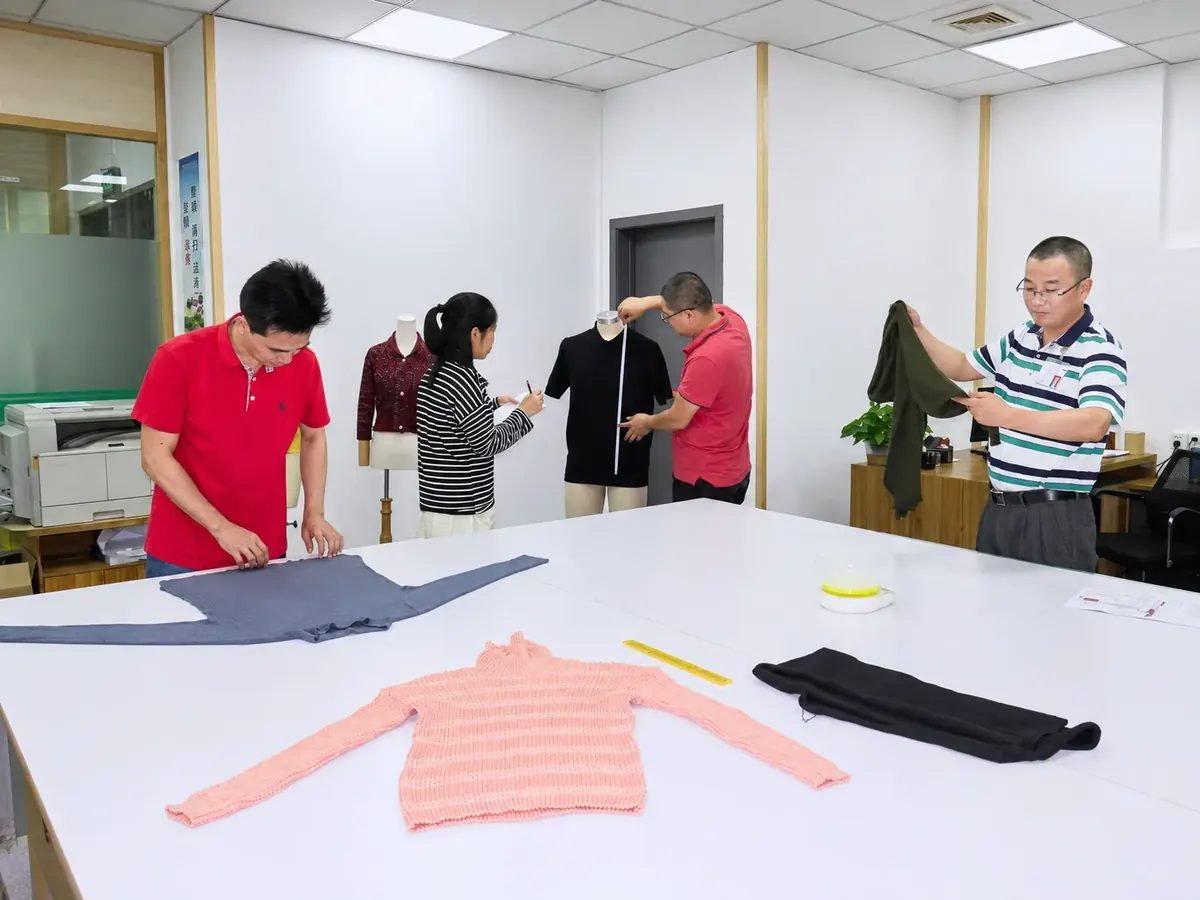
Name the parties, order and product
Record the buyer, legal supplier, relevant factory or approved subcontractors, PO, quotation, style, color-size SKUs, quantities, markets, delivery terms and agreement revision. Identify who can approve product changes, release bulk and accept a deviation. A sales chat with an unnamed style is not a controlled quality record.
This is an operational sourcing framework, not legal advice. Contract enforceability, governing law, language priority, warranties, liability, payment remedies and dispute resolution require qualified counsel. Keep those legal terms aligned with the purchase order rather than hiding them in an inspection checklist.
| Agreement layer | What it controls | Typical reference |
|---|---|---|
| Product identity | Yarn, gauge, stitch, construction, trims, finish | Tech pack, BOM, artwork and sealed sample |
| Measurable quality | Dimensions, weight, placement and tolerances | POM chart and named methods |
| Visual quality | Workmanship and appearance | Defect library and approved reference |
| Performance | Care, colorfastness, pilling, safety or chemistry | Test plan, methods and limits |
| Lot decision | Sampling, inspection and release | AQL plan and critical-defect rules |
| Nonconformity | Hold, rework, reinspection or rejection | Written disposition and cost responsibility |
Create one hierarchy of requirements
List every controlled document with revision and date: PO, quotation, tech pack, measurement chart, BOM, yarn and color standards, knitting program or artwork, labels, packing manual, test plan and approved samples. State which reference prevails if two conflict. Otherwise, a newer email may silently contradict an older signed sample.
Do not let the sealed sample override invisible requirements such as fiber content, chemical limits or test performance. Conversely, a flat drawing cannot fully communicate hand feel or workmanship. Define which reference governs each characteristic and reconcile conflicts before bulk starts.
Freeze material and construction
Specify yarn supplier or approved reference where nominated, fiber percentages, count and ply, number of ends, color and lot controls, gauge, stitch structure, density or relevant program, panel construction, linking, wash or finish, trims, labels and packaging. Mark permitted alternatives explicitly.
Require written approval before supplier, yarn, blend, count, colorant, finish, trim, artwork, construction, subcontractor or pack route changes. Define the evidence needed: document review, swatch, strike-off, revised sample, test or first-bulk check. “Equivalent material” should never be self-approved after the deposit.

Define measurements and tolerances by POM
Give the base measurements, grading, points of measure, garment condition, laying and measuring method, equipment, conditioning and tolerance for every important POM. State whether tolerance is bilateral or one-sided and whether individual critical measurements have special limits.
Explain the lot rule: how many pieces and sizes are measured, whether one severe result can fail, and how repeated directional drift is treated. An average inside tolerance can hide every garment being short in one size. Keep fit approval, numerical tolerance and grading approval connected but distinct.
Classify defects before inspectors see them
Define critical, major and minor defect categories with sweater-specific examples: wrong fiber or style, sharp object, open linking seam, hole, severe measurement failure, shade mismatch, artwork error, pilling, snag, loose end or cosmetic variation. State whether any characteristic has zero acceptance regardless of overall AQL.
Use photos and boundary samples for subjective features, but record whether each image shows acceptable, limit or reject condition. One attractive approval sample is not a defect library. Specify how repeated defects, multiple defects on one unit and repair evidence are counted.
Separate testing from inspection
List required tests with exact method and edition, specimen, stage, colors or worst cases, laboratory, limit, units, uncertainty or decision rule, timing and retest trigger. Assign who selects specimens and who pays. A generic “all tests pass” row cannot be audited.
Inspection samples the lot for identity, workmanship, measurement, packing and other agreed checks. It does not replace destructive laboratory testing, legal review or 100% safety controls. Likewise, a passing test report does not prove every carton follows the sealed sample.
Write the inspection and release plan
Name any inline, final or third-party inspection stage; lot definition; sampling standard and plan; inspection level; AQL by defect class; carton selection; measurement sample; packed percentage; documents supplied; readiness condition and reinspection rule. Confirm whether production must be complete and what percentage must be packed.
ISO explains that ISO 9001 is a quality-management-system standard and does not specify requirements for the goods a buyer purchases. Supplier certification can support capability evaluation, but the sweater agreement must still define the product and lot acceptance criteria.
Plan nonconforming-goods decisions
Before a failure occurs, define quarantine, notification time, root-cause evidence, sorting, repair or rework approval, retesting, reinspection, replacement, rejection and shipment release authority. State whether corrected goods must be re-presented separately and how affected lots remain traceable.
Do not promise automatic remedies without legal and commercial review. Instead, make responsibilities, decision deadlines and approval evidence explicit in the binding documents. Preserve both failed and passed reports; replacing history makes recurrence harder to investigate.
Close commercial and quality assumptions together
Confirm that the price includes the agreed yarn, sample route, tests, inspections, labels, packing, rework expectations and delivery term. Identify buyer-nominated services and excluded costs. A low quote based on missing tests or a substitute yarn is not comparable to a complete quote.
Hold a pre-production review after all approvals are closed. Record open actions, owners and due dates. Bulk authorization should reference one agreement revision and should not be issued while a product-changing comment remains unresolved.
Buyer quality-agreement checklist
- Legal parties, PO, styles, SKUs and markets are identified.
- Document precedence and revisions are explicit.
- Materials, construction, finish and substitutions are controlled.
- Every important POM has a method and tolerance.
- Critical, major and minor defects have sweater examples.
- Tests name methods, specimens, limits and responsibility.
- Inspection defines lot, sampling, AQL and readiness.
- Safety controls are not reduced to ordinary AQL sampling.
- Nonconformity and reinspection decisions are written.
- Price and timeline include the agreed quality scope.
Yushengda develops custom knitwear across 3GG–16GG in wool, cotton, acrylic, viscose, cashmere and blends, subject to the project, and supports customer-nominated third-party inspection. Use the quote-locking guide, the AQL inspection guide, or send your tech pack, quantity, markets, test plan and delivery requirement for an RFQ discussion.
Primary references: ISO, ISO 9001:2015 overview and ISO 9001 in the supply chain, which expressly distinguishes quality-management systems from purchased-product requirements; Intertek's inspection guidance on agreed shipment acceptance criteria. Competitor content was reviewed only for gaps; no contract terms, tolerances, cases, images or wording were reused.