Approve the complete wash and finishing route—not just a soft hand on one sample—before releasing a washed knitwear order. Record the machine, load, water conditions, chemistry, time, agitation, extraction, drying, steaming and conditioning used on the approval sample. Then compare appearance, measurements, hand, odor, shade and trim behavior on a production-intent sample. A recipe is acceptable only when the buyer can identify what was done, what evidence passed and what changes require a new approval.
Why “soft wash” is not a production specification
Washed knitwear is sensitive to the interaction of yarn, gauge, stitch structure, color, garment weight and handling. Two processes described as “soft wash” may use different temperatures, liquor ratios, detergent levels, mechanical action, extraction and drying. Those differences can change shrinkage, growth, spirality, surface hairiness, shade, pilling risk, odor and rib recovery.
The correct recipe is therefore product-specific. Do not copy a numeric formula from another style or supplier and assume it will transfer. Use the buyer’s approved appearance and performance targets, then document the route that produced them. If a nominated laundry or finishing partner is used, the same record must travel with the purchase order and inspection plan.
Build a recipe record a second operator can understand
Give the wash record a style number, color, yarn blend, gauge, construction, garment weight and sample revision. Identify the machine or process category, load basis, water temperature range, time, liquor ratio where measured, detergent or softener identity, dosage basis, pH control if measured, agitation, rinsing, extraction, drying, steam or pressing and conditioning method. Record who approved each chemical and whether any enzyme, silicone or special finish is allowed.
Do not invent tolerances that the buyer has not approved. If a parameter is controlled by a supplier standard, ask for the standard or a measurable acceptance rule. “Low heat” and “normal tumble” are not independently repeatable instructions unless the supplier defines them. A photograph is useful evidence, but it cannot replace the process record.
| Recipe control | Evidence to retain | Risk if omitted |
|---|---|---|
| Material identity | Yarn blend, gauge, stitch and color lot | A substitute behaves differently after washing |
| Machine and load | Machine class, load basis and garment count/weight | Mechanical action changes with load size |
| Water and chemistry | Temperature, chemical names, dosage basis and pH if measured | Hand, shade or surface cannot be reproduced |
| Time and action | Cycle time, agitation, rinses and extraction | Shrinkage or distortion drifts between lots |
| Drying and pressing | Drying route, steam/pressing and blocking method | Measurements pass only after hidden reshaping |
| Conditioning | Rest time/environment before measurement | Early readings are mistaken for final size |
Approve the right sample in the right sequence
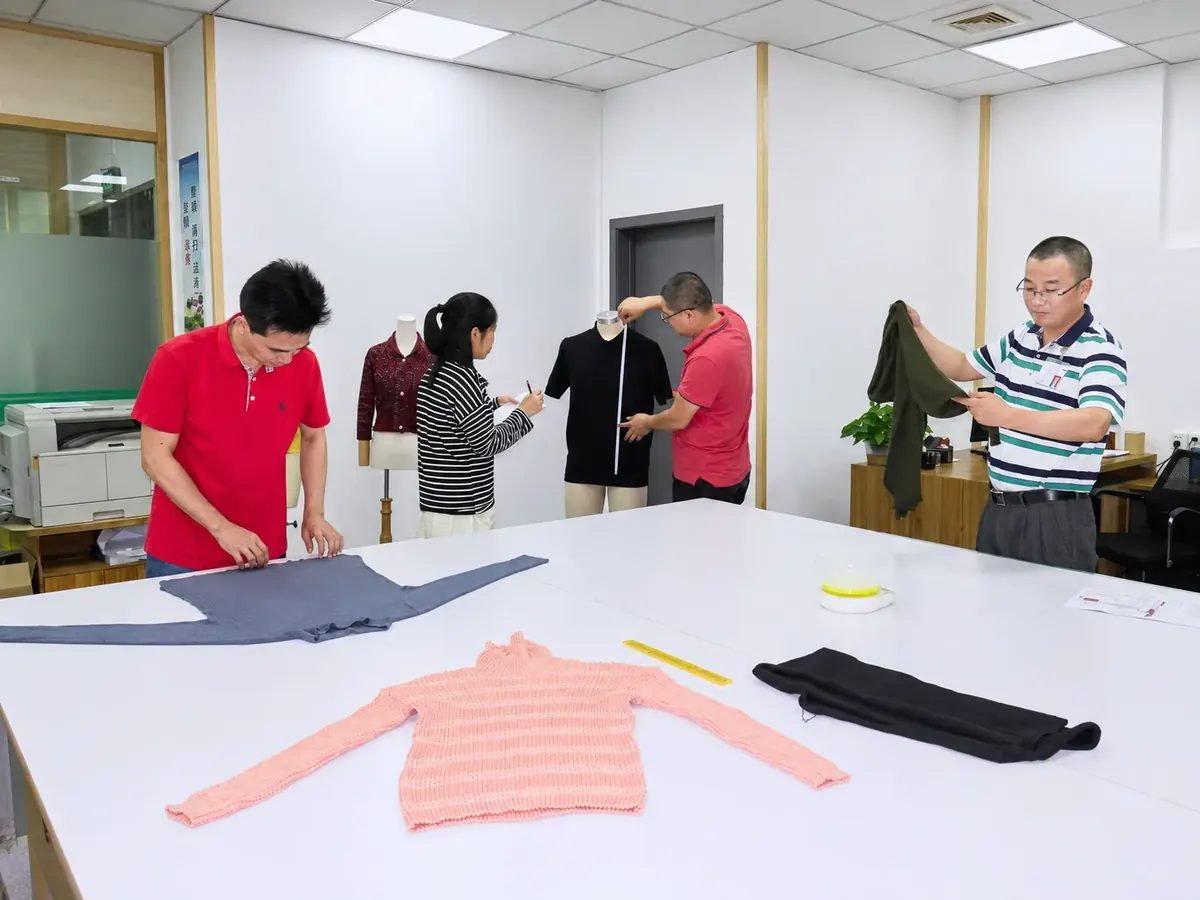
Start with a pre-wash reference that identifies yarn, gauge, construction, trims and color. Run the intended wash, dry and finish route on a production-intent sample. After conditioning, photograph front, back, side and detail views under consistent lighting. Measure the agreed points without stretching: body length, chest, shoulder, armhole, sleeve, cuff, hem and any style-specific placement.
Compare more than dimensions. Review drape, surface, hand, shade evenness, streaks, crease marks, spirality, seam torque, neckline, placket, pocket, embroidery and label areas. Check odor after the garment is dry and conditioned. If the buyer requires colorfastness, pilling or dimensional-change testing, identify the applicable buyer or laboratory method instead of claiming that a visual review proves performance.
The Woolmark Company’s care guidance explains that wool garments should follow the care instruction appropriate to the product and that flat drying can help preserve shape. Use such public guidance to align the product claim and care label; it does not prescribe one factory wash recipe for every yarn or style. Keep the source linked in the approval file: Woolmark wool care guidance.
Separate appearance approval from dimensional approval
A sample can look attractive while measurements are unstable, or meet measurements while the surface is wrong. Create two sections in the approval sheet. Appearance should cover color placement, wash character, hand, hairiness, streaks, creases, pilling observations and trim interaction. Dimensional approval should cover relaxed measurements, symmetry, growth or shrinkage, spirality and recovery after handling.
Record the measurement condition: flat or on form, time since drying, whether steamed, and whether blocked. If a sample is hand-shaped to look correct, disclose that action. The bulk team must know whether the approved look comes from the recipe or from an additional manual step that may not be available at scale.
Use hold points for color and spray effects
Washed or spray-dyed sweaters may show intentional variation, but “intentional” must have boundaries. Mark the approved shade range, placement direction, contrast areas and unacceptable streaks or back staining. Compare body, rib, collar, cuff and sewn-on components separately because they can absorb or release color differently.
For spray or pigment effects, retain a labeled front and back reference and define the viewing distance and lighting used for approval. Do not ask inspectors to match a screen image. If the yarn lot, chemical, spray color, wash sequence or drying route changes, treat the change as a new risk review rather than silently using the old approval.
Run a controlled first-bulk confirmation
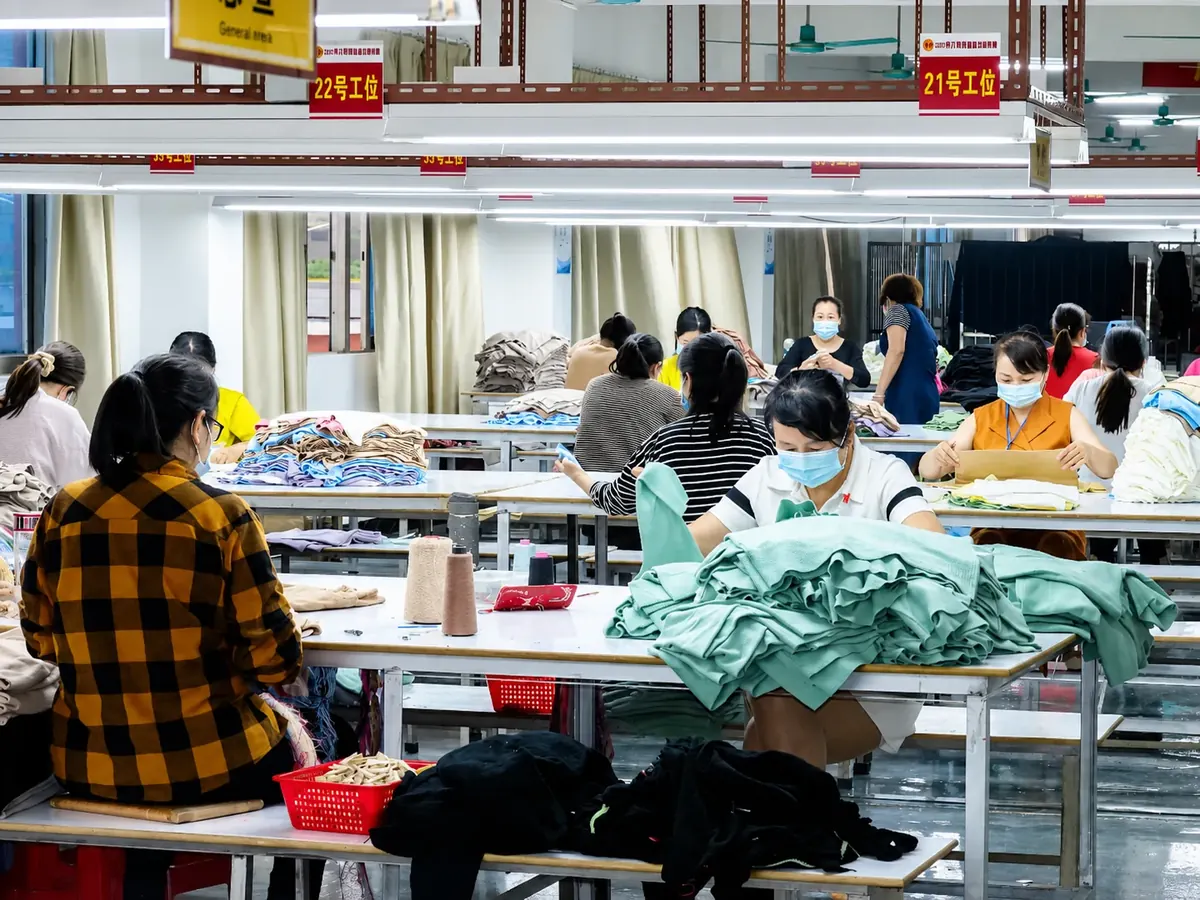
Before full production, request first-bulk or pilot pieces from the same yarn lot, gauge, construction, wash route and finishing partner. Select representative colors and sizes, including a dark shade and any color with spray or special effects. Compare them with the sealed approval sample using the same checklist and measurement method.
Set a clear disposition rule: accept, hold for buyer review, rework where technically allowed, or reject. A failed first-bulk sample should trigger a documented investigation. Do not change detergent, drying, pressing or blocking informally and then present the corrected garment as if it were the original recipe.
Control changes and evidence over the order life
List changes that require re-approval: yarn or lot, gauge, machine, laundry, chemical, dosage, temperature, cycle time, agitation, extraction, drying, steaming, pressing, blocking, spray color or trim. Keep the former recipe and sample as history; create a new revision with the reason, date, owner and buyer decision.
Yushengda’s verified site information describes development and production of wool, cotton, acrylic, viscose, cashmere and blended knitwear across 3GG–16GG, with buyer-defined development and inspection coordination. Confirm the actual recipe and acceptance criteria for each style in the RFQ and approval record. Do not infer a certification, in-house laundry capability or guaranteed result from a general product description.
Buyer checklist before releasing bulk
- Material, gauge, color and sample revision are identified.
- Wash, dry, steam/press and conditioning steps are recorded.
- Appearance and relaxed measurements are approved separately.
- Color and spray variation have visible boundaries.
- First-bulk confirmation uses the same route and a repeatable checklist.
- Change triggers and evidence owners are named.
For related controls, see how to approve sweater appearance after washing, care-label testing for custom sweaters and how to control a sealed sample before bulk production. If you need a recipe review for a new style, send Yushengda the tech pack, yarn details, target finish and approval evidence before quoting a final bulk route.