Approve sweater appearance after washing with a whole-garment protocol that scores shape, seam smoothness, surface, stitch definition, color, ribs, plackets and components after the proposed care cycles. Record dimensions separately. A sweater can remain within measurement tolerance yet become commercially unacceptable because it twists, puckers, mats, loses texture, develops waves or damages buttons and zippers.
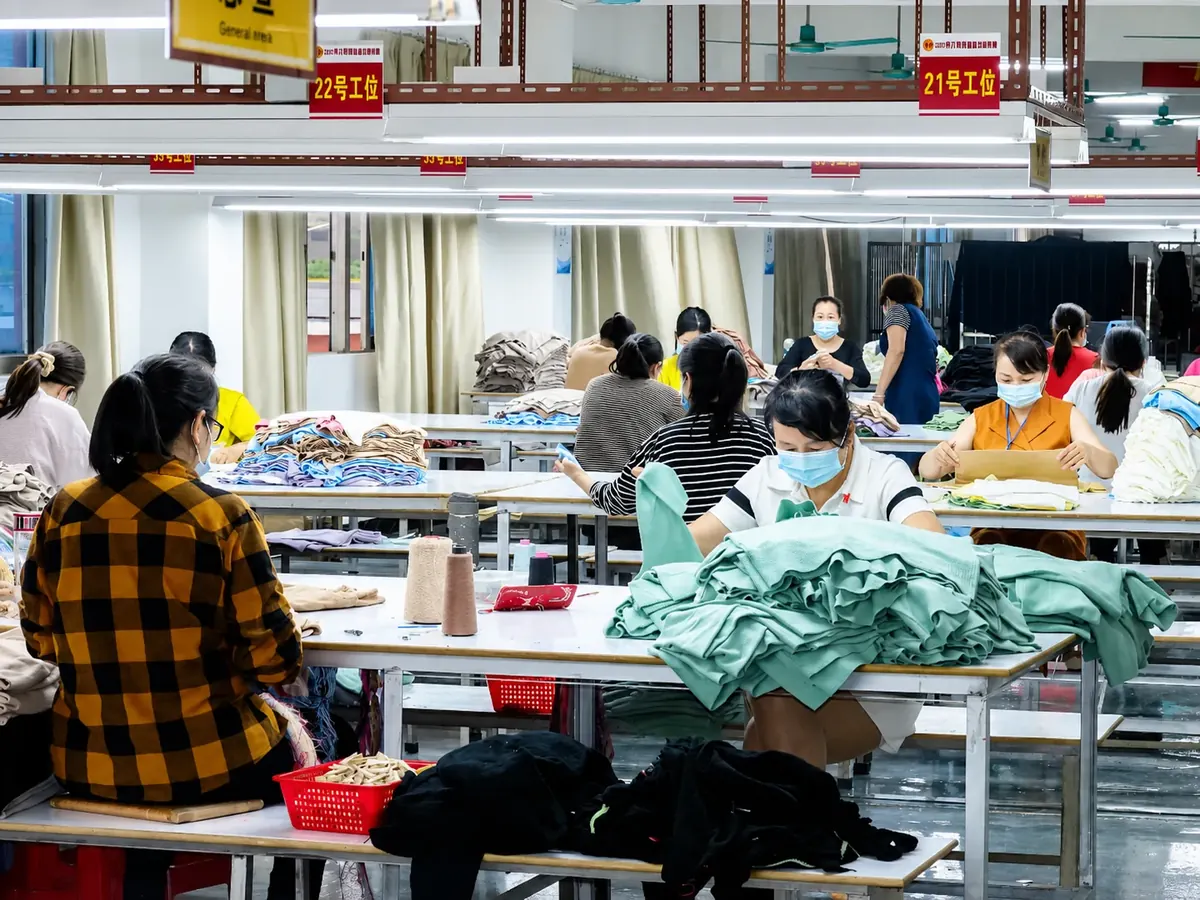
Why a shrinkage result cannot approve appearance
Dimensional change compares defined measurements before and after care. It can reveal shrinkage or growth, but it does not fully describe surface or construction. Two sweaters can finish at the same chest and length while one has a rippled placket, skewed side seams, flattened cables or uneven ribs.
Create two result sections: numeric measurements and visual/functional appearance. State which findings can fail the garment independently. Do not average a strong dimensional score with a damaged zipper or severe matting to produce one vague overall pass.
| Appearance area | What to examine | Evidence to retain |
|---|---|---|
| Overall shape | Balance, twist, asymmetry and local growth | Standardized front/back/side photos |
| Surface | Pilling, fuzzing, matting, harshness and marks | Rated specimens and controlled lighting |
| Stitches/ribs | Definition, waviness, recovery and distortion | Close-ups plus approved reference |
| Seams/plackets | Puckering, roping, grin and edge wave | Location-specific ratings and photos |
| Components | Buttons, snaps, zippers, labels and decoration | Function result and damage record |
Test the production-intended complete garment
Use the approved yarn, color, gauge, stitch program, linking, trims, labels, decoration and specialty finish. A development sample made with substitute yarn cannot validate final appearance. Include risk colors and sizes because contrast combinations, dark shades, large panels or heavy trims may behave differently.
Condition, mark and measure the garment before care. Photograph it under controlled lighting, distance, camera angle and background. Record its size, color, sample revision, yarn or finish lot, method, equipment and date so later comparisons do not rely on memory.
Define the exact washing and drying sequence
Reference the proposed care label and a named laboratory method. Specify wash type, temperature, detergent, load, agitation, rinse, extraction and number of cycles, plus flat, line or tumble drying conditions. If reshaping is allowed, write what the operator may do; uncontrolled hand blocking can hide distortion.
Evaluate after the defined conditioning interval, not while damp or freshly arranged. If consumers are expected to repeat the procedure, include multiple cycles appropriate to the program. One gentle cycle may not reveal progressive matting, seam wave or component deterioration.
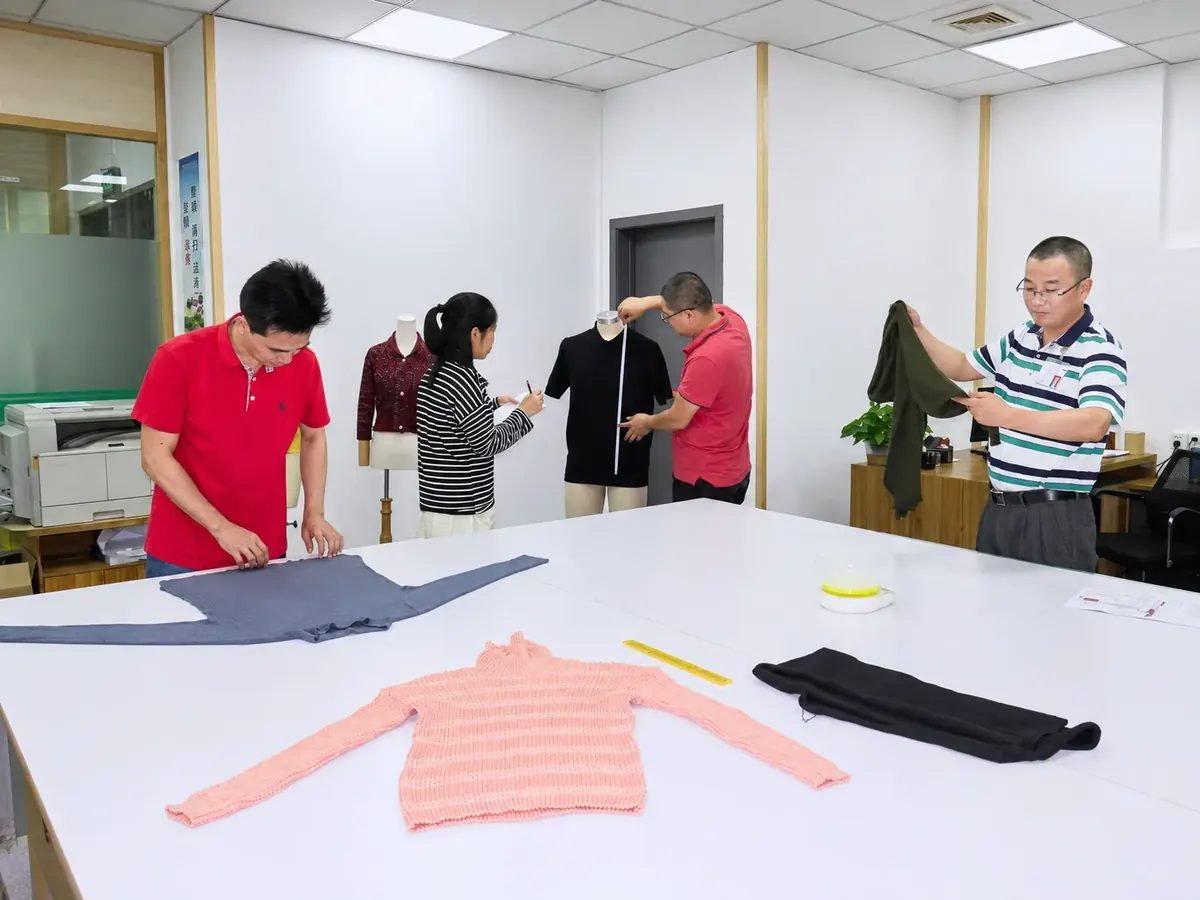
Use ISO 15487 for whole-product appearance
ISO 15487:2018 specifies a method for evaluating apparel and other textile end products after one or several domestic washing and drying treatments. Its scope includes color change, pilling, fuzzing, matting, smoothness of flat fabric and seams, crease retention and damage to components such as buttons, press fasteners and slide fasteners.
AATCC TM143 is described by AATCC as technically equivalent to ISO 15487 and covers smoothness appearance, seam smoothness and crease retention after home laundering for woven, knitted and nonwoven end products. Use the licensed edition, rating standards and viewing conditions selected by the buyer or laboratory.
Add knitwear-specific visual checkpoints
Inspect cable relief, jacquard registration, intarsia edges, tuck texture, rib contraction, neckline symmetry, cuff and hem recovery, shoulder line, sleeve pitch and side-seam twist. Look at the garment flat and on the intended form or wearer where fit appearance matters.
For washed, brushed or sprayed designs, distinguish intentional variation from deterioration. The approved sample and boundary references should show acceptable texture, shade distribution and surface. “Vintage” is not permission for uncontrolled streaks, local stiffness, abrasion or panel mismatch.
Score before and after pressing separately
Consumer appearance should normally reflect the labeled care procedure. A factory pressing step after testing can temporarily smooth seams, restore dimensions or flatten texture. Record results before any unlisted corrective pressing, then evaluate an allowed ironing or steaming route separately when the care instructions include it.
If appearance passes only after skilled reshaping unavailable to consumers, the care claim or construction may need revision. Conversely, a product intended to be ironed should be evaluated under the supported ironing instruction rather than judged in an incomplete care state.
Set category-specific acceptance rules
Define minimum ratings or approved-reference boundaries for each applicable category before results are known. Not every sweater needs a pressed-crease score, while placket wave may be crucial for a cardigan. State whether one severe component failure overrides other acceptable categories.
Use trained evaluators, controlled viewing and independent scores where the method requires visual judgment. Retain photographs for communication but do not replace physical assessment with phone images when color, texture or three-dimensional smoothness matters.
Transfer results into bulk and the care label
Link the approved appearance report to the exact BOM, yarn, finish and care-label revision. Check first production pieces and representative bulk lots after the final process. Changes in yarn supplier, stitch density, wash formula, trim or drying route require review proportional to the risk.
When bulk fails, hold the affected finish or production lots, trace the pattern and test any correction on a limited sample. Rewashing, repressing or adding chemicals can change measurements, color, hand, pilling or compliance, so it needs buyer-authorized evidence before full-lot rework.
Buyer wash-appearance checklist
- Dimensions and visual appearance have separate decisions.
- The complete production-intended garment is tested.
- Care cycles, drying and permitted reshaping are defined.
- Overall shape, surface, seams, ribs and components are scored.
- Knit textures and intentional finishes have boundary references.
- Results before and after allowed pressing are distinguished.
- Category-specific criteria are fixed before testing.
- The report connects to the BOM and care-label revision.
- Representative bulk lots receive risk-based confirmation.
Yushengda develops custom knitwear in wool, cotton, acrylic, viscose, cashmere and blends across 3GG–16GG, subject to the project. Use the care-instruction testing guide, the measurement tolerance guide, or send your finished sample, proposed care route, construction and quantity for an RFQ discussion.
Technical references: ISO 15487:2018, currently published but under revision, and AATCC TM143-2018te, described as technically equivalent. Use the licensed current method and project-specific acceptance criteria selected with qualified textile guidance.