Control sweater spirality by recording the garment's initial geometry, laundering it with a named procedure, then measuring side-seam or reference-line displacement using one selected ISO 16322-3 procedure. Investigate yarn torque, stitch balance, panel orientation, linking and finishing separately. Do not merge pre-existing asymmetry with wash-induced change or copy a universal percentage limit from another product construction.

Recognize spirality without confusing it with shrinkage
Spirality, torque or twist appears when a garment's vertical references rotate after laundering. Side seams may migrate toward the front or back, hems may no longer sit level, sleeves may rotate and motifs or plackets can appear off-axis. Shrinkage or growth changes dimensions; spirality changes angular or positional alignment. Both can occur in the same garment.
Also separate twist from incorrect assembly. A side seam already displaced before washing may result from panel mismatch, linking take-up, asymmetric shaping or pressing. ISO 16322-3:2021 states that it measures spirality after domestic laundering and is not intended to measure spirality as manufactured. Record initial geometry independently so the investigation answers both questions.
| Observation | Possible category | Evidence needed |
|---|---|---|
| Seam displaced before wash | Panel, assembly or pressing asymmetry | Pre-wash flat and worn photos plus measurements |
| Seam rotates after wash | Laundering-induced spirality/torque | Named procedure and before/after references |
| Only one sleeve twists | Panel orientation, joining or local construction | Left/right component identity and seam review |
| Whole garment leans | Structure, yarn, finish or asymmetric assembly | Panel, yarn-lot and process comparison |
| Hem waves but seams stay aligned | Dimensional or finishing issue | Measurements and appearance assessment |
Select one ISO 16322-3 procedure
ISO 16322-3:2021 specifies procedures for measuring spirality or torque of woven and knitted garments after domestic laundering. The standard warns that results from different procedures might not be comparable. Therefore the buyer must name the selected procedure, laundering route, drying route, number of cycles, specimen preparation and calculation basis.
Use the licensed method through a qualified laboratory or trained quality team. Report actual values and direction, not only “pass.” If a retailer has its own protocol, reconcile its marking and calculation with the ISO route before comparing data from different suppliers or seasons.
Use a production-intended complete garment
Test the correct yarn, gauge, stitch program, panel shaping, linking, trims, wash, drying and pressing route. A swatch can show wale or course behavior, but it cannot reproduce panel joins, armhole balance, sleeve construction, plackets or mixed stitches. A substitute-yarn fit sample is not the final spirality approval.
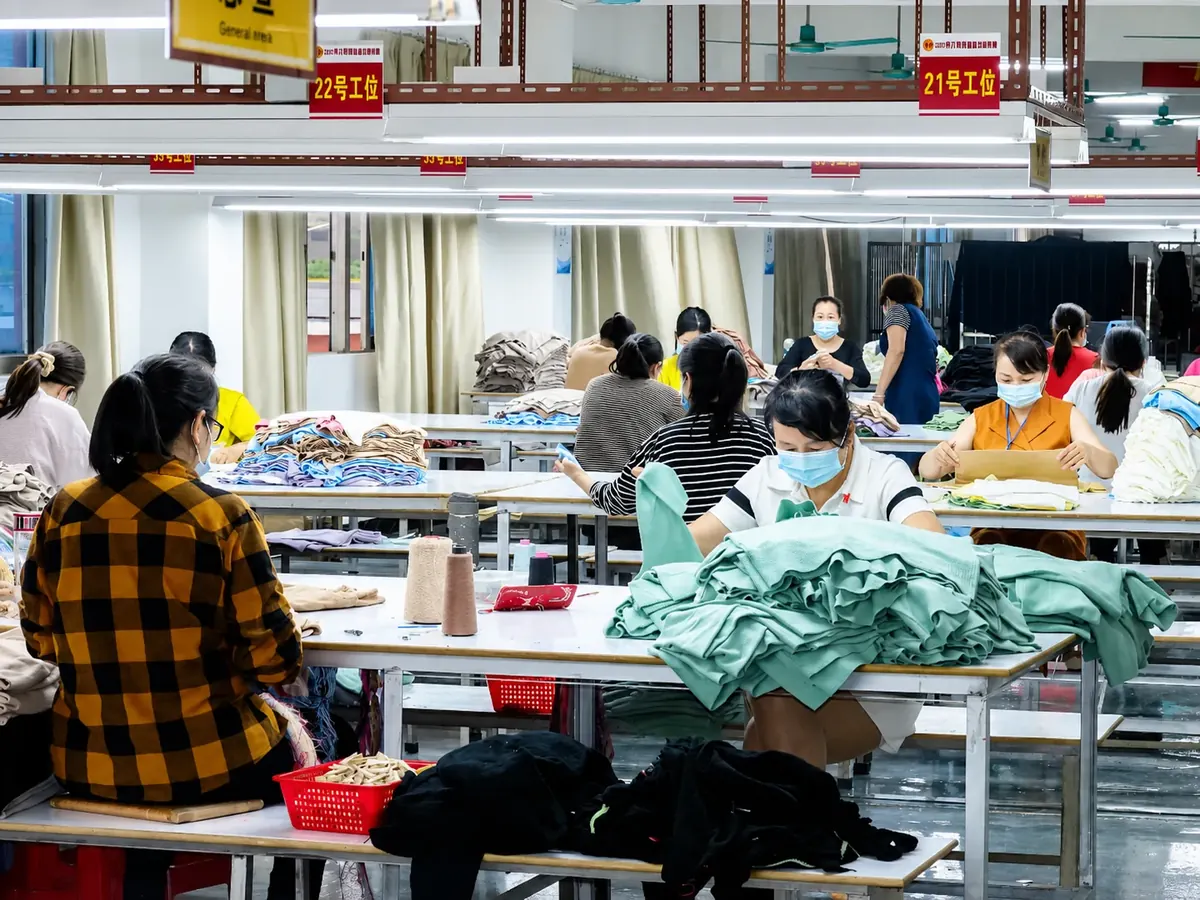
Mark garment identity, size, color, yarn or finish lot and sample revision. Include risk sizes and constructions rather than testing only the easiest sample. Long bodies, asymmetric designs, mixed stitches, heavy plackets and fitted sleeves may reveal positional change differently.
Standardize marking, laying and conditioning
Before laundering, condition and place the sweater without stretching or corrective blocking. Mark or identify the reference points required by the selected procedure. Photograph front, back and sides with a fixed camera position, scale and garment orientation. Record initial seam positions and any intentional asymmetry.
After laundering and drying, use the defined conditioning interval and the same laying method. Do not rotate, pull or steam the garment until seams look straight. If reshaping is permitted by the care instruction, distinguish the result before reshaping from the result after the precisely allowed action.
Investigate flat-knit causes without importing T-shirt assumptions
Much online spirality guidance concerns tubular single-jersey fabric and cut-and-sew T-shirts. Fully fashioned flat-knit sweaters have different component geometry. For sweaters, investigate yarn construction and torque, stitch balance, panel orientation, shaping symmetry, take-down or density consistency, linking tension, seam take-up and asymmetric finishing.
Trace whether the change appears in an isolated panel, one yarn lot, one color, one size or every garment. Compare left and right sleeves, front and back panels and mixed-stitch areas. Do not automatically blame sewing when the knitted panel itself rotates, or blame yarn when only one joining operation is affected.
Set a product-specific acceptance rule
The standard supplies measurement procedures, not one commercial limit for all sweaters. Define the acceptable result before testing based on silhouette, seam visibility, stripe or motif alignment, wearer fit, retailer requirement and care cycles. Record both numeric result and visible commercial effect.
A small measured shift may be obvious on a striped fitted cardigan, while another construction may visually tolerate more. Do not average a severe sleeve rotation with an acceptable body result. Set location-specific decisions and state whether any single major distortion fails the garment.
Transfer the control into bulk production
Link the approved result to the exact BOM, yarn lot or approved route, program, measurements, joining details and finish. Check early production garments after the intended finish so corrective action remains possible. Then select representative bulk samples across sizes, colors and process lots for the agreed laundering confirmation.
If bulk fails, hold the affected lots and preserve unpressed evidence. Repressing may temporarily improve presentation without resolving wash-induced torque. Any change to yarn, stitch, panel orientation, linking or finish should be trialed on limited pieces and remeasured before full-lot rework.
Buyer spirality-control checklist
- Pre-wash asymmetry and post-wash change are separate results.
- The selected ISO 16322-3 procedure is named.
- Laundering, drying, cycles and conditioning are fixed.
- The complete production-intended garment is tested.
- Reference marking and laying are standardized.
- Body, sleeves, plackets and motifs are reviewed separately.
- Flat-knit causes are investigated, not assumed from T-shirts.
- Product-specific limits are agreed before results.
- Early bulk and representative process lots are checked.
- Corrective pressing is not mistaken for permanent correction.
Yushengda develops custom knitwear in wool, cotton, acrylic, viscose, cashmere and blends across 3GG–16GG, subject to the project. Use the measurement tolerance guide, the wash-appearance guide, or send your yarn, gauge, garment construction, care route and quantity for an RFQ discussion.
Primary reference: ISO 16322-3:2021, Textiles — Determination of spirality after laundering — Part 3: Woven and knitted garments, currently published and under systematic review. Competitor content was used only to identify the common overfocus on circular-knit T-shirts; no thresholds, cases, images or wording were reused.