Evaluate a knitwear factory's social compliance with site-specific, current evidence and an ongoing due-diligence plan—not a logo or pass statement. Confirm the production address and processes, define the buyer's standard, review the audit scope and findings, verify corrective actions, map subcontractors, and examine whether the buyer's own prices, lead times and order changes could create labour or safety pressure.

Define the requirement before asking for a certificate
State the buyer code, applicable law, customer requirement and any accepted audit or certification programme. Clarify the required site, validity or review period, audit type, minimum outcome, disclosure level and remediation rules. amfori BSCI, a SMETA audit and SA8000 certification are different instruments; a supplier should not be asked to treat their names as interchangeable.
Separate social compliance from product quality, chemical testing, recycled-content traceability and environmental claims. One document rarely proves all four. A good sweater sample does not verify working conditions, while a social audit does not prove fiber composition or bulk workmanship.
Match every document to the production site
Compare the legal entity, site name, full address, platform or report identifier, assessment body, audit dates, scope, worker count and processes with the proposed order route. Check whether knitting, linking, washing, finishing, embroidery, inspection and packing are performed at the audited location or elsewhere.
| Evidence | What to verify | What it cannot prove alone |
|---|---|---|
| Audit report | Site, date, scope, method, findings and status | Conditions after the audit date |
| Certificate | Issuer, identifier, validity and covered entity | Unlisted subcontractors or product quality |
| Corrective-action plan | Root cause, owner, deadline and closure evidence | Effective change without verification |
| Payroll/time records | Consistent period, workers, hours, wages and payments | Voluntary participation or complete worker experience |
| Worker interviews | Confidential selection and issue consistency | Every worker's conditions |
| Factory tour | Actual layout, exits, equipment and work in progress | Hidden records or off-site production |
Read findings, not only the headline result
Obtain the level of report access allowed by the programme and supplier authorisation. Review nonconformities, observations, evidence sampled, management-system weaknesses and unresolved items. A current report can still contain material open findings; an expired report can still provide history but should not be presented as current approval.
Look for consistency among worker roster, attendance, payroll, production records and capacity claims for the same period. Differences require explanation, not an automatic accusation. Identify whether records include temporary, agency, migrant, young or other relevant worker groups and whether peak-season overtime is represented.
Test working time, wages and freedom of communication
Ask the qualified auditor to select records across normal and peak months and trace sampled workers from time record to payroll and payment evidence. Review regular and overtime hours, rest days, wage components, deductions, benefits and contract terms against the applicable requirement. Do not calculate compliance from one summary spreadsheet supplied for the visit.
Worker interviews should be confidential, appropriately sampled and conducted without management retaliation or coaching. The process should let workers describe hours, pay, leave, safety, discipline, grievance channels and freedom to raise concerns. Procurement staff should not request personal worker data beyond what is lawful and necessary.
Review occupational health and safety in context
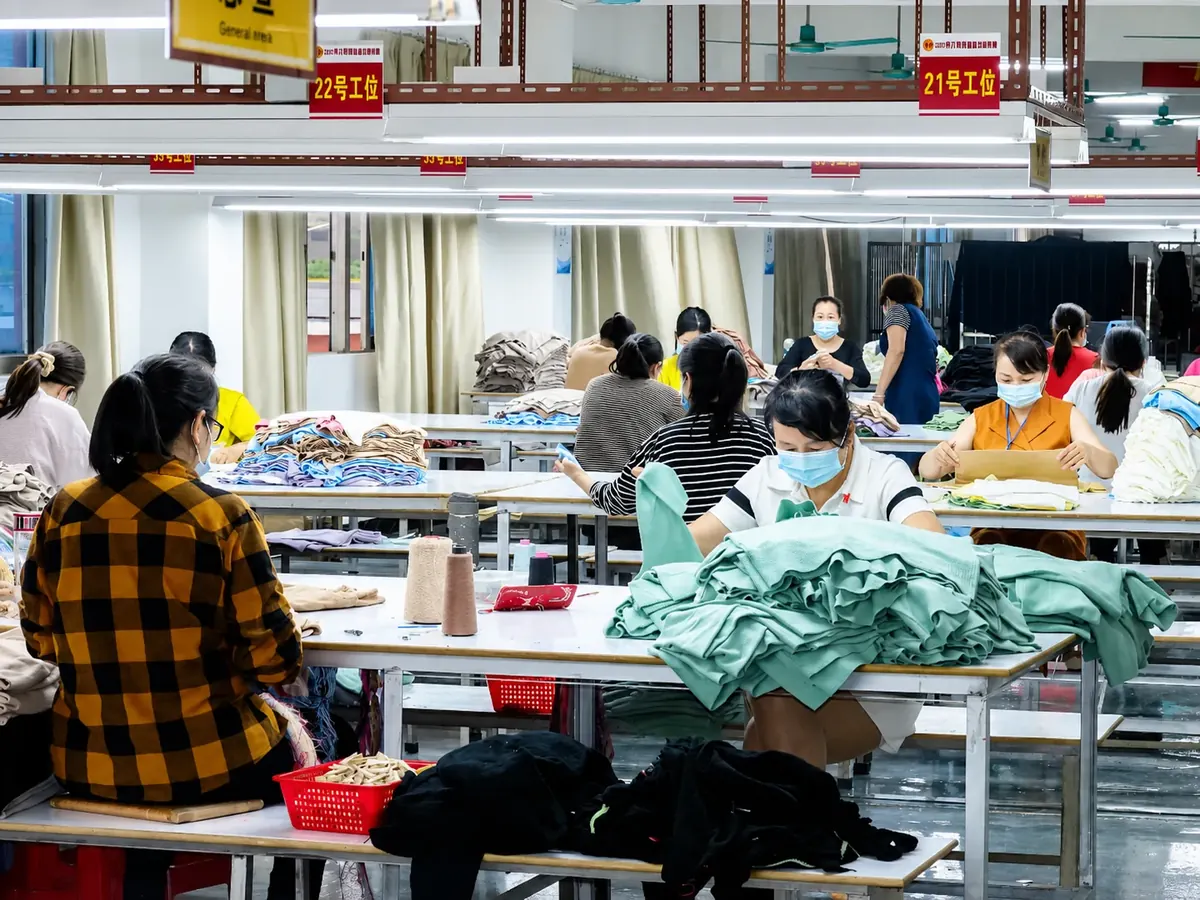
Walk the real production flow and supporting areas. Relevant evidence can include emergency exits and drills, fire protection, electrical safety, machine guarding, ergonomics, chemical identification and storage, personal protective equipment, first aid, sanitation and dormitory or canteen conditions where in scope.
For knitwear, include yarn storage, computerized knitting, linking, needle control, steam or pressing, washing and specialty finishing actually used for the order. A clean showroom or empty aisle does not represent normal production. Compare observed work in progress and staffing with the site's records.
Map subcontracting before bulk release
List every external process, legal entity, address, order share and approval status. Subcontracting is not automatically unacceptable, but undisclosed production defeats site-level evidence. Write whether buyer approval is required, which standards extend to partners, who monitors them and how materials and work in progress remain traceable.
Confirm the route again when capacity becomes tight, an urgent order is requested or a specialty finish changes. A supplier may have an audited main site while washing, embroidery or overflow knitting follows a different risk profile.
Close findings through verified corrective action
For each finding, record immediate containment, root cause, systemic correction, responsible owner, target date and evidence. Document review can close some issues; others need worker feedback, payment evidence, repeated records or an on-site follow-up. A photograph of a new notice does not prove that the underlying practice changed.
Define consequences proportionately: approve, conditionally approve with milestones, pause new orders, restrict processes or exit responsibly. Abruptly cancelling without considering worker impacts can create additional harm. Serious immediate risks require prompt specialist escalation, but ordinary improvement should be monitored rather than hidden to preserve a score.
Check the buyer's purchasing practices
The OECD garment and footwear guidance treats due diligence as an ongoing process to identify, prevent, mitigate and account for adverse impacts. Review whether late design changes, unrealistic prices, compressed approvals, rush capacity or payment delays undermine the supplier's ability to meet labour and safety expectations.
Align merchandising, sourcing and compliance teams. When the buyer causes a timeline change, revise the delivery plan instead of silently assuming overtime. Forecasts, order allocation and remediation support should reinforce the stated code of conduct.
Buyer social-compliance checklist
- The required standard, programme and acceptance rule are named.
- Legal entity, address, dates and production scope match the order.
- Findings and limitations are reviewed beyond the headline result.
- Worker, time, payroll and production records are reconciled.
- Interviews are confidential and protected from retaliation.
- Health and safety checks cover the actual knitwear processes.
- Every subcontractor and overflow route is disclosed.
- Corrective action includes root cause and verified effectiveness.
- Approval status has a review date and escalation rule.
- Buyer pricing, changes and lead times support responsible production.
Yushengda can disclose confirmed production information and cooperate with buyer-defined due-diligence requests, subject to lawful scope and project agreement; this article does not claim any current social certification or audit rating. Use the supplier capability guide, supplier scorecard and third-party product inspection guide, or send the required social standard, site scope and onboarding timeline for evidence coordination.
Primary reference: OECD, Responsible Garment and Footwear Supply Chains and its government-backed sector guidance, for the ongoing process of identifying, preventing, mitigating and accounting for labour, human-rights, environmental and integrity impacts. Applicable law, programme rules and customer requirements must be checked directly. Competitor material was reviewed only to identify current buyer terminology and gaps; no scores, audit claims, templates, cases, wording or images were reused.