Prepare custom sweaters for Amazon FBA by freezing the Seller Central shipment plan before final packing, then connecting every sellable unit, barcode, bag, carton and shipment label to that plan. Give the factory a controlled FBA pack specification and test a first packed unit. Do not treat a normal export carton, a unit barcode and an Amazon box label as interchangeable; each identifies a different thing.
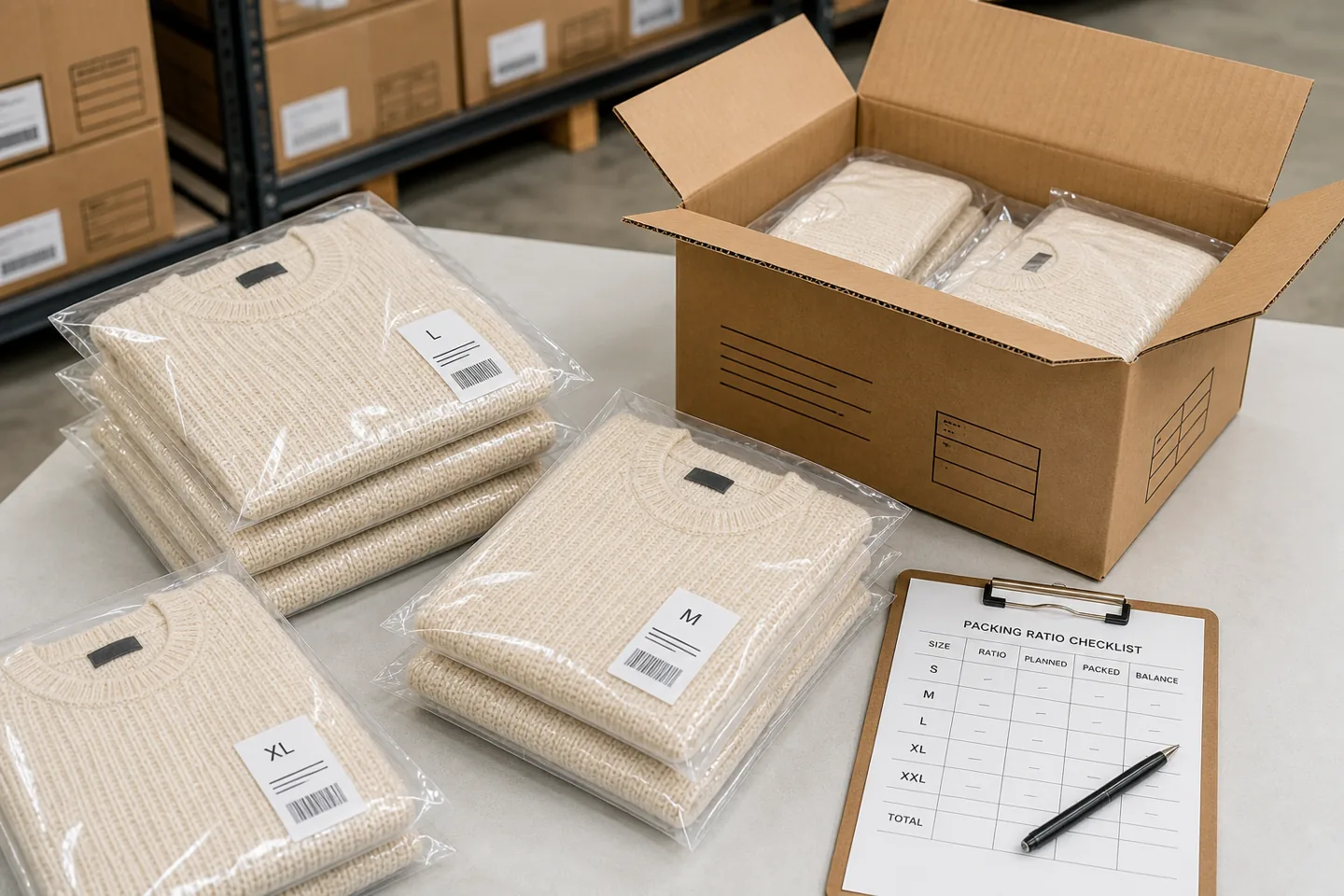
Freeze the inbound plan before labels are printed
Create the FBA workflow in the seller's current Seller Central account, confirm the marketplace, shipment destination, SKU quantities, preparation owner and label files, then issue one controlled pack specification to the factory or prep partner. Platform assignments, requirements and files can change, so do not reuse labels, carton addresses or screenshots from a previous shipment.
Separate four layers: the saleable sweater; the individual protective pack; the master carton; and transport or pallet handling. The buyer controls the Amazon account and inbound plan. The supplier can execute approved artwork and packing instructions, but should not guess a destination, barcode or prep requirement from a product name.
Choose and control the unit identifier
Amazon's current guidance explains that products may be tracked by a manufacturer barcode, an Amazon barcode such as FNSKU, or in some cases a Transparency code. The correct choice depends on the seller's listing, barcode setting, eligibility and programme. Obtain the exact approved file or identifier for every style-color-size SKU from Seller Central.
| Layer | Purpose | Control check |
|---|---|---|
| SKU/ASIN record | Seller's catalogue identity and offer | Matches style, color, size and listing variant |
| Unit barcode | Identifies the individual sellable unit | Exactly one scannable intended identity remains visible |
| Unit protective pack | Protects and keeps the sweater together | Barcode remains readable after packing |
| FBA box label | Identifies the shipment carton in the current plan | Applied to the correct finalized carton |
| Carrier label | Moves the carton on the selected transport leg | Does not obscure FBA or required carton information |
Prevent barcode conflicts
Map every unit code to style, color, size, revision and pack type in a master list. Scan a printed production label with the intended scanner or application before bulk application. Check contrast, quiet area, placement, print quality and whether a folded polybag, hangtag or label overlap makes the code unreadable.
Amazon advises covering or removing conflicting original barcodes where its workflow requires a different unit identifier. The required treatment depends on the active plan; never cover legally required product information or use an unapproved substitute label. Keep retailer, warehouse and customs labels distinct from marketplace inventory identification.
Specify apparel unit preparation
Amazon's seller guidance lists apparel, fabrics and textiles among products that need bagging and describes transparent, sealed bagging, readable external barcode placement and a suffocation warning for bags with a qualifying opening. The current Seller Central product-preparation instructions are controlling, including market-specific language and measurement details.
For each sweater, state fold method, insert or board if any, polybag material and size, seal method, warning artwork, placement of size or brand sticker, barcode location and permitted hangtag condition. The bag must protect the garment without forcing deformation, trapping loose components or hiding the code. Confirm care, fiber, origin and other legally required labels remain on the product; FBA prep does not replace import or consumer-label obligations.
Build carton contents from accepted units
Pack only quality-released units. Decide whether a carton contains one SKU, a defined case pack or an approved mixed assortment. Record every carton number, contents by SKU, unit count, gross weight, external dimensions and carton sequence. Sum all carton content back to the final accepted PO and FBA shipment quantity before box labels are assigned.
A complete carton count is not enough. A carton labelled for one color and size that contains another can delay receiving and create inventory errors. If sorting, rework, partial shipment or a last-minute quantity change occurs after labels are generated, stop and rebuild the affected carton-content and label records instead of hand-editing an unverified sequence.

Apply shipment labels only to finalized cartons
Use the current FBA box labels from the active shipment plan and apply them where they remain visible, scannable and protected. Keep any carrier label, handling mark and destination mark from covering or confusing the marketplace label. The seller should confirm the current box-content submission method, routing, weight and dimension limits directly in Seller Central or with its authorised logistics provider.
Do not preprint an FBA box ID during general packaging if the final carton, shipment plan or assigned destination is not yet fixed. If the factory needs to close cartons before labels are available, use a controlled temporary carton ID and a documented process for later label application and scan verification.
Inspect a first packed unit and first carton
Before full run, inspect one finished sweater in its complete FBA unit pack and one master carton. Verify the correct variant, folds, bag closure, warning, external barcode, legal labels, hangtag, product protection and barcode scan. Then verify carton contents, dimensions, weight, carton mark, FBA label placement and records.
During final inspection, sample units and cartons across colors, sizes and sequences. Reconcile scan results with the master SKU file and carton matrix. Photograph representative approved packing only as traceable supporting evidence, not as a replacement for actual scan and count checks.
Choose factory prep or a separate prep partner deliberately
Factory-side prep can reduce handling when the listing data and approved labels arrive early. A prep partner can be useful when final platform labels, split destinations, bundling or returns processing are still uncertain. Compare the added handling, control points, transit, storage and error risk—not merely the quoted per-unit prep fee.
Whichever route is chosen, preserve a handover record: accepted quantity, SKU matrix, carton matrix, barcode file revision, label files, photographs, packing list, shipment booking and exception log. Import clearance, marketplace prep and final-mile appointment are separate responsibilities.
Buyer FBA knitwear checklist
- The active Seller Central shipment plan is the only label source.
- Each SKU maps to the correct style, color, size and unit barcode.
- Barcode conflicts are checked under the current marketplace rule.
- Unit bags, warnings and label placement follow the current instructions.
- Legal product labels remain separate from FBA preparation.
- Only quality-released units are packed.
- Every carton reconciles to the SKU and PO matrix.
- FBA box labels are applied only to final, verified cartons.
- First packed unit and carton pass scan, count and protection checks.
- Changes create a new controlled packing and label record.
Yushengda can execute buyer-approved unit packing, barcode and carton specifications for confirmed custom knitwear projects, subject to the final order and pack instructions. It does not control the buyer's Seller Central account or certify marketplace acceptance. Use the label and packaging checklist, carton assortment guide and carton transit-test guide, or send the SKU matrix, current FBA prep file and packing requirements for order-specific coordination.
Primary reference: Amazon Sell, FBA prep, packaging and labeling guide, for current seller-facing explanations of barcodes, bagging, labels and shipment preparation. Requirements can vary by marketplace, category, listing and active workflow, so confirm the live Seller Central instructions before production. Competitor content was reviewed only for buyer questions and coverage gaps; no rules, claims, wording, images or examples were reused.