Run a remote knitwear factory video audit as a structured supplier screen: verify the legal entity and address, follow one relevant sweater route from yarn to packing, compare live observations with controlled documents, and record questions and evidence. A video call can confirm useful facts and expose gaps, but it cannot certify capacity, social compliance, product safety or future bulk quality. Use it to decide what requires a sample, third-party audit or on-site visit.
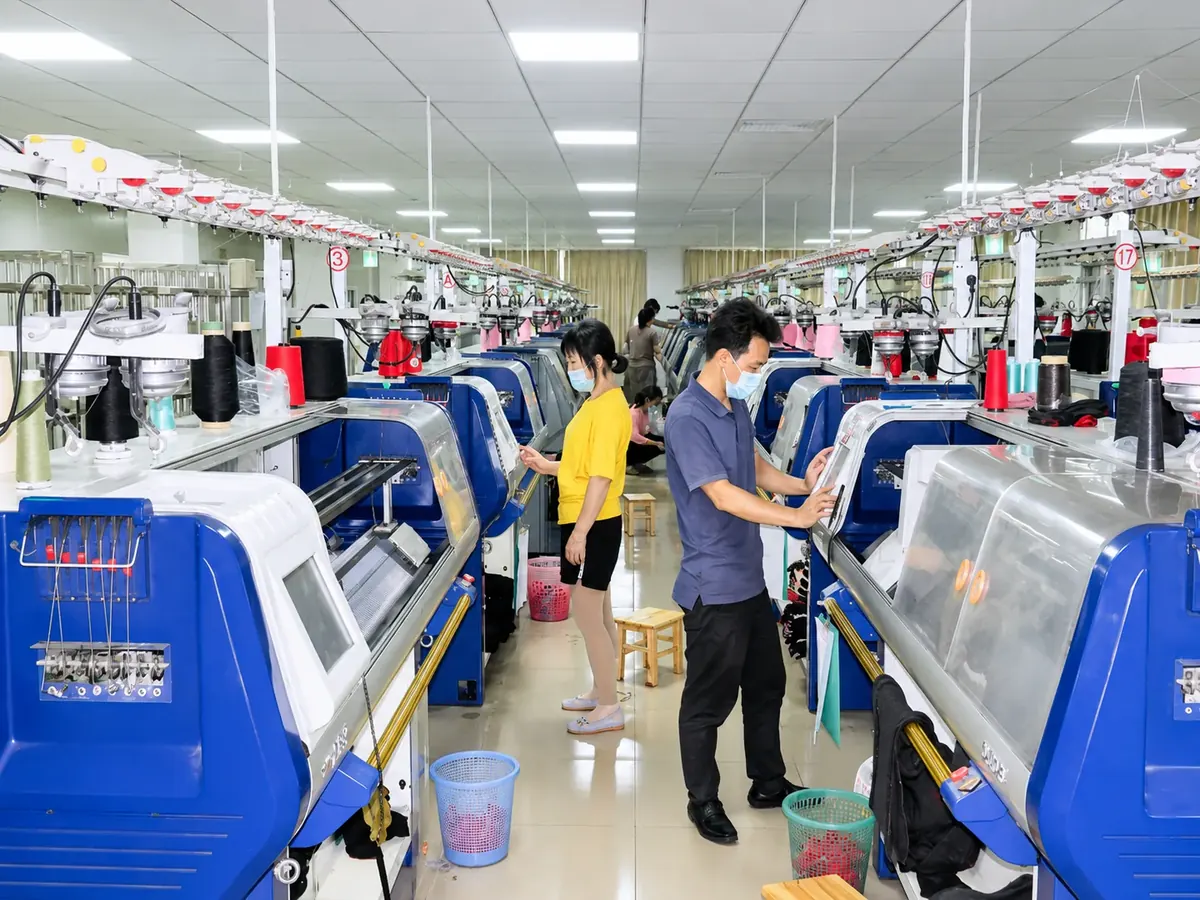
Define the decision the video audit must support
State whether you are screening a new supplier, qualifying a specific product route, investigating a production issue or reviewing a repeat-order change. Name the sweater type, yarn direction, gauge range, stitch structure, finish, quantity, target date and destination. A generic “show your factory” call rarely produces evidence useful for a custom knitwear decision.
Set boundaries before the call. A remote walkthrough is not a formal management-system audit, social audit, fire-safety inspection or legal certification. ISO 19011:2026 provides guidance for management-system auditing and does not itself lead to certification; use qualified auditors and the correct programme when that level of assurance is required.
Request a controlled pre-call evidence pack
Ask for the legal company name, registered or operating address, responsible contact, product range, confirmed processes, sample route, quality-control flow and relevant project documents. For the proposed style, request a current tech pack or controlled brief, yarn specification, gauge and stitch explanation, sample photographs, measurement records and an outline production timeline.
| Question area | Evidence before or during call | What to compare |
|---|---|---|
| Identity | Legal entity, address, invoice details and named contacts | Whether commercial and operating information agrees |
| Product fit | Relevant sample, yarn, gauge and stitch records | Whether the route matches your actual design |
| Production route | Live walkthrough and process map | Which stages are internal or external |
| Quality controls | Approved reference, check records and hold process | How a defect is found and contained |
| Materials | Identified yarn, trim and lot records | Whether inputs can be linked to the sample |
| Capacity | Current work in progress and booking explanation | Current project availability, not machine count alone |
Use a live, evidence-led route
Agree a time zone, call platform, interpreter if needed and the person responsible for answering technical questions. Ask for a live walkthrough rather than a promotional reel, while respecting safety, privacy and customer-confidentiality restrictions. The host should be able to respond to reasonable follow-up questions, show identifying context and move through the requested sequence without substituting unrelated stock footage.
A useful knitwear route is: entrance or location context; yarn and trim storage; programming or development; relevant computerized knitting equipment; panel, linking or assembly work; washing or specialty finishing where used; quality inspection; packed-goods storage; and shipping handover. If a process is subcontracted, ask for the partner's role and how approved specifications, lots and quality requirements are controlled—not an unsupported claim that every step is in-house.
Follow one real style, not a polished showroom
Ask to see a representative sample or work in progress that resembles the intended route. Match its yarn code, composition, gauge, stitch structure, color, finish and revision to the supplied records. A chunky cable in wool blend does not demonstrate the same capability as a fine-gauge viscose jacquard or a washed cotton sweater.
Where live work is unavailable, record that limitation. An empty floor could reflect timing, shift pattern, seasonality or a different production arrangement; it does not prove either capacity or lack of capacity. Request dated evidence and a sample rather than drawing a definitive conclusion from one camera view.
Test process control with specific questions
Ask how buyer comments become the current production revision, who releases yarn and trims, how panels are identified, where first-off checks occur, who can place goods on hold and how corrective action is verified. Request an explanation of one non-sensitive example of a normal quality checkpoint, not a claim that “all items are inspected.”
For specialty washing, spray dyeing, brushing or embroidery, ask how the approved appearance is transferred to production and how controlled variation is judged. For color-critical orders, the call should lead to a physical standard or knit-down approval, because a phone camera and screen are not an adequate color standard.
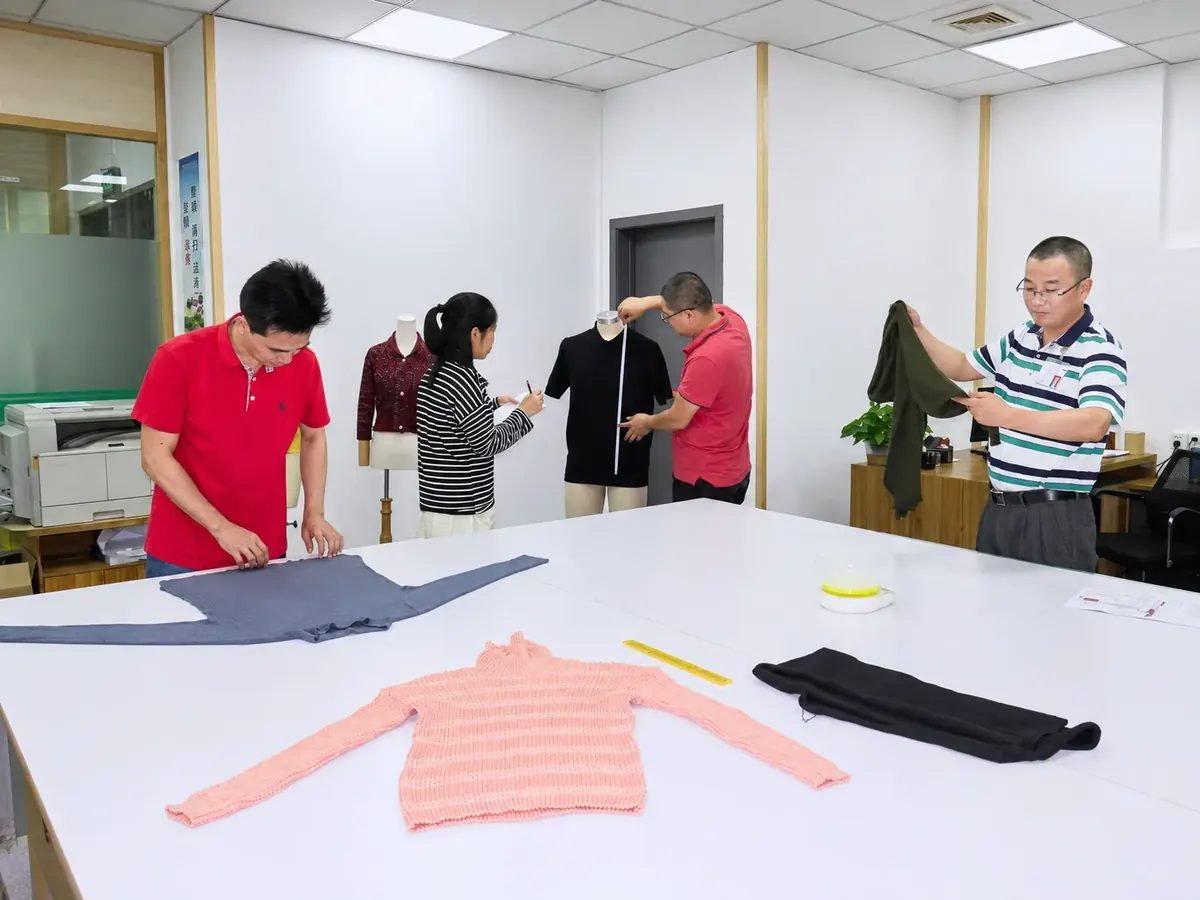
Check materials, capacity and subcontracting separately
Visible yarn cones do not prove they are approved, available or reserved for your order. Ask for the yarn article, lot where relevant, supplier status, quantity basis, custom-dye requirements and substitute-approval route. Visible machines do not prove an open production slot. Ask for the confirmed order calendar, gauge-specific suitability, current commitments and the earliest date at which a specific project could be assessed.
List any external knitting, linking, washing, printing, embroidery, testing or packing partner. Record the legal entity, location, process, quality responsibility and buyer approval requirement. The aim is supply-chain visibility, not an assumption that subcontracting is automatically a defect.
Score observations with evidence boundaries
Use a simple record for each topic: claim, evidence viewed, source and timestamp, unresolved question, risk, owner and next action. Separate “observed live” from “shown in a document,” “explained by the supplier” and “not verified.” This makes the decision reproducible and prevents a confident presentation from becoming a false fact in a sourcing file.
Red flags include an address or entity that cannot be reconciled, unwillingness to identify the actual route, documents that conflict with the product shown, unexplained changes in process ownership, or claims that cannot be supported with current evidence. A red flag is a reason to investigate, not proof of wrongdoing.
Close the call with a proportionate next step
For a low-risk initial screen, request a labeled development sample and controlled quotation. For a complex, high-value or regulated programme, commission a qualified third-party audit, testing plan or on-site visit before material commitment. For an existing supplier, use the video review to focus a later inspection on a specific risk rather than duplicating a general tour.
Send written minutes containing what was confirmed, assumptions, open items, owners and dates. Do not release bulk based only on a video call. Bulk authorization should still follow the approved sample, specification, materials, quality plan, commercial terms and capacity confirmation.
Buyer remote video-audit checklist
- The audit decision, style and required evidence are defined.
- Legal entity and operating address are reconciled.
- The route is live, structured and responsive to follow-up questions.
- One relevant product is compared with controlled records.
- Internal and external processes are identified separately.
- Yarn, gauge, stitch, finish and sample revision are traceable.
- Quality holds and corrective action have named owners.
- Capacity is discussed as a current project-specific booking question.
- Observations are distinguished from supplier explanations.
- A sample, audit, visit or commercial next step closes each gap.
Yushengda can provide project-relevant production information and discuss confirmed custom-knitwear routes from 3GG–16GG, subject to the project. A video walkthrough is not evidence of a universal capacity figure, certification or guaranteed delivery. Use the capability-verification guide, social-compliance evidence guide and third-party inspection guide, or send the style, quantity, finish and supplier-qualification questions for a structured remote review.
Primary reference: ISO, ISO 19011:2026 Guidelines for auditing management systems, for the distinction between audit guidance and certification; ISO 9001 Auditing Practices Group, Remote Audits, for considering ICT in an audit programme. These sources do not prescribe a knitwear video-tour checklist. Competitor material was reviewed only for current buyer questions and content gaps; no claims, scoring thresholds, cases, wording or images were reused.