Validate sweater barcode labels by locking the product data first, then approving the symbol type, encoded number, human-readable text, size, quiet zones, contrast, substrate and placement. Print labels with the production-intended printer and material, apply them to the actual polybag or hangtag, and scan representative units before bulk packing. A barcode image that scans once from a screen is not proof that every packed color-size SKU is correct or scannable.
Start with controlled product data
The brand or retailer should own the identifier assignment and tell the factory which approved data belongs to every sellable variant. Build one controlled table containing style, color, size, internal SKU, approved GTIN or retailer code where applicable, barcode type, human-readable text, price field if required, label version and placement. Do not ask a factory to invent GTINs, reuse another product’s number or infer a missing size mapping.
One visual sweater style can contain many inventory units. Oatmeal small, oatmeal medium and charcoal medium may require different identifiers even when the packaging looks identical. Freeze the variant table before printing, give it a revision number and name the person authorized to release changes. If a retailer supplies its own label file or ticketing guide, record the applicable version and destination channel.
Approve the symbol and the label as separate layers
The encoded identifier, barcode symbology and symbol dimensions are technical controls. Brand name, product description, color, size, price and typography are label-layout controls. Check both layers. A label can contain the correct number in readable text while the bars encode a different number; it can also encode correctly while the printed size or color is wrong.
| Control layer | Approval evidence | Common packing risk |
|---|---|---|
| Master data | Revision-controlled variant table from the brand or retailer | Two sizes assigned the same identifier |
| Barcode artwork | Approved symbology, encoded value and dimensions | Artwork stretched to fit a layout |
| Print result | Production printer, ink, stock and verification sample | Bars bleed, fade or lose contrast |
| Placement | Photo or drawing on the actual bag or hangtag | Wrinkles, seams or glare cross the symbol |
| Packed SKU | Scan-to-variant reconciliation record | Correct label applied to the wrong sweater |
Protect dimensions, contrast and quiet zones
GS1 explains that barcode quality depends on factors including symbol dimensions, print quality, contrast and clear quiet zones around the symbol. Do not resize a released barcode disproportionately, crop its surrounding clear area, place text or borders inside that space, or treat a screenshot as production artwork. Ask the identifier owner or qualified barcode provider for an output suitable for the specified print process.
Review the production-intended label stock, ribbon or ink and printer settings. Glossy bags, transparent film, textured hangtags, curved surfaces, creases and dark contents behind a clear label can change scanning conditions. If a barcode is printed on a clear substrate, confirm the required background rather than assuming the sweater color will provide consistent contrast.
Test the barcode in its final position
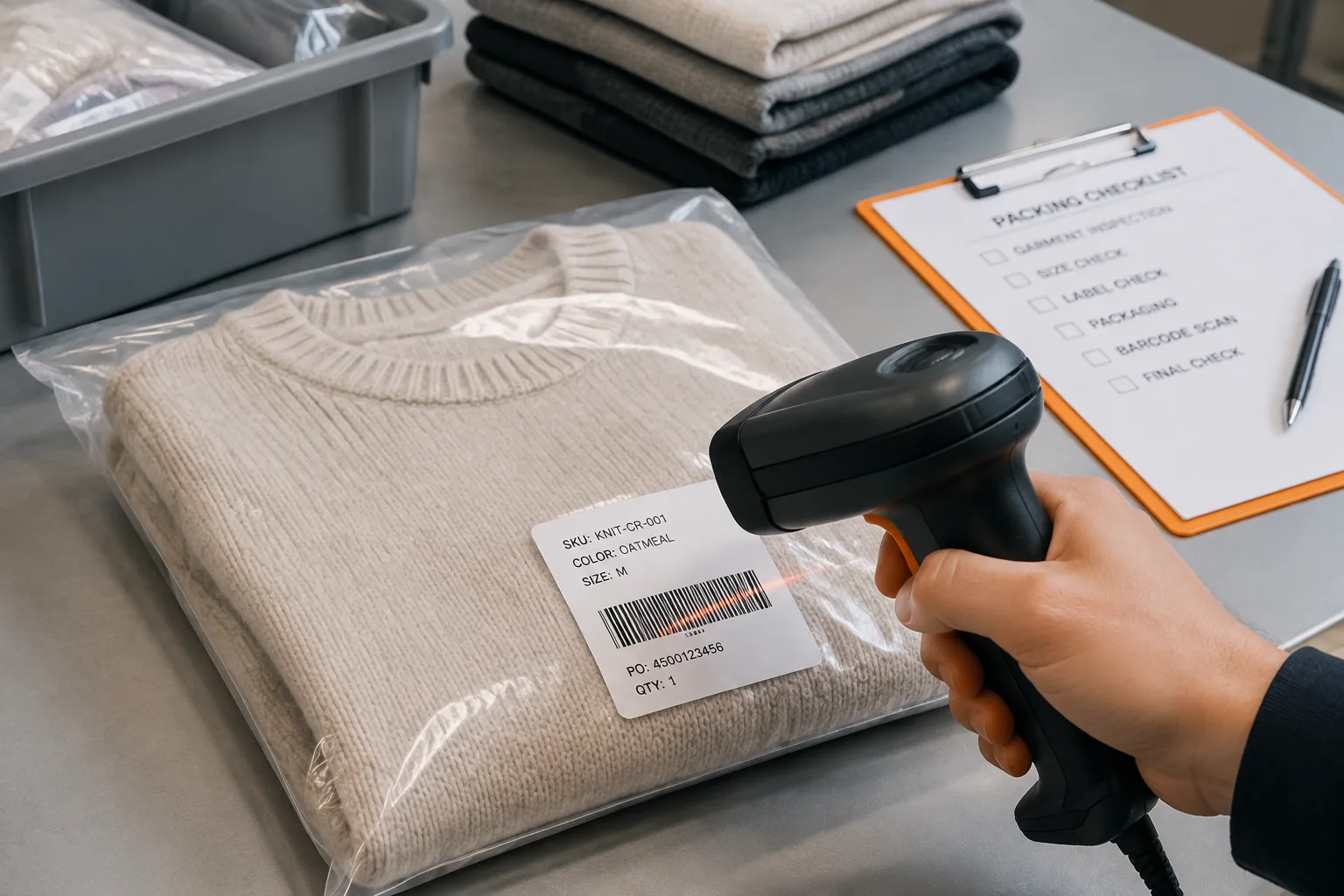
Apply the label to the intended polybag, hangtag or retail ticket and put the actual folded sweater inside. Keep the symbol away from bag seals, folds, gussets, punched holes, hangtag strings and curved edges. Define orientation and measured placement from stable package edges. For a transparent bag, test light and dark garment colors because the background and reflections may differ.
A handheld scan is a useful process check, but it is not the same as formal barcode verification. GS1 distinguishes verification, which grades symbol quality against standards using compliant equipment, from simply reading a code with a scanner. If a retailer, marketplace or distribution center requires a verification report, confirm its method, grade, sample and provider before production; do not replace it with a phone-app screenshot.

Reconcile the scan with the sweater inside
Before bulk packing, choose one sample from every color-size variant. Scan the label into a clean file or approved warehouse test environment and compare the returned identifier with the master data and the physical garment’s style, color and size. Also check human-readable text, care label, neck-size label, hangtag, polybag sticker and carton assortment. The barcode passing technically cannot catch a medium sweater packed in a small-labelled bag unless the process compares the contents.
During bulk, sample across printers, label rolls, packing lines, shifts and production timing. Retain the label roll or batch reference and inspection result. When a number changes, quarantine superseded labels and document destruction or return; loose obsolete labels create a high-risk mix-up route. If a scan fails, hold the affected group and investigate artwork, printer, stock, placement and handling before reprinting.
Buyer barcode release checklist
- The brand or retailer owns and approves each identifier.
- Every style-color-size combination maps to one controlled record.
- Symbology, dimensions and human-readable text are specified.
- Barcode artwork has not been stretched, cropped or recreated.
- Quiet zones, contrast and print quality are protected.
- The production printer and label stock are used for approval.
- Placement is checked on the actual bag or hangtag.
- Each variant is scanned and reconciled to the sweater inside.
- Formal verification is arranged when the channel requires it.
- Obsolete labels are quarantined and traceable.
Yushengda can coordinate buyer-supplied label, packaging and inspection instructions for confirmed custom knitwear orders, including the agreed SKU and packing references. The brand, retailer or authorized standards adviser must supply and approve legitimate identifiers and destination requirements. Use the label and packaging checklist, carton assortment guide and Amazon inbound guide, or send the variant table, label files and receiving-channel instructions for project review.
Primary references: GS1, 1D Barcode Verification Process Implementation Guideline, for verification, quiet-zone and print-quality concepts; and the current GS1 General Specifications for authoritative symbol and placement requirements. Apply the edition and retailer rules relevant to the actual program. Competitor content was reviewed only to identify buyer questions and coverage gaps; no wording, figures, images, examples or claims were reused.