Approve steaming, pressing and blocking as controlled finishing operations, not as an informal way to make a sample look neat. Record the approved equipment category, heat or steam exposure, pressure, contact surface, blocking dimensions, rest time and packing condition. Review the production-intent garment after it relaxes. A sweater that reaches the right measurements only because an operator stretches it or presses it flat may change after packing, transport or the first care cycle.
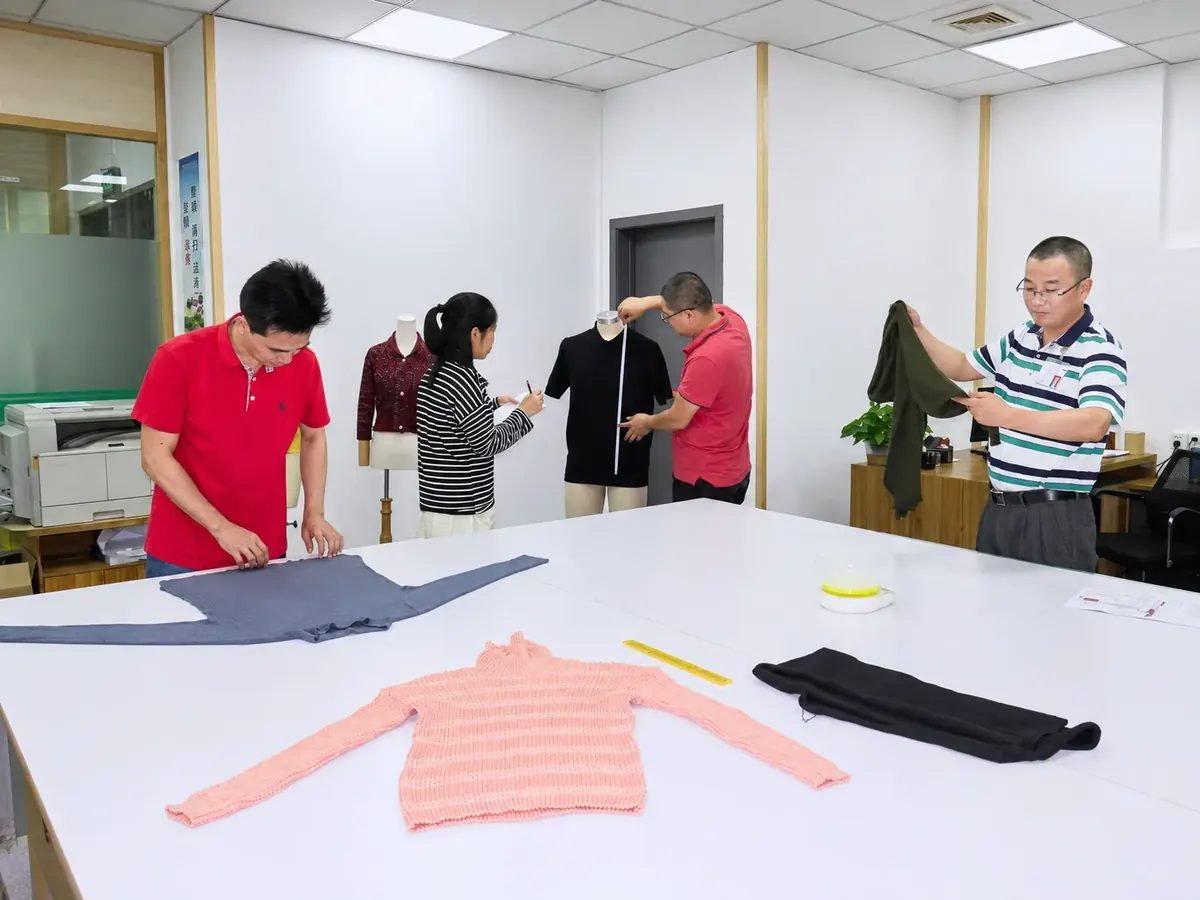
Why finishing pressure becomes a sourcing risk
Knitted fabric is flexible and directionally sensitive. Steam can relax or extend loops; pressure can flatten texture, create shine or alter edge recovery; blocking can set a temporary shape that changes when moisture and tension leave the garment. Cables, ribs, brushed surfaces, intarsia, embroidery, zippers and labels each respond differently.
Descriptions such as “light press” or “block to measurement” are not repeatable by themselves. One operator may use a hand iron and another a press table. One may stretch the body aggressively while another leaves it relaxed. The result can be a correct photograph but an unstable product. The buyer should approve the finishing route together with the yarn, gauge, stitch, construction and care route.
Define the finishing operation in the tech pack
Identify whether the garment is steamed, pressed, tunnel-finished, hand-blocked, board-blocked or simply conditioned. State the surface to be protected, the direction of any permitted tension and the dimensions to be reached after the garment rests. Record the equipment category, temperature or steam range when controlled, contact duration, pressure, cloth or mesh barrier, vacuum or suction if used, and the handling sequence.
For blocking, define the reference landmarks: center front, center back, shoulder points, armhole, side seam, hem, cuff and neckline. A finished chest width alone does not explain whether the shoulders were pulled outward or the side seams were allowed to relax. Show the maximum permitted stretch direction and identify areas that must not be pulled, such as artwork, embroidery or a zipper edge.
| Control | Approval evidence | Risk if omitted |
|---|---|---|
| Operation | Steam, press, block or conditioning route named | Different operators create different shape |
| Equipment | Equipment category and protective surface recorded | Texture, shine or heat damage varies |
| Pressure/tension | Permitted contact and stretch direction shown | Measurements are forced or motifs distort |
| Landmarks | Numbered points and relaxed POM method | “Block to size” cannot be audited |
| Rest condition | Time and handling before measurement/packing | Temporary shape is mistaken for stable size |
| Change control | Re-approval triggers and owner defined | Subcontractor changes stay invisible |
Approve a production-intent sample
Use the intended yarn or approved substitute, gauge, stitch, linking, trims, decoration and wash route. Finish the garment using the proposed production method. Let it rest under the agreed conditioning method before measuring. Photograph front, back, both sides and close-ups of texture, ribs, seams, artwork, collar, cuffs and hem.
Review the garment flat without stretching and then in the intended wearing position. Check whether shoulders remain level, sleeves hang naturally, the neckline sits correctly, ribs retain their structure, cables remain dimensional and the hem does not flare. Look for press shine, flattened loops, water marks, seam impressions, edge curl, scorching, needle lines made more visible by pressing and local distortion around labels or embroidery.
Record both the immediate finish and the rested finish. If the buyer receives only a freshly pressed sample, mark that limitation. A neat appearance immediately after pressing is not proof that the garment will retain its shape after folding, carton compression or normal consumer care.
Separate measurement approval from appearance approval
Use one section for relaxed measurements and another for surface and shape. Measurements should identify the size, condition, point-of-measure route, actual value and tolerance. Appearance should describe texture, shine, drape, symmetry, seam behavior, rib definition, artwork alignment and any intentional finish effect.
Do not use steam or pressure to hide a construction problem. If a side seam is displaced before finishing, investigate panel matching or linking. If it moves only after blocking, investigate tension and relaxation. If a collar appears correct only while held, review recovery and attachment. The finishing operator should record observations neutrally rather than diagnosing the cause from one garment.
Protect texture, decoration and trims
Define no-contact or low-pressure zones for cables, raised stitches, brushed faces, embroidery, patches, prints, zippers, buttons, labels and heat-sensitive components. A protective cloth may reduce marking, but it does not prove that the approved hand or relief has been preserved. Compare the finished sample with the pre-finish reference under consistent lighting and at normal viewing distance.
For a cardigan, check placket straightness, zipper waviness and button security after finishing. For a jacquard or intarsia style, verify that blocking does not pull color boundaries or distort artwork. For a brushed or hairy surface, check whether pressure creates a directional shine or a visibly different nap. These observations belong in the approval record, even if the buyer ultimately accepts a deliberate effect.
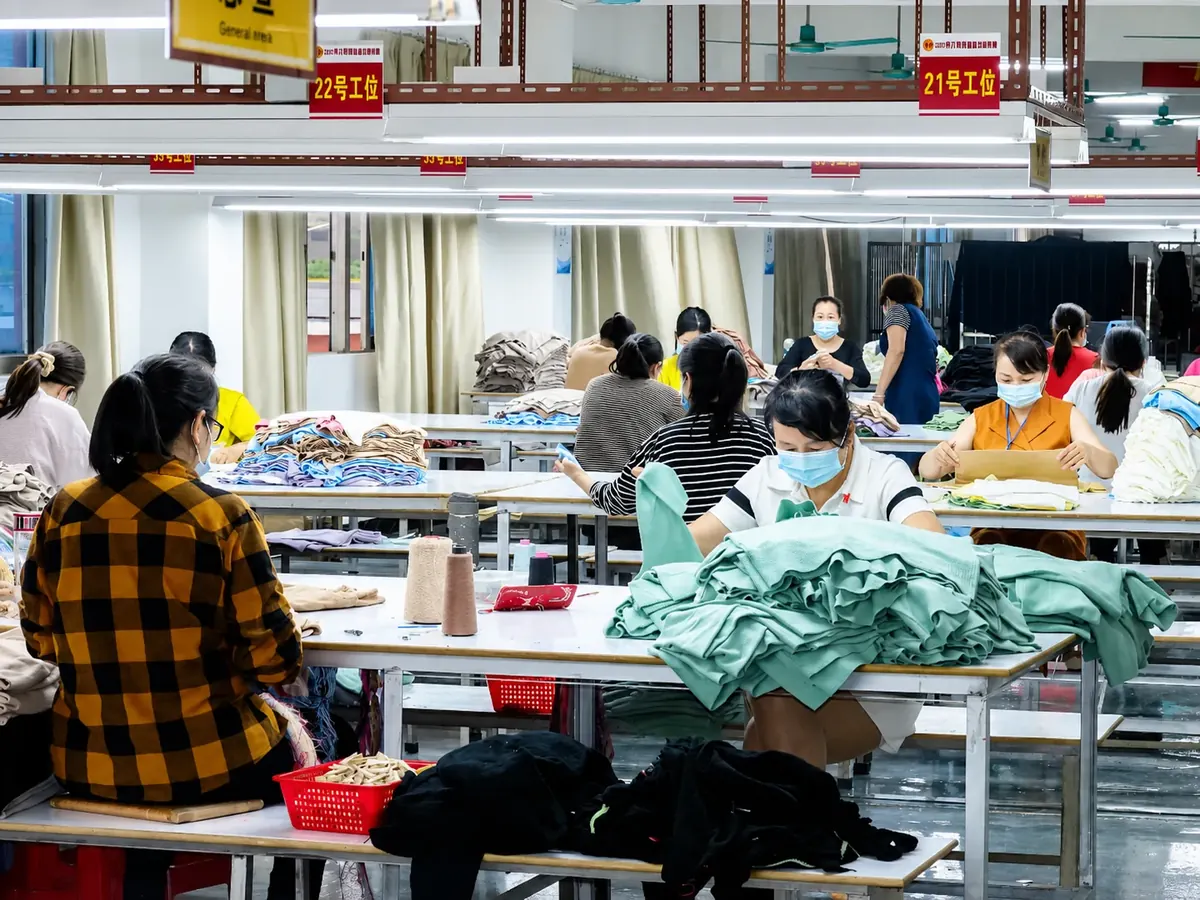
Test packing and recovery after finishing
After approval, fold or hang the garment using the intended packing method. Hold it for a representative period, then reopen and inspect fold lines, shoulder shape, sleeve pitch, collar, cuffs, hem, surface and decoration. If the sweater will travel compressed, include that condition in the trial. Do not re-press before recording the first-open appearance.
For recovery, state the handling sequence: lay flat, hang, wear or lightly steam only if the buyer permits it. Compare the garment at opening, after rest and after the agreed recovery observation. This separates a temporary fold or compression effect from a permanent dimensional or finishing problem.
Coordinate care claims with the finishing route
Consumer care instructions and factory finishing are related but not interchangeable. Woolmark’s public care guidance emphasizes following the product’s care instruction and using shape-preserving handling such as flat drying where required: Woolmark wool care guidance. Use the destination-market care requirement and the actual product tests to set the label; do not treat a finishing sample as proof that every care method is safe.
If the approved garment relies on a particular blocking or pressing step, ask whether that step is available after laundering in the target market. If not, the buyer should reconsider the claim, construction or tolerance before bulk. Yushengda can coordinate buyer-defined finishing and inspection requirements for confirmed custom knitwear projects, but the actual method and acceptance criteria must be agreed style by style.
Set change triggers before bulk starts
Require renewed review when the yarn or lot, gauge, stitch, wash route, machine, press surface, steam or heat exposure, blocking board, operator method, subcontractor, trim or packing route changes. Retain the former sample and record the new revision, reason, affected styles and buyer decision. A cost-saving change that preserves the measurement but changes surface, hand or recovery is still a product change.
Buyer checklist
- Finishing operation and equipment category are named.
- Pressure, tension and protected zones are shown.
- Blocking landmarks and relaxed measurement method are defined.
- Immediate and rested results are both reviewed.
- Texture, decoration, trims and shine have explicit checks.
- Packing compression and recovery are simulated.
- Care claims are supported by the appropriate product evidence.
- Change triggers and re-approval authority are recorded.
For related controls, see washed-knitwear recipe approval, post-wash appearance approval and measurement tolerances after washing. To review a project, send Yushengda the tech pack, yarn, gauge, finish route and target market before bulk release.