Control custom sweater weight by approving both a finished-garment weight range and the construction that creates it: yarn identity and count, number of ends, machine gauge, stitch structure, stitch length or density, measurements, trims and final finish. GSM measures mass per unit area of fabric; it does not by itself predict the weight, warmth, drape or cost of a fully fashioned sweater.
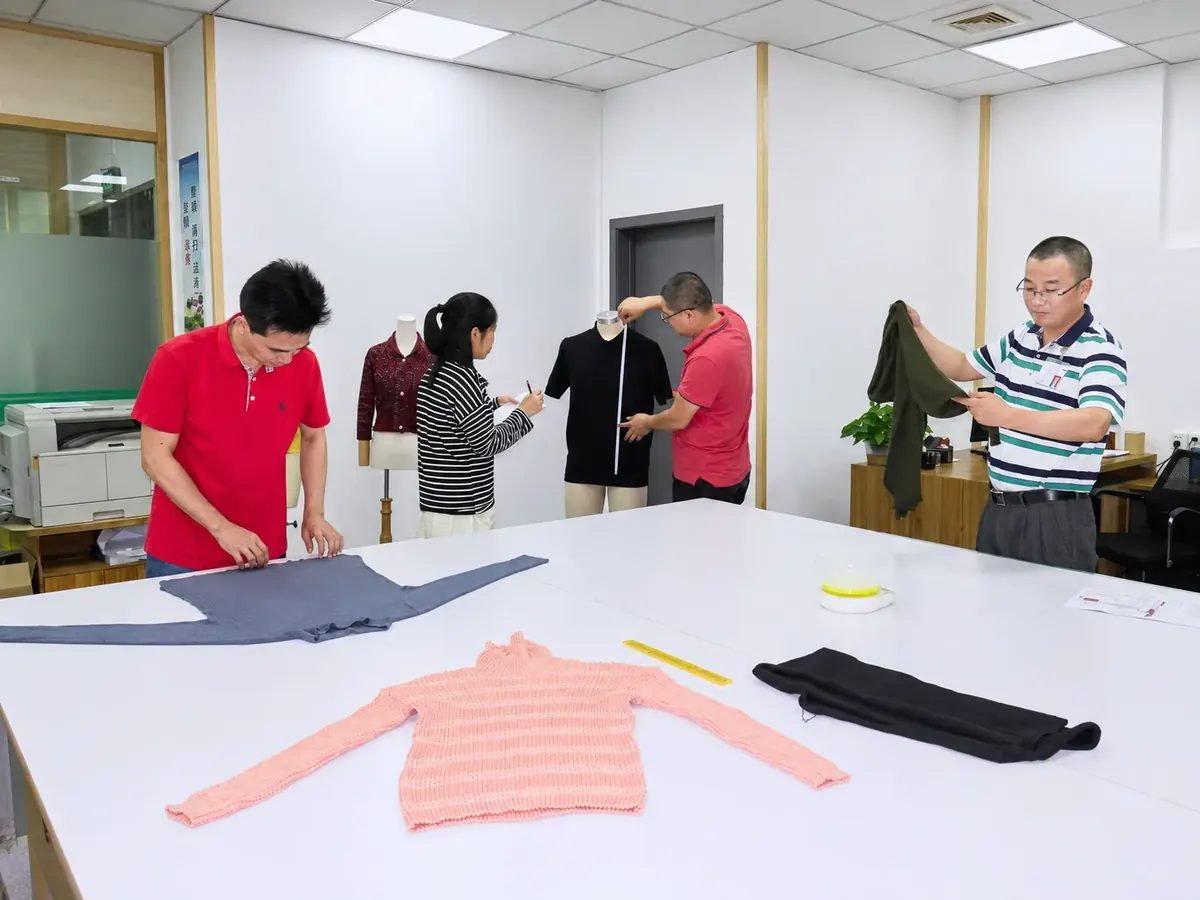
Separate three numbers that buyers often confuse
Yarn linear density relates yarn mass to length and may be expressed through systems such as Nm, Ne, tex or denier. Fabric mass per unit area is commonly reported in grams per square metre (GSM). Finished garment weight is the mass of the complete sweater, normally including its panels, ribs, collar, pockets, buttons, zipper, labels and other approved components.
These numbers are connected but not interchangeable. Two sweaters made from similar-GSM knitted material can weigh differently because their dimensions, silhouette, collar, ribs, pockets or trims differ. Two sweaters with the same total weight can feel different because one spreads the mass across an oversized area while another concentrates it in a smaller, denser construction.
| Control | Useful for | What it cannot prove alone |
|---|---|---|
| Yarn count | Describing yarn linear density | Finished density, garment weight or hand feel |
| Fabric GSM | Comparing mass per unit area under one method | Total garment mass or construction identity |
| Garment weight | Checking the complete approved size/style | Fiber, stitch density, performance or durability |
| Physical approved sample | Reviewing appearance, hand and construction together | Bulk consistency unless measurable controls are retained |
Why cut-and-sew GSM language can mislead sweater buyers
GSM is routinely used for roll goods such as jersey, fleece and French terry before pieces are cut and sewn. Fully fashioned sweaters are commonly knitted as shaped panels, so buyers may not receive a uniform roll of fabric from which a simple commercial GSM target was developed. Cables, jacquard, intarsia, ribs and fashioning can place different structures within one garment.
ASTM D3776/D3776M-20(2025) covers mass per unit area for most fabrics and provides multiple specimen options. ASTM notes that a small-swatch result applies to that sample and not necessarily to its source lot. For a structured sweater, the buyer must also define where a specimen comes from, whether cutting the garment is acceptable and how patterned zones are represented.
Build the target from yarn, gauge and stitch
State the exact yarn supplier or code where nominated, fiber percentages, count system, singles and ply construction, number of ends and approved color or lot controls. A converted yarn count does not guarantee the same bulk, loft or knitting behavior across wool, cotton, acrylic, viscose, cashmere and blends.
Record machine gauge and the actual stitch program. Gauge identifies needle spacing, not a universal thickness class. Jersey, rib, tuck, cable and jacquard consume yarn differently. Stitch length, courses and wales, tension, take-down and shaped-panel dimensions also affect material consumption. CottonWorks notes that yarn count, machine gauge, needle count and stitch length have a profound effect on knitted-fabric weight and shrinkage.
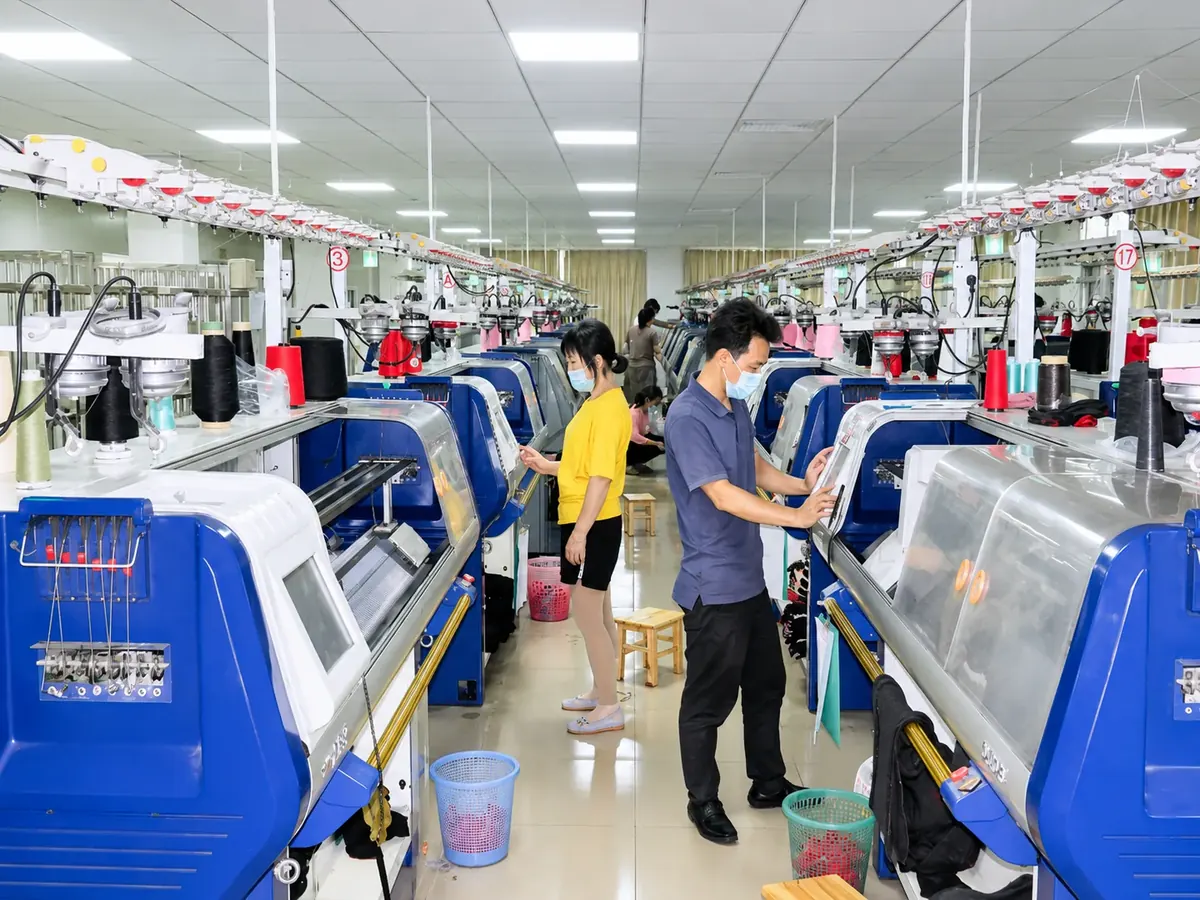
Approve weight only after the intended finish
Washing, softening, felting, brushing, steaming, pressing, spray finishing and drying can change dimensions, moisture condition and apparent bulk. Weigh the sample after the intended process and an agreed conditioning period. A damp, freshly steamed or unusually dry garment is not comparable with a conditioned approval sample.
Record the scale resolution, whether removable packaging is excluded, which trims are included, sample size and color, conditioning, number of specimens and reporting precision. Use one protocol across suppliers. Do not compare a naked development sample with a packed production unit or compare size S with size XL.
Set a range by size instead of one number for every unit
Choose a base size and approve its finished weight range with qualified technical input. Then establish expected size grading because larger panels and longer ribs normally consume more yarn. Cardigans with buttons, zippers or pockets need component allowances that a simple percentage may not capture.
A tolerance should reflect measurement variation, yarn variability, structure, finish, scale accuracy and commercial risk. It must not be invented after bulk goods are weighed. If color treatments or specialty finishes materially affect the result, approve color-specific evidence rather than hiding all colors inside one wide tolerance.
Use weight as a diagnostic signal, not automatic proof
An underweight sweater can indicate fewer ends, a finer substitution, longer stitch length, reduced dimensions, missing components or a different finish. An overweight sweater can indicate a heavier yarn, tighter structure, oversized measurements, excessive moisture or added trims. The scale identifies a difference; it does not identify the cause.
When a result is outside range, hold the affected units and compare yarn identity, panel dimensions, stitch data, garment measurements, trim records and finish batch. Check visual coverage, hand feel and required performance. Do not “correct” weight by changing dimensions, over-steaming or adding moisture.
Connect weight control to quotation and consumption
Ask suppliers to show whether price is based on an approved sample, estimated garment consumption, yarn price, wastage, trims and finishing. A low quote may be based on a lighter construction or different dimensions. Normalize those assumptions before comparing unit prices.
After the final sample, reconcile estimated and actual consumption and document approved departures. Keep a sealed sample, yarn reference and production specification. For repeat orders, reapprove substitutions or construction changes instead of treating the previous garment weight as the only identity check.
Buyer checklist for sweater weight approval
- Yarn unit, count, ply, ends, fiber content and code are explicit.
- Gauge and stitch structure are recorded.
- Finished measurements and size grading are locked.
- GSM and complete garment weight are not treated as synonyms.
- Weight is checked after the approved finish and conditioning.
- Scale, included components, sample size and color are defined.
- Base-size range and size-specific expectations are approved.
- Bulk outliers are investigated by yarn, knitting, trim and finish data.
- Quote comparisons use the same construction and consumption basis.
Yushengda develops custom knitwear in wool, cotton, acrylic, viscose, cashmere and blends across 3GG–16GG, subject to the project. Use the yarn count and ply guide, the sweater gauge guide, or send your reference sample, size chart, yarn direction and target hand feel for an RFQ discussion.
Technical references: ASTM D3776/D3776M-20(2025), active test methods for fabric mass per unit area, and CottonWorks’ Proper Processing of 100% Cotton Knit Fabrics. Apply the relevant method and acceptance range with qualified textile guidance; neither source prescribes a universal finished-sweater weight.