A clear custom sweater tech pack helps a knitwear manufacturer understand what you want before yarn is ordered or a sample is made. For washed knitwear, it must describe both the knitted garment and the finish applied after assembly. This checklist gives fashion brands and buyers a practical starting point for requesting an accurate quotation and a useful first sample.
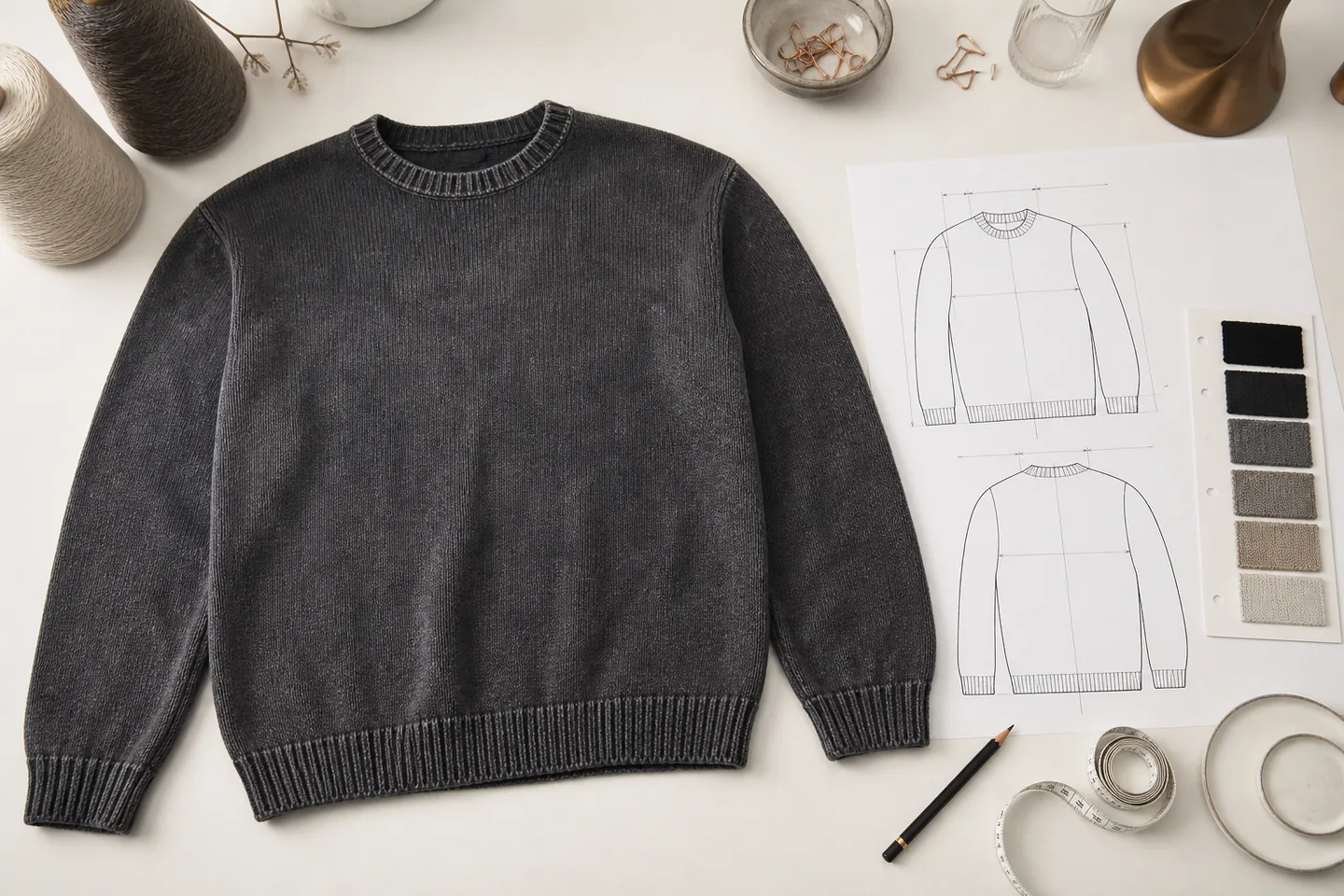
1. Begin with the commercial brief
Put the style name, season, intended customer, target quantity, number of colors, target price and required delivery date on the first page. Include the destination country and preferred trade term because packaging, freight and delivery expectations can affect the quotation. Yushengda supports EXW, FOB and DDP projects, with an MOQ starting from 100 pieces per color for suitable developments.
State whether the document is for an initial feasibility review, a development sample or an approved bulk specification. Add a revision number and date to every issue. A simple version history prevents the factory, buyer and designer from working from different files.
2. Draw the sweater from the front and back
Provide clean flat sketches showing the neckline, shoulder shape, body length, sleeves, cuffs, hem, placket, pockets and visible seams. Add enlarged detail views for unusual ribs, cables, jacquard, embroidery, distressing or hardware. If a reference garment is important, explain which features should be followed and which should not. Reference photos alone cannot communicate measurements or construction priorities.
3. Specify yarn, gauge and knit structure
List the preferred fiber composition, yarn count if known, target handfeel, weight direction and color reference. Wool, cotton, acrylic, viscose, cashmere and blended yarns respond differently during knitting and finishing, so a substitute should be approved rather than assumed. Identify the intended gauge and stitch structure, or ask the factory to recommend a practical combination. Yushengda develops knitwear from 3GG to 16GG, but the final choice depends on yarn thickness, silhouette and surface effect.
4. Describe the washed finish visually
Words such as vintage, faded, snow washed and worn-in are subjective. Include close-up reference images and describe the desired shade loss, contrast, handfeel and areas of emphasis. Note whether ribs, seams and edges should look stronger or softer than the body. If some variation between garments is acceptable, define the intended character instead of requesting impossible visual uniformity.
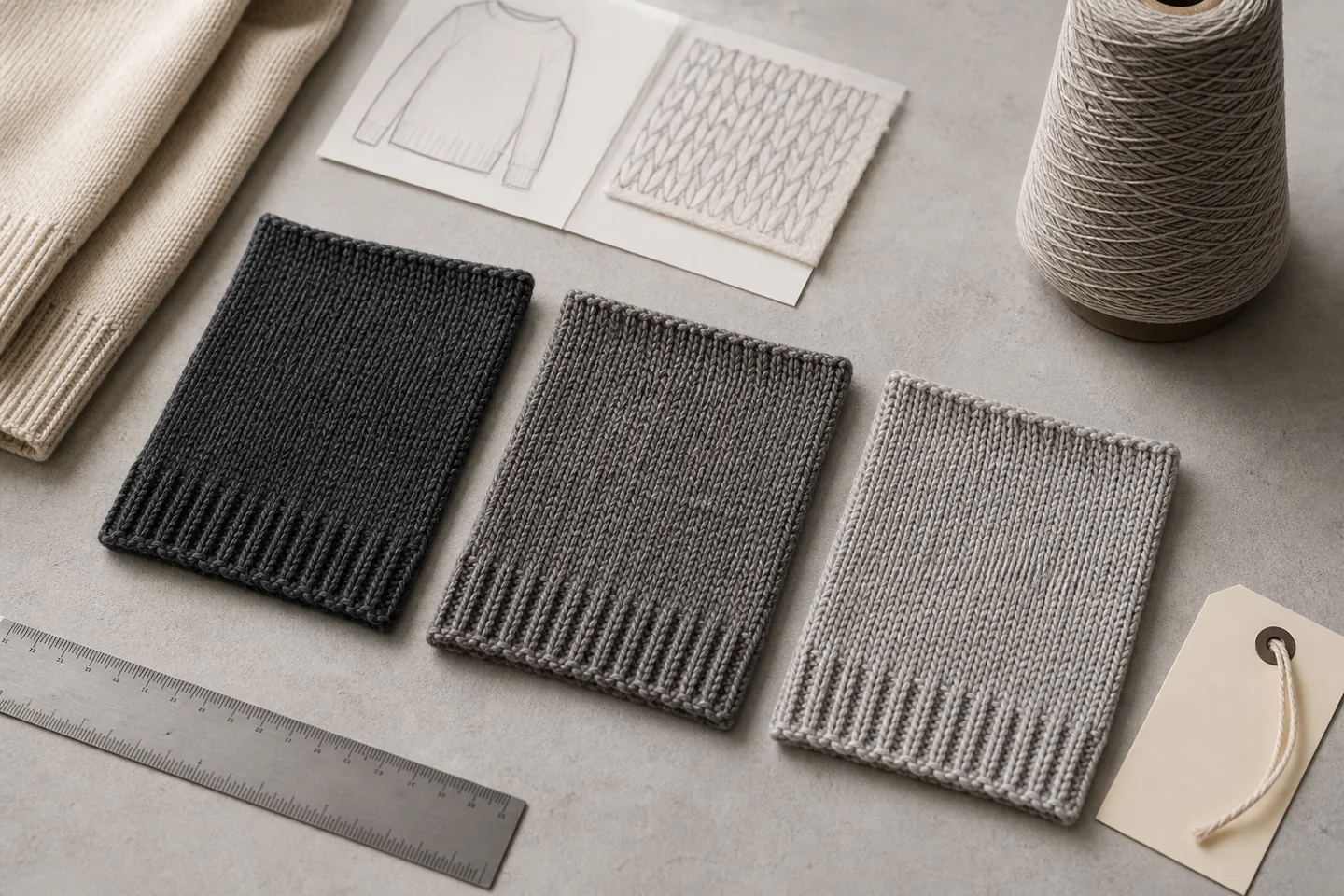
A useful approval system may include one center reference and agreed lighter and darker limits. The factory can then compare trial samples and bulk pieces with a range instead of a vague adjective. This is especially important when a specialty finish is meant to create controlled individuality.
5. Build a complete measurement chart
Include the base size, graded sizes, point-of-measure diagrams, measurement method and tolerance for each point. Typical sweater measurements include chest width, body length, shoulder width, sleeve length, bicep, cuff opening, hem opening and neckline dimensions. State whether measurements apply before or after washing. Finished measurements should normally be evaluated after the agreed finishing process because knit structures may relax, shrink or grow.
6. Add trims, labels and packaging
Show the material, size, color and placement of buttons, zippers, patches, embroidery and other trims. Provide artwork and placement dimensions for the main label, size label, care label and hangtag. Confirm folding, polybag, carton marking and barcode requirements. If care instructions or fiber declarations require legal review in the destination market, assign responsibility clearly rather than asking the supplier to guess.
7. Define the sample approval checklist
Review more than the overall appearance. Check measurements, silhouette, yarn and color, stitch definition, seam quality, rib recovery, handfeel, wash effect, shrinkage, labels and trim placement. Record every comment against the relevant page or measurement point. Photos with arrows are useful, but written instructions should explain the required correction.
Sampling at Yushengda typically takes 7–15 working days, depending on yarn sourcing, stitch trials and finishing complexity. The sample fee starts from US$30 and is refundable when the corresponding order reaches 100 pieces. Bulk production normally takes 25–45 days after the deposit is received, subject to the confirmed project.
What to send for a faster review
- Front and back flat sketches
- Measurement chart with tolerances
- Fiber, yarn, gauge and stitch direction
- Color standard and washed-finish references
- Trim, label and packaging files
- Quantity per color and size breakdown
- Target price, delivery date and destination
- Revision number and approval status
A tech pack does not need to answer every technical question before the first conversation. It should make your priorities visible and separate confirmed requirements from areas where you want manufacturing advice. Learn more about our custom washed knitwear and OEM/ODM development process, or send your tech pack for a practical production review.