Prevent visible lines in custom sweaters by locking yarn lots and knit settings, approving a representative first panel, inspecting panels before linking, and checking again after the complete finish. When a line appears, record whether it follows the wales or courses, its repeat, face and back appearance, process stage and lot identity. “Needle line” and “barré” describe different evidence; neither proves one root cause from a photograph.
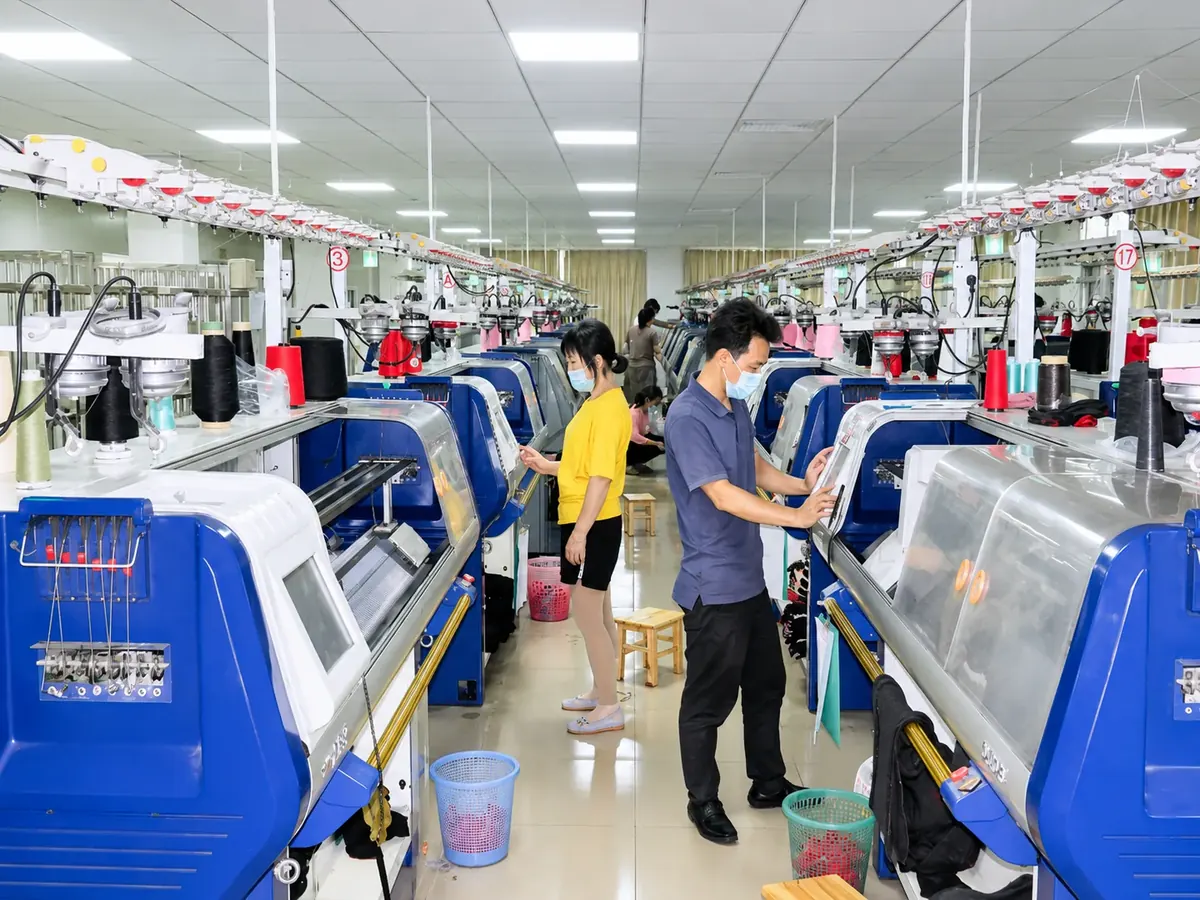
Classify the visible direction before naming the defect
In a knitted panel, wales run through aligned stitch columns while courses run across rows of loops. Mark those directions on the physical sample rather than calling a mark “vertical” or “horizontal,” because a photo or panel can be rotated. A narrow continuous line following one or several wales is different evidence from a repeated band following courses.
CottonWorks classifies a needle-line example as a warp-line or vertical-line defect in double-knit fabric, while its coarse-yarn and missing-yarn examples can produce course-direction barré. These references help buyers describe an observation; they do not diagnose every flat-bed sweater. A visible line can also be a seam impression, pressing mark, color boundary, intended stitch feature or lighting effect.
Understand why barré is an appearance symptom
Cotton Incorporated’s TRI-1002 technical bulletin treats barré as a repeated yarn-direction appearance and discusses physical, optical, dye-response and geometric differences that may contribute. This matters because a band becoming obvious after washing or coloration does not prove that finishing created it. The process may reveal a difference already present in yarn or knit structure.
Possible investigation inputs include yarn lot and linear density, twist, color response, package condition, feed or knitting tension, stitch length, machine setup and later processing. More than one variable can create a similar appearance. Buyers should request a documented comparison from the responsible technical party instead of prescribing a needle change or redye from a phone image.
Do not confuse needle lines with every wale-aligned mark
A wale-aligned line can justify checking needles and related knitting elements, but it is still an observation until correlated with the panel, machine position and production record. Groz-Beckert documents one specific mechanism in which an almost imperceptibly bent open hook can create a vertical line that may become visible only after finishing. Its G00 technology is one manufacturer-specific prevention approach, not proof that every line has that cause or that a factory uses that needle.
Record whether the mark is continuous, intermittent, limited to one panel, repeated at the same position, or present across several panels. Compare the technical face and back. Check whether it crosses a seam unchanged or begins beside linking. These facts narrow the investigation without turning the buyer’s description into an unsupported machine diagnosis.
Build prevention gates before bulk knitting
- Approve the yarn specification, supplier reference and lot-control plan.
- Confirm gauge, stitch structure, density and finished handfeel through development.
- Keep approved knit-downs or panels for visible surface comparison.
- Identify intentional stripes, marl, slub or irregular effects so they are not treated as defects.
- Approve a representative first-off panel after relaxation and any relevant trial finish.
- Inspect panels under consistent lighting before linking hides their production order.
- Segregate yarn and work in progress by traceable lot and style identity.
- Recheck line visibility after the full wash, spray, brush, steam or finish route.
- Define hold, repair, replacement and approval authority before final inspection.
For specialty-finished knitwear, approve both an appearance target and a bounded variation range. A desired vintage or uneven surface should not silently authorize a repeated structural line. Conversely, a deliberate stripe or engineered texture should be documented so inspectors do not reject it based on a generic defect list.
Capture evidence that supports a controlled investigation
Take one full-panel image, one repeat view and one close-up, then photograph the reverse when useful. Include a scale only if it does not cover the symptom. Record style, color, size, panel position, yarn lot, knitting batch, process state, date and affected quantity. Preserve the physical sample and avoid steaming, stretching or washing the only evidence before review.
Map related scope: other panels from the same yarn lot, machine run or finishing batch; linked garments containing those panels; and unaffected comparisons. One marked piece does not prove the entire order is defective, while one clean piece does not release a related lot. The hold should expand or contract based on traceable relationships and inspection evidence.
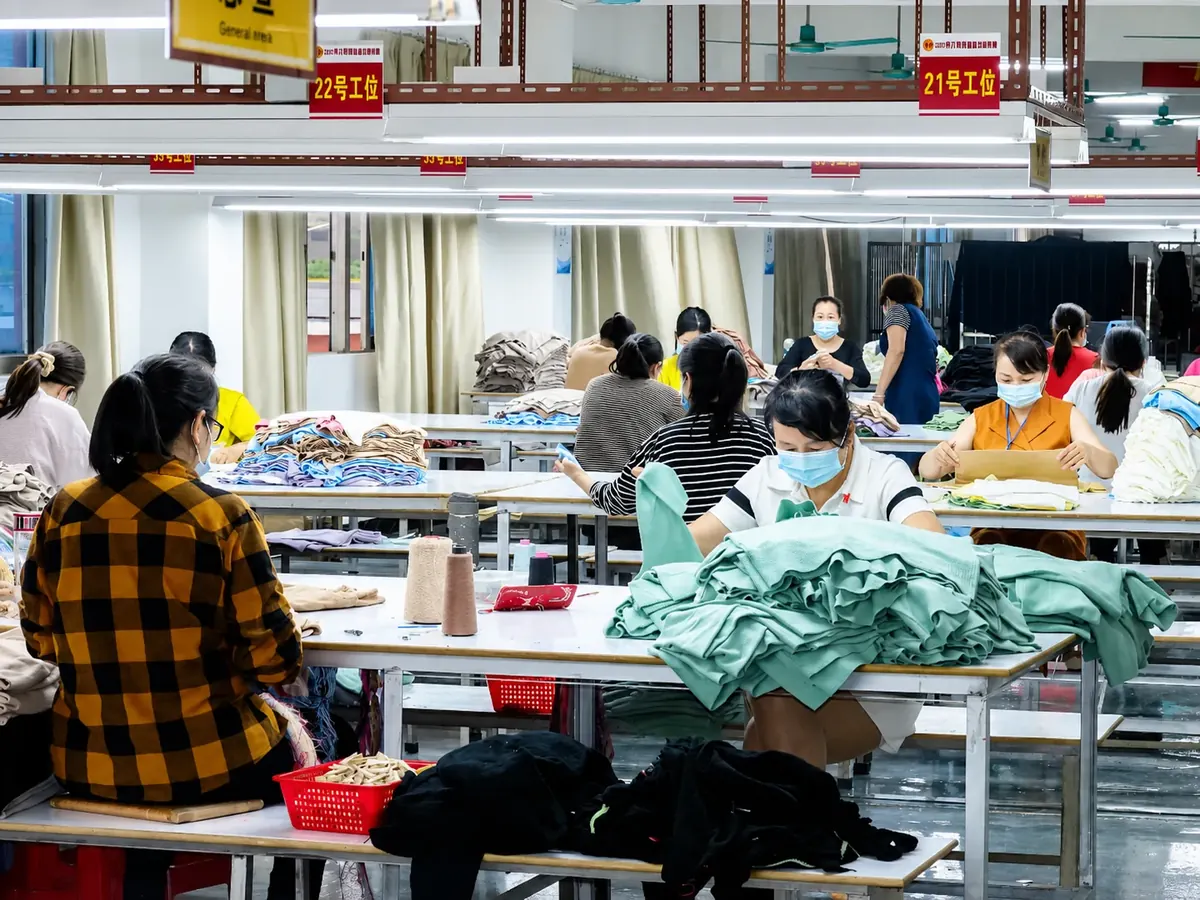
Use stage comparisons without overclaiming cause
Compare available yarn, greige panel, trial-finished panel, approved sample and bulk garment. If a line exists before finishing and remains afterward, that sequence is useful evidence. If it appears only afterward, record the change but keep multiple explanations open until a qualified investigation isolates the variable. Lighting, moisture and surface orientation can alter visibility.
A controlled trial should change one relevant input or process at a time where practical, retain a control, assign new sample identities and define the resubmission decision. “Adjusted machine” or “washed again” is not a complete corrective-action record. The responsible team should explain what changed, what quantity it represents and what comparison supports release.
Set a buyer decision rule, not a universal tolerance
There is no single responsible line-width or barré tolerance for every sweater. Visibility, location, color, stitch, gauge, intentional effect, retail position and brand standard all matter. Define an approved physical reference, observation conditions, defect class and sampling or screening plan for the actual style.
For a prominent front-panel line, the commercial consequence can differ from a faint mark hidden inside a textured area. Record that decision in the style-specific defect library. If the cause may affect performance rather than appearance alone—for example an open loop or damaged structure—route it to the applicable function or strength assessment instead of approving it as a cosmetic variation.
Needle-line and barré release checklist
- Wale and course directions are marked on the retained sample.
- The record separates line, band, shade and seam-related observations.
- Full-panel, repeat, close and reverse views share one traceable ID.
- Yarn lot, panel, knitting batch and process state are recorded.
- Affected and related work has an explicit hold status.
- Any root-cause statement is supported by records or a controlled comparison.
- Corrected material has a new identity and approval gate.
- Final release names the exact quantities and restrictions.
Yushengda supports 3GG–16GG custom sweater development and customer-nominated third-party inspection. Use the workmanship defect-classification guide, the colorfastness specification guide, or send your yarn, stitch reference and line-evidence photos for a project-specific discussion.
Technical references: Cotton Incorporated TRI-1002: Barré, the CottonWorks Defects Glossary, and Groz-Beckert’s Prevention of Lines technical sheet. These sources describe defect evidence and selected mechanisms; final diagnosis and corrective action remain material-, machine- and process-specific.