Set a sweater repair standard before bulk production by listing each likely defect, permitted repair method, prohibited locations, appearance and strength requirements, maximum repeat frequency, approval authority and reinspection rule. Repair should restore the agreed product without hiding structural weakness, changing measurements, shade or hand, or creating a new defect. If that outcome cannot be demonstrated, replace or reject the unit rather than repeatedly reworking it.
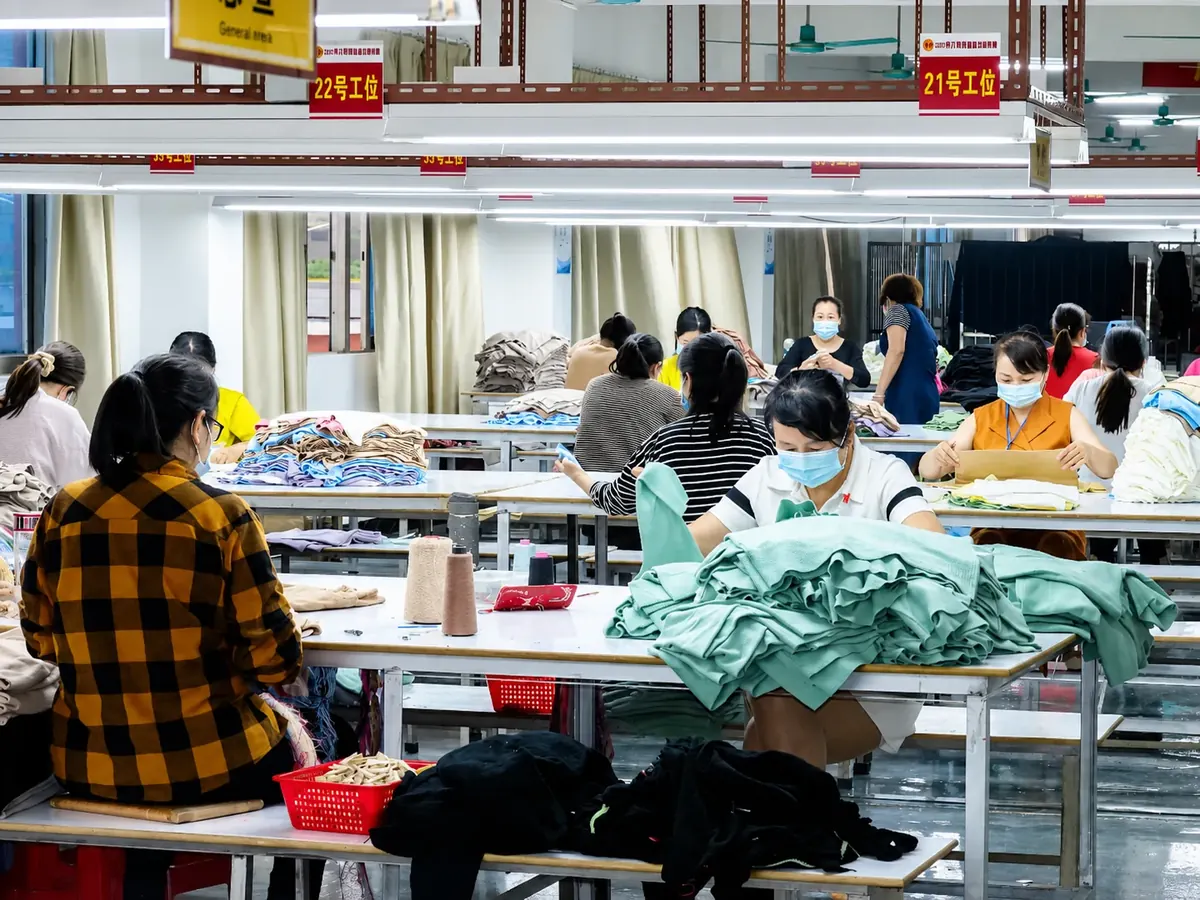
Separate correction, repair, rework and rejection
Use consistent status words. Correction removes an isolated problem such as a loose removable thread. Repair restores function or appearance to an agreed level. Rework sends the garment through a production operation again, such as relinking, relabeling, washing or pressing. Replacement substitutes another conforming unit; rejection removes the garment from deliverable stock.
The ILO's quality-management training asks whether nonconforming pieces should be reworked or scrapped and stresses in-process quality assurance. That decision belongs in a controlled system, not with the last operator who sees the defect. The buyer's terminology and commercial disposition should be agreed for the order.
| Defect | Possible disposition | Main evidence |
|---|---|---|
| Loose removable end | Controlled trim/secure | No cut structural yarn or visible tail |
| Skipped linking loop | Relink if technically accessible | Seam appearance and extension recheck |
| Missing/wrong trim | Replace and verify attachment | Correct BOM item and function |
| Oil or surface mark | Approved spot route or reject | No ring, shade or hand change |
| Hole/broken body yarn | Buyer-defined mend or reject | Face/reverse visibility and strength |
| Wrong yarn/color/size | Segregate and replace | Identity cannot be repaired cosmetically |
Build a defect-to-disposition matrix
List knitting, linking, assembly, finishing, trim, measurement, label and packing defects relevant to the style. For each, specify repairable, repairable with buyer approval, or not repairable. Add location, size, frequency and visibility limits because the same mend may be tolerable inside a hidden seam and unacceptable on a cashmere front panel.
Mark critical characteristics separately. A repair must not be used to conceal a sharp object, wrong fiber identity, prohibited component, safety failure or unapproved substitution. Contract and market requirements can override a normal workmanship decision.
Control yarn mending technically
Define the permitted yarn, color and lot, needle or tool, stitch path, securing method and face/reverse appearance. Pulling a loop into a seam may distort surrounding wales; cutting it can create a broken end. Closing a hole can leave a stiff, bulky or visibly different area even when it no longer opens.
Inspect the garment relaxed, gently extended in the relevant direction and after the production-intended finish where risk warrants it. Do not accept glue, fused patches, surface coloring or another hidden method unless it was explicitly developed and approved for that product.
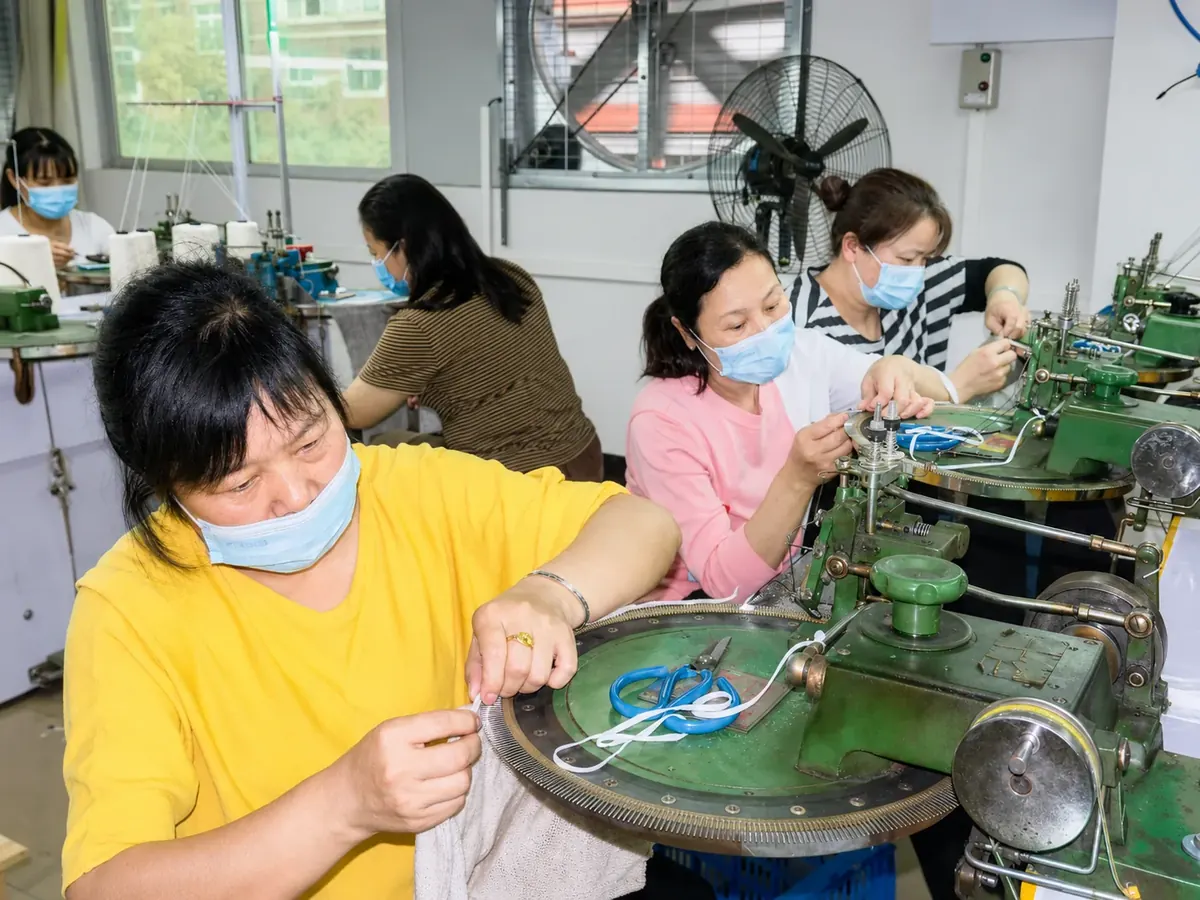
Set linked-seam rework boundaries
For an open or skipped linked seam, identify whether the affected section can be undone and relinked without damaging panel edges. Require the approved joining yarn, start/end securing and pattern alignment. Check armholes, shoulders, necklines and side seams under the specified extension or functional review.
A small hand stitch across an opening may close the gap but behave differently from the linked structure. Approve the actual method and limit, especially at load-bearing or high-visibility locations. Repeated seam repair in one production group should trigger process investigation, not unlimited individual patching.
Limit stain removal and repeat finishing
Specify permitted spot-cleaning agent, application, rinsing, drying and review where applicable. Check rings, local shade, odor, stiffness, abrasion and color transfer. Deep or unknown contamination may require rejection rather than aggressive treatment.
Rewashing, redyeing, respraying, brushing, steaming or pressing can change dimensions, shade, hand, ribs and surface. Require authorization and identify the affected batch. Recheck the complete consequences; a stain can disappear while the sweater moves outside measurement or appearance limits.
Protect measurements and shape
Do not use stretching, steaming or pressing merely to force an unstable garment into tolerance for inspection. Define conditioning and measurement method, then determine whether the product remains within tolerance after normal relaxation. Pattern, knitting or finish causes need process correction.
If a trim or seam repair changes local geometry, remeasure affected POMs and review balance. A replacement zipper, neckband or button line can alter length, waviness or symmetry even when the component is correct.
Trace every reworked quantity
Create a repair ticket with PO, style, color, size, garment or bundle identity, defect, location, original process lot, disposition, operator, date and checker. Keep repair, reject and first-quality stock physically separated until release. Reconcile the final accepted quantity by SKU.
Trend defects by machine, linking group, yarn lot, finish batch or operation. A rising repair count is evidence of a process issue and possible hidden population risk. Stop and correct the source before a large quantity reaches final packing.
Reinspect the repaired product and the process
Check every repaired characteristic under the defined method, then inspect for damage introduced by handling, opening seams, washing or repacking. Depending on risk, repeat measurements, appearance, extension, metal detection, label/barcode or packing checks.
A photo of one good repair proves only that one repair can look acceptable. For a failed lot, provide original findings, sorted quantity, defect counts, repaired/replaced/rejected quantities, affected cartons and corrective action to the buyer or nominated inspector. Define whether full or focused reinspection is required.
Control seconds, rejects and branded goods
Agree identification, quarantine, ownership, logo or label removal, storage, return, destruction or other disposition in the contract and applicable legal framework. A rejected branded garment should not quietly return to saleable stock after an undocumented cosmetic touch-up.
Keep scrap and repair decisions separate from production allowance and shipment tolerance. Only accepted, correctly packed first-quality units count toward delivery unless the buyer explicitly contracts another grade.
Buyer repair-standard checklist
- Status terms and release authority are defined.
- Each likely defect has a permitted disposition.
- Location, size, frequency and visibility limits are explicit.
- Yarn mends control material, method and face/reverse result.
- Seam rework restores loop capture and extension behavior.
- Spot treatment and repeat finishing require approval.
- Measurements are checked after normal relaxation.
- Every repaired unit or batch remains traceable.
- Reinspection covers the repair and new risks.
- Reject and branded-goods disposition is documented.
Yushengda develops wool, cotton, acrylic, viscose, cashmere and blended knitwear across 3GG–16GG, subject to the project, and supports customer-nominated third-party inspection. Use the linking-seam guide, the failed-inspection guide, or send your style, defect priorities, inspection plan and quantity for a quality discussion.
Primary reference: International Labour Organization, Improving Productivity and Working Conditions in Small Manufacturing Enterprises, quality-assurance section, for controlled decisions on nonconforming work, rework and scrap. Competitor content was reviewed only to identify common repair questions; no repair limits, AQL values, cases, images or wording were reused.