Washed knitwear shrinkage should be managed as a development variable, not discovered during final inspection. Buyers need one defined finishing route, measurements taken at agreed conditioning points, and an approved tolerance for every important point of measure. The same yarn and stitch can behave differently when garment construction, wash time, drying or pressing changes.
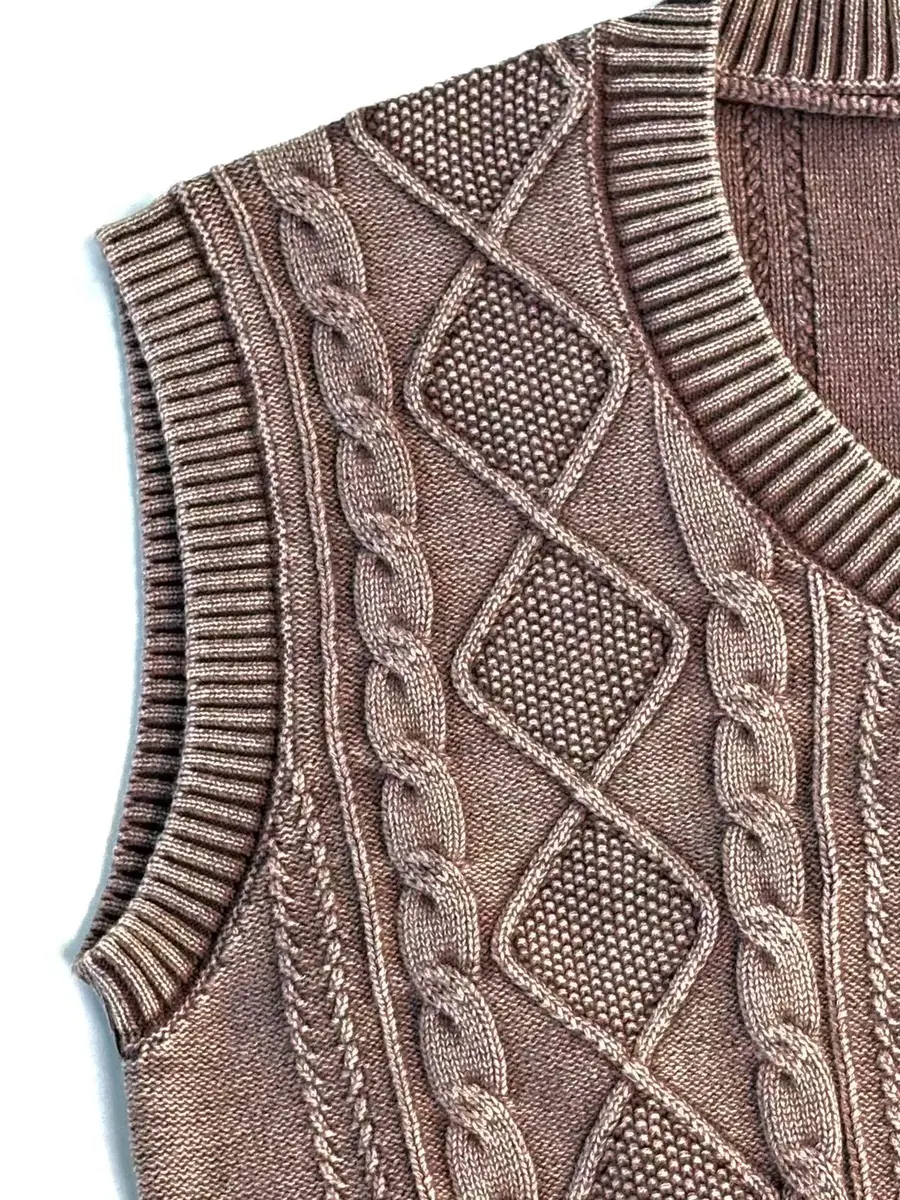
Define what shrinkage means for the project
State whether the comparison is between unwashed panels and finished garments, between a finished garment before and after a care cycle, or both. These are different questions. Record the measurement method, conditioning time and care procedure. Without a shared baseline, a buyer may call relaxation shrinkage a defect while the factory is measuring only the final approved garment.
Start with yarn and stitch behavior
Fiber composition, yarn construction, stitch length, rib structure and gauge influence dimensional movement. Cotton, wool, viscose, acrylic, cashmere and blends should not be assumed to react alike. Knit and finish a representative swatch when risk is meaningful, then use the result to guide pattern dimensions. A swatch cannot predict every garment detail, but it can reveal whether the selected combination needs another development route.
Approve finished measurements
The sales sample or pre-production sample should be measured after the same finishing sequence planned for bulk. Review chest, body length, shoulder, sleeve, openings and any style-specific points. Set tolerances by measurement rather than applying one number everywhere. A neckline opening, long body measurement and narrow cuff do not carry the same fit risk.
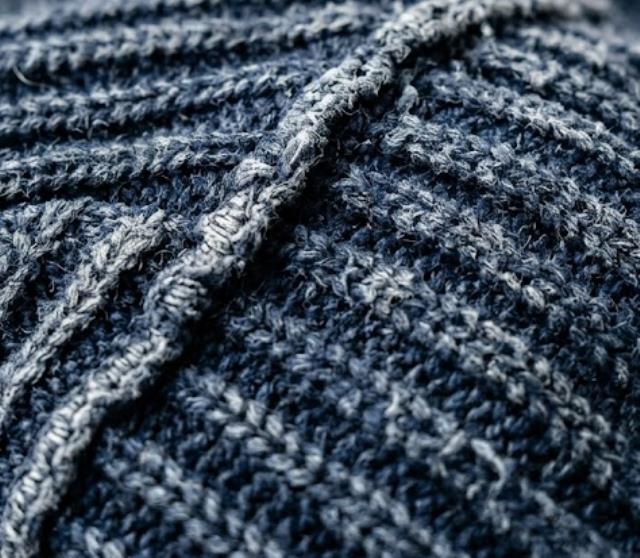
Watch construction-sensitive areas
Ribs, plackets, pockets, zippers, mixed stitches and contrasting materials can relax or shrink differently from the main body. Check distortion, seam appearance and balance as well as numeric measurements. If a heavy trim pulls on a softened knitted surface, measurement compliance alone may not protect appearance. Identify these areas in the tech pack and photograph the approved result.
Control bulk at more than one stage
Measure representative panels or early garments before the full order is complete, then check finished goods after washing and pressing. The aim is to detect process drift while correction is still practical. Record batch, size and result rather than relying on a general statement that measurements were checked. Customer-nominated third-party inspection can be added when the order value or risk justifies it.
Treat care instructions as part of development
The intended consumer care route should be considered before labels are finalized. A garment that meets factory measurements but changes unacceptably under its stated care instruction creates a downstream problem. Confirm who is responsible for testing and legal label review in the destination market. Do not print performance claims that have not been supported by the agreed test or documentation.
Apply the decision to a real order
Create a shrinkage record for every approved material and color route. Identify the sample, original dimensions, finished dimensions, calculation method, finishing condition and reviewer. Photographs of the garment positioned for measurement help explain where movement occurred and whether the silhouette remained balanced.
If the result misses the target, investigate stitch settings, panel dimensions, wash, drying, pressing and measurement method before simply enlarging the pattern. Pattern compensation works only when it responds to a stable process. Compensating for an uncontrolled finish may create one correct sample but inconsistent bulk.
Buyer checklist
- Define the exact before-and-after condition
- Use one written measurement method
- Approve finished dimensions and tolerances
- Review ribs, trims and mixed structures
- Check early bulk and final goods
- Align care instructions with verified behavior
Yushengda develops custom knitwear from 3GG to 16GG with an MOQ starting from 100 pieces per color for suitable projects. Sampling normally takes 7–15 working days and bulk production normally takes 25–45 days after the deposit, subject to the confirmed yarn, construction and finish. Review our OEM/ODM process, explore our custom knitwear range, or send your project for a practical quotation.