Approve knitted artwork only after the yarn, gauge, stitch structure and construction method are fixed. Convert the design to a stitch-and-row map, make a physical knit-down or complete panel, and review the face, reverse, color joins, floats, dimensions and washed result. For every garment size, state whether the motif stays a fixed physical size, scales proportionally or changes its repeat count.
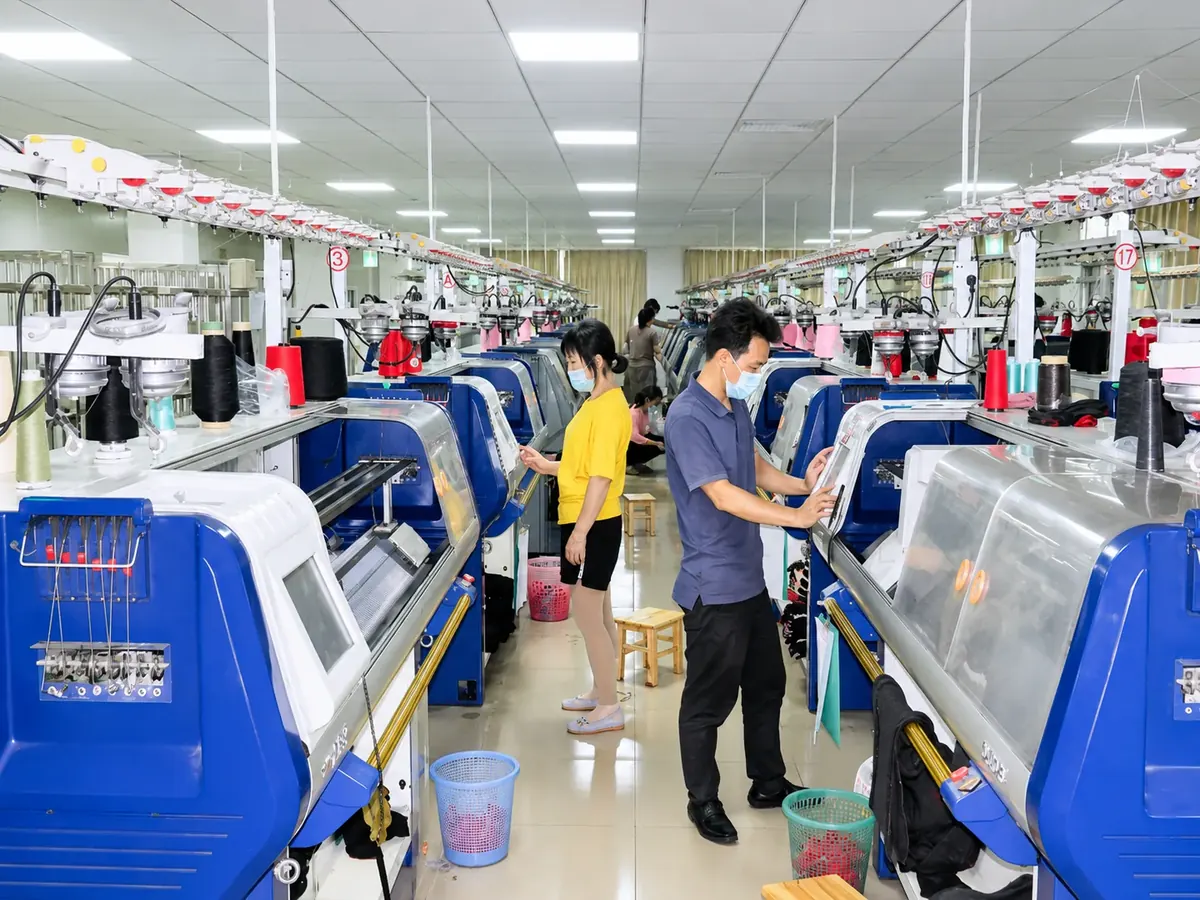
Decide what must be knitted
Start with vector artwork where possible, named colors, final placement, intended dimensions and a list of details that cannot change. Mark which lines, counters, borders and negative spaces are essential. A logo that depends on very fine curves may need simplification when each visible step is formed by stitches rather than ink pixels.
Separate visual intent from construction. A buyer can request a multicolor motif, but the technician must determine whether intarsia, jacquard, embroidery, print or another route best fits the image, yarn, gauge, stretch, hand and reverse appearance. Do not approve the word “jacquard” while leaving the back construction and color handling undefined.
| Decision | Buyer must specify | Evidence to approve |
|---|---|---|
| Motif geometry | Final width, height, proportions and essential details | Measured knit-down or panel |
| Construction | Selected intarsia/jacquard route and reverse expectation | Face and reverse photographs plus physical sample |
| Color | Yarn references and approved combinations | Actual-yarn colorway sample |
| Size behavior | Fixed, proportional or repeat-based scaling | Graded artwork map and size-set evidence |
| Placement | Stable landmarks and alignment rules | Complete garment on flat and worn views |
Lock yarn, gauge and stitch before mapping
The same stitch chart can produce a different physical motif when yarn count, number of ends, gauge, stitch structure, density or finishing changes. Approve the production-intended combination before treating a stitch map as final. If a yarn substitution is proposed, remap or reknit the design where the changed behavior can alter scale, definition or hand.
Record both the artwork dimensions and the knitted dimensions after relaxation. Pixel dimensions from a graphics file are not garment dimensions. STOLL's official pattern-software documentation describes image import in which each source pixel is allocated to one stitch, followed by choices for color reduction and jacquard or intarsia processing. That confirms why image conversion is a technical step rather than a direct copy-and-paste result.
Approve the face and the reverse
On the face, review proportions, stepped diagonals, curves, small lettering, color boundaries, missing stitches, distortion and show-through. On the reverse, inspect yarn paths, joins, tucked or secured sections, bulk, loose ends and any areas likely to catch during dressing or use. State whether reverse appearance matters because the garment is open, reversible or visible at a placket.
Do not apply a universal maximum float length copied from another product. Acceptable handling depends on yarn, gauge, backing construction, motif spacing, wearer use and snag risk. Ask the technician to identify long or exposed paths, propose a controlled securing method, and show the result on the physical sample without unwanted face marks.
Test color boundaries and intarsia joins
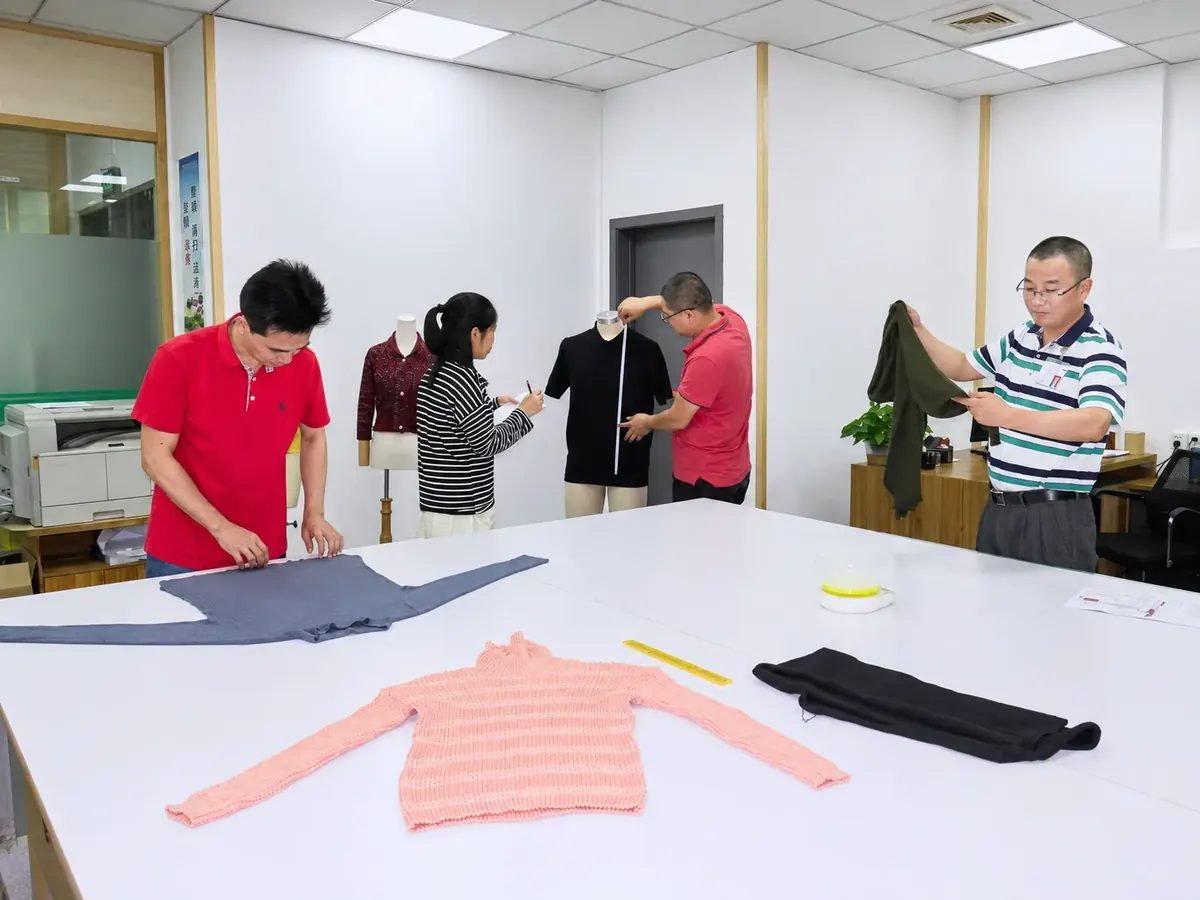
Inspect every color-field boundary for holes, loose loops, tight joins, ridges and visible contamination. Narrow points, diagonals and isolated small areas can behave differently from large blocks. Stretch the sample gently in the directions expected in wear, then allow it to recover and check the boundary again.
Color selection is also a material decision. Closely valued colors may lose definition; contrasting or unstable colors can create staining risk after care. Visual artwork approval does not replace named colorfastness tests. Evaluate the finished color combination and intended wash route separately.
Write one scaling rule for every size
A motif can remain the same physical size across all garments, scale with chest or panel width, or preserve repeat size while changing the number of repeats. Each choice produces a different commercial result. Put the rule in the tech pack and issue a controlled map for every affected size rather than asking production to “scale proportionally.”
Check risk sizes physically. A small size may not have enough needles or clear space for the approved motif, while a large size may create excessive blank space or an unplanned extra repeat. Review interaction with necklines, armholes, fashioning marks, pockets, plackets and rib borders. If sleeves carry artwork, define whether left and right are mirrored or identical.
Control alignment at garment joins
Artwork crossing a side seam, shoulder, sleeve seam or placket requires component-level reference points. Specify which line must meet, allowable visual offset and how partial motifs end. Perfect alignment in a flat illustration may be impossible after shaping, linking and wear; identify the priority junction before programming.
Approve the complete garment in a defined size, not only a rectangular swatch. Lay it without stretching, photograph it consistently, then assess it on a form or wearer suitable for the size. Check whether the design remains centered and level when the neckline, shoulder and body take their intended shape.
Wash and finish before sealing the program
Use the proposed finishing and care route, then condition and remeasure the motif, panel and garment. Washing can change width, height, surface texture, contrast, joins and float behavior. Record whether the final dimensions are measured before or after care and which state becomes the production standard.
Seal the approved artwork revision, stitch map, knitting program revision, yarn and color map, gauge and structure, sample identity, size rule and finishing route together. A later program edit should trigger a documented comparison rather than silently replacing the approved file.
Verify early bulk against the sealed sample
Review first bulk panels or garments before full production. Compare motif dimensions and position, face definition, reverse construction, boundary quality, seams and finished appearance. Trace checks by size, color, yarn lot and program revision so a local defect is not hidden inside an overall shipment average.
For final inspection, define critical artwork identity errors separately from minor visual variation. A wrong program, mirrored logo, missing repeat or mismatched component should not be averaged with small cosmetic defects. Keep the approved physical sample and dated images available to the inspector.
Buyer artwork-approval checklist
- Vector artwork, final dimensions and essential details are identified.
- Yarn, gauge, stitch and construction route are locked.
- Artwork is converted to a controlled stitch-and-row map.
- The face, reverse, joins and exposed floats are approved.
- Actual yarn colors and colorfastness risk are reviewed.
- Each size has a fixed, proportional or repeat-based rule.
- Seam, placket, sleeve and fashioning alignment is defined.
- A complete garment is assessed flat and in worn shape.
- The intended finish and care route are evaluated.
- Program, yarn map, sample and revisions remain linked.
Yushengda develops custom knitwear in wool, cotton, acrylic, viscose, cashmere and blends across 3GG–16GG, subject to the project. Use the size-set grading guide, the snag-prevention guide, or send your artwork, target dimensions, yarn, gauge, size range and quantity for an RFQ discussion.
Primary references: SHIMA SEIKI, SDS-ONE APEX virtual sampling, which describes flat-knit design for structure, intarsia and jacquard patterns; STOLL, Import pictures, which documents stitch-based image conversion and technique selection. These sources support the digital-to-knit workflow; they do not prove which equipment a supplier owns. Competitor buyer guides were reviewed only for topic gaps, and no claims, settings, images, cases or wording were reused.