Approve a spray-dyed sweater with a finished physical reference that identifies the base garment, spray colors, placement zones, gradient edges, viewing side and acceptable variation. A mood image or phone photo can communicate direction but cannot define bulk acceptance. Before bulk, turn the design into a placement map, make a production-intended trial, record boundary samples and inspect first output against the approved reference under consistent viewing conditions.
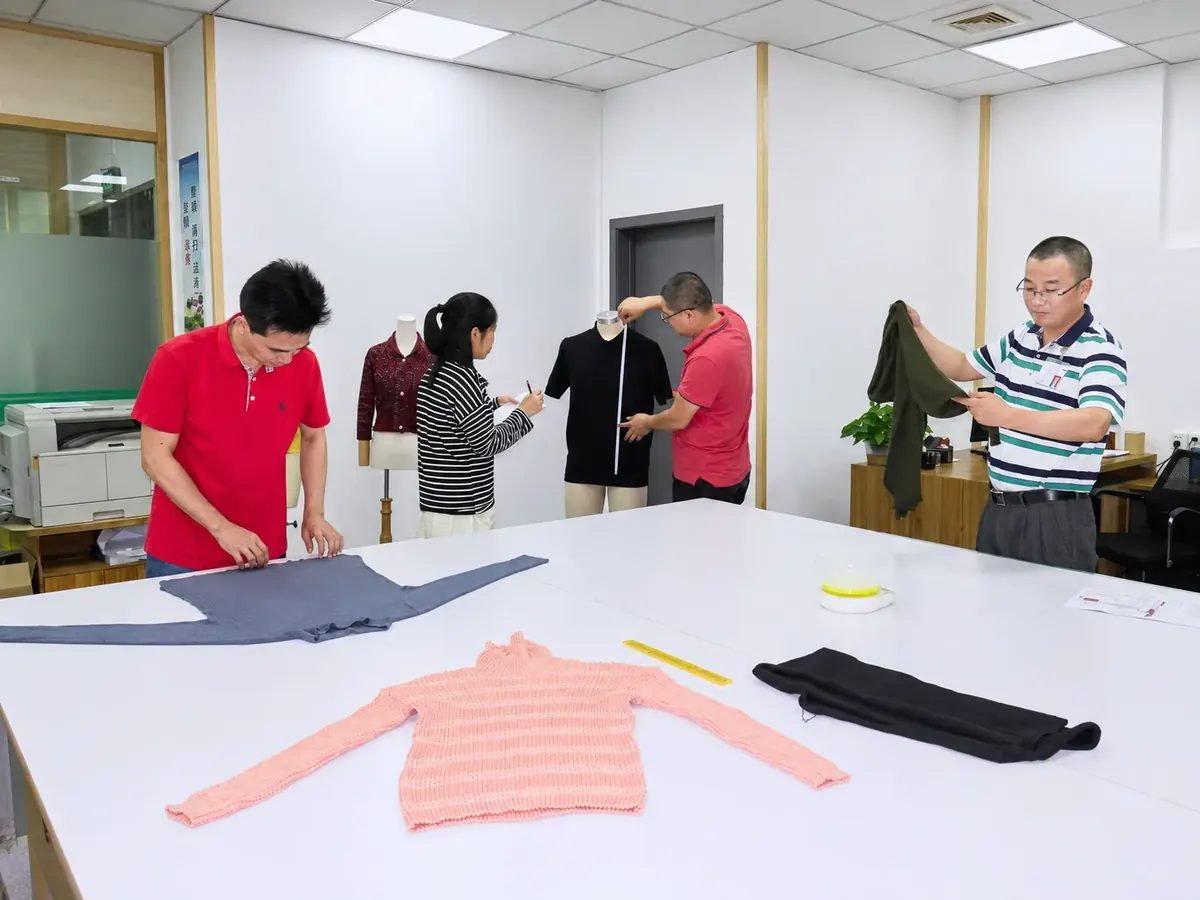
Why color approval alone is not enough
Spray dyeing places color directionally on selected areas. The commercial result depends on where the effect starts and ends, its density, overlap with ribs or seams, relation to necklines and pockets, and appearance after the complete finish. A loose yarn color, Pantone reference or a flat digital rendering may establish intent, but cannot show the effect on the final knit surface, shape and garment treatment.
Separate four questions: base-garment color; applied spray color; placement geometry; and allowed visual variation. A buyer can approve the right blue but still reject a garment when the shadow sits too high on the chest, crosses the rib unexpectedly or differs between sleeves. Write each question into the approval record.
Build a placement map before sampling
Use front, back, left and right side views of the flat garment. Mark fixed landmarks such as high-point shoulder, neckline edge, center front, armhole, cuff edge, hem edge, pocket edge, placket and side seam. Define the zones by measured distance or identifiable construction landmarks, not only by a floating graphic. If the effect wraps around a seam, state whether continuity or a deliberate break is expected.
| Control item | What to specify | Evidence at approval |
|---|---|---|
| Base garment | Yarn, base shade, gauge, stitch, size and intended finish | Identified garment or panel |
| Spray palette | Named effect colors and dominant/subordinate relationship | Physical trial and labelled color reference |
| Placement | Landmarks, zones, wrap rules and critical no-spray areas | Annotated front/back/side map |
| Gradient | Dense area, fade direction, edge character and overlap limit | Approved reference plus boundary samples |
| Variation | Intentional piece-to-piece character and unacceptable outcomes | Written acceptance/rejection examples |
| Bulk control | First-off check, sampling points, hold authority and records | Dated release and inspection plan |
Approve boundaries, not a single ideal garment
A specialty finish can have controlled variation. If the buyer wants a handmade or vintage impression, describe the acceptable range without calling every difference intentional. Use one approved central reference together with labelled light, dark, high, low, sharp-edge or soft-edge boundary examples as needed. The boundary set should answer what is still acceptable and what must be held for review.
Be specific about failures: spray on an excluded rib, a hard unintended stripe, color transfer onto a lining or label, an unbalanced left/right effect, a gap that exposes a different base shade, or a stain-like spot outside the design zone. Do not rely on “same as sample” when the sample itself contains unrecorded variation.
Make a production-intended trial
The trial should use the intended yarn or base garment, gauge, stitch, construction, size where placement is critical, spray route and post-treatment. A test on a different fabric, a flat cut panel or an unwashed garment may answer a limited color question but cannot fully approve a finished sweater. If sizes change the body proportion or sleeve length, state whether the placement stays at a fixed distance from a landmark or scales by size.
Review the garment flat and on a form or wearer when the design is body-position sensitive. Compare front, back, sleeves, cuffs, neck and seams. Look at the effect under agreed lighting and at normal retail viewing distance as well as close range. A camera may exaggerate or suppress a gradient, so retain the physical reference and use photos only as traceable supporting records.
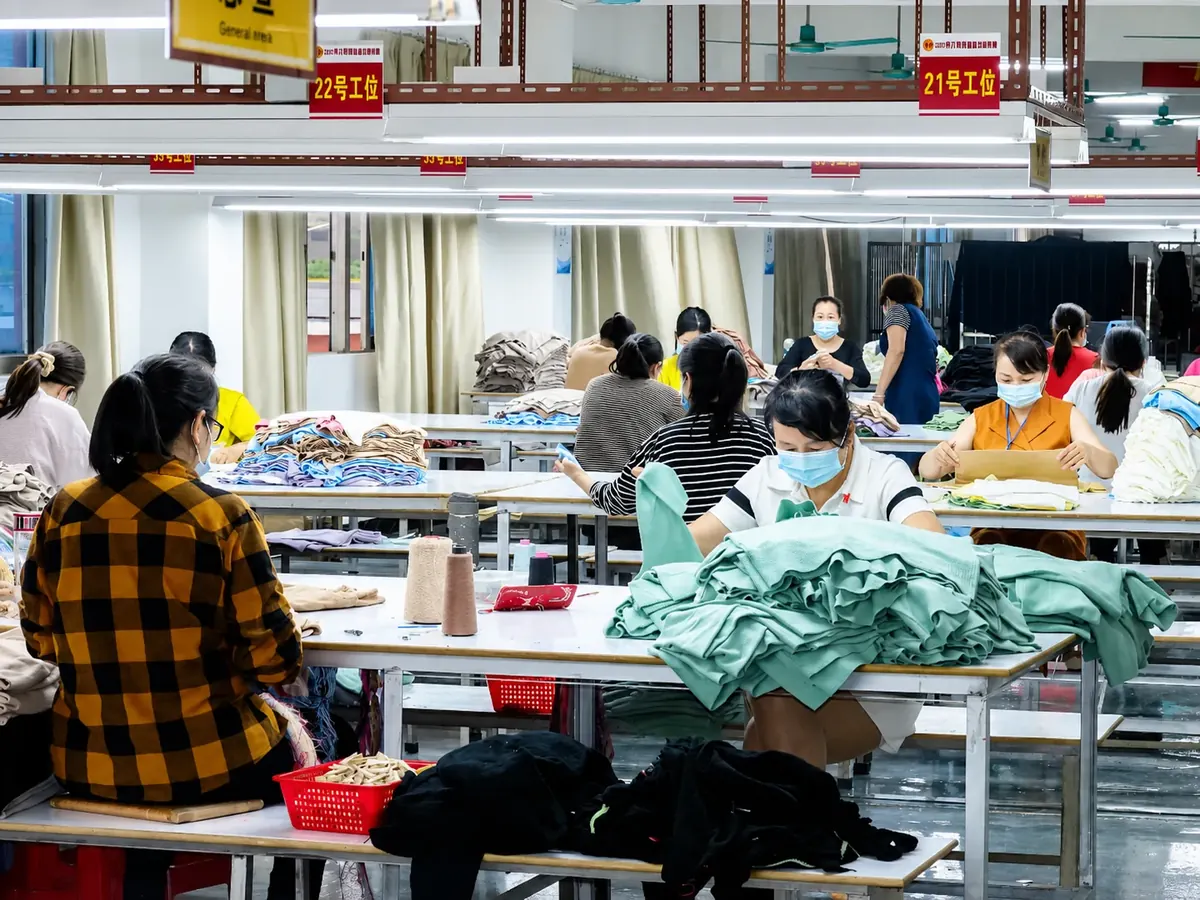
Control the first output and bulk sequence
Before running the full order, inspect a first production-intended garment or agreed first set against the placement map and boundary references. Confirm the base garment is the approved revision and that the spray result survives any washing, drying, pressing or conditioning planned for bulk. Release, hold or revise in writing; verbal acceptance invites a later dispute over which version was approved.
During bulk inspection, sample across sizes, colors, production time and any finishing batch. Keep results tied to garment identity and sequence where practical. When a deviation appears, hold the relevant group, compare with the boundaries, identify whether the issue is placement, shade, surface, contamination or base-garment difference, and agree the disposition before rework or packing.
Buyer spray-dye approval checklist
- The base garment, yarn, gauge, stitch and final finish are identified.
- Every spray color and its role is named.
- Front, back and side placement uses fixed garment landmarks.
- Critical seams, ribs, trims and no-spray zones are mapped.
- Central approval and acceptable boundary samples are retained.
- Unacceptable effects are written as observable conditions.
- Size-scaling or fixed-placement rules are stated.
- Trial and first bulk output use the intended finished route.
- Bulk inspection covers sequence and finishing-batch variation.
- Hold, release, rework and change authority are assigned.
Yushengda develops custom washed, spray-dyed and other specialty-finished knitwear subject to a project-specific review. This article does not claim that every visual effect is repeatable at every quantity or that a reference image is production-ready. Use the spray-dye color-consistency guide, post-wash appearance guide and change-control guide, or send the artwork, reference sample, target quantity and placement priorities for a feasibility discussion.
Primary reference: The Woolmark Company, Garment Dyeing — Quality Control, for the principle that dyed garments require inspection before and after dyeing, including shade, dimensions, appearance and handle. It does not prescribe spray-dye placement tolerances. Competitor pages were reviewed only for buyer terminology and coverage gaps; no wording, images, data, cases or claims were reused.