Spray-dyed knitwear cannot be controlled by a Pantone number alone because placement, intensity, garment shape and operator technique affect the result. Buyers should approve a physical center standard, acceptable lighter and darker boundaries, and a placement map. The production goal is a recognizable family of garments, not mechanically identical pieces.

Describe the visual intent precisely
State whether the effect should be smoky, framed, shadowed, faded at edges or concentrated in selected zones. Mark front, back and sleeve placement on a flat sketch, and add worn photos if body position affects the design. Explain which areas must remain cleaner and which natural transitions are welcome. General words such as vintage or airbrushed are not sufficient production instructions.
Build the color on the actual garment system
Base yarn shade, fiber, stitch texture and garment wash change how sprayed color appears. A smooth fine-gauge surface reflects a gradient differently from a chunky cable. Trial the intended material and construction where possible. If a substitute yarn is introduced, do not automatically carry over the old approval because absorption, contrast and handfeel may change.
Approve a range, not one perfect photograph
Keep a center sample plus acceptable lighter and darker or stronger and softer limits. Photograph them under consistent neutral lighting and retain physical references when feasible. Define unacceptable outcomes such as hard overspray edges, blank zones, excessive concentration near seams or visible transfer. This gives production and inspection teams clearer decisions than asking every piece to match one edited image.
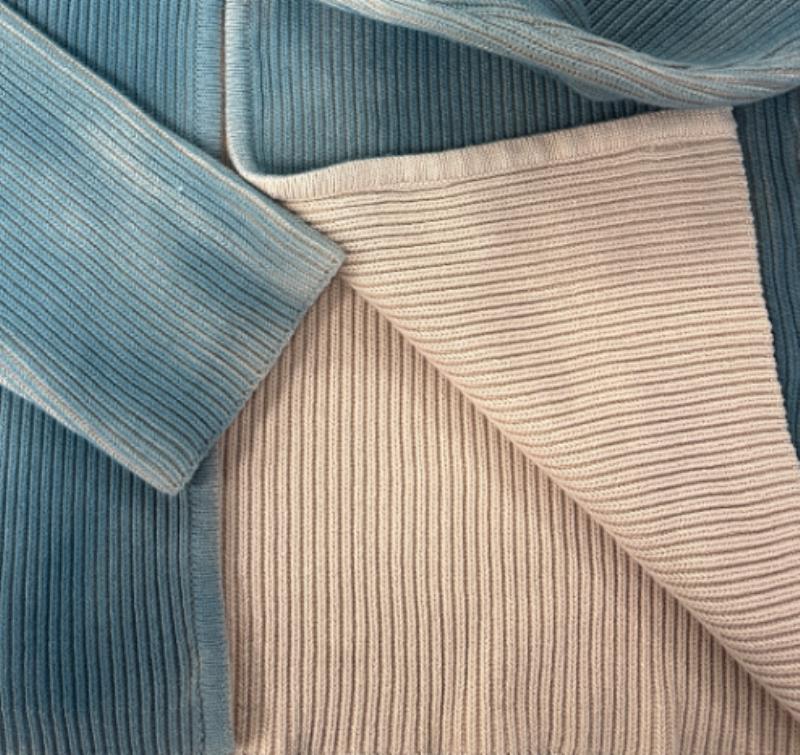
Control placement by garment zone
Use measurable landmarks such as distance from neckline, cuff, side seam or hem when placement matters. For an organic all-over effect, define density and balance instead. Review front-to-back transition and paired sleeves. A garment may look acceptable laid flat but unbalanced when worn, so approval should include the complete silhouette.
Inspect by batch and color family
Pull pieces across the production run, compare them together and separate clearly out-of-range garments. Check measurement and handfeel alongside color because additional finishing can affect all three. Record any approved corrective action. Re-spraying or reprocessing may introduce new surface or shade risks, so it should not be treated as an automatic fix.
Set buyer expectations before the purchase order
Sales, design and production teams should agree that controlled variation is part of the product. Product photography and ecommerce copy should not imply exact motif placement if the process is intentionally individual. At the same time, handcrafted character is not permission for uncontrolled defects. The written approval range defines where variation ends and non-conformity begins.
Apply the decision to a real order
Review several trial garments together under the same lighting and orientation. Record the center standard, acceptable boundaries and rejection reasons. For remote approval, include a neutral reference and avoid image filters that can hide actual shade relationships.
For replenishment, state whether the new order must sit beside the previous delivery in retail. Retain the earlier standard where possible, but confirm the new base yarn lot and finish. If continuity is critical, discuss material reservation and batch planning before the old yarn is exhausted.
Buyer checklist
- Placement map for front, back and sleeves
- Approved center plus boundary samples
- Unacceptable zones and marks defined
- Actual yarn and stitch trialed
- Batch comparison after finishing
- Variation communicated to commercial teams
Yushengda develops custom knitwear from 3GG to 16GG with an MOQ starting from 100 pieces per color for suitable projects. Sampling normally takes 7–15 working days and bulk production normally takes 25–45 days after the deposit, subject to the confirmed yarn, construction and finish. Review our OEM/ODM process, explore our custom knitwear range, or send your project for a practical quotation.