A custom sweater sample should be approved against a written checklist, not a general impression. Buyers need to review measurements, silhouette, yarn, gauge, stitch structure, linking, trims, color, handfeel and finishing, then record every accepted deviation. A visually attractive sample can still be unsuitable for bulk if its material, construction or approval status is unclear.
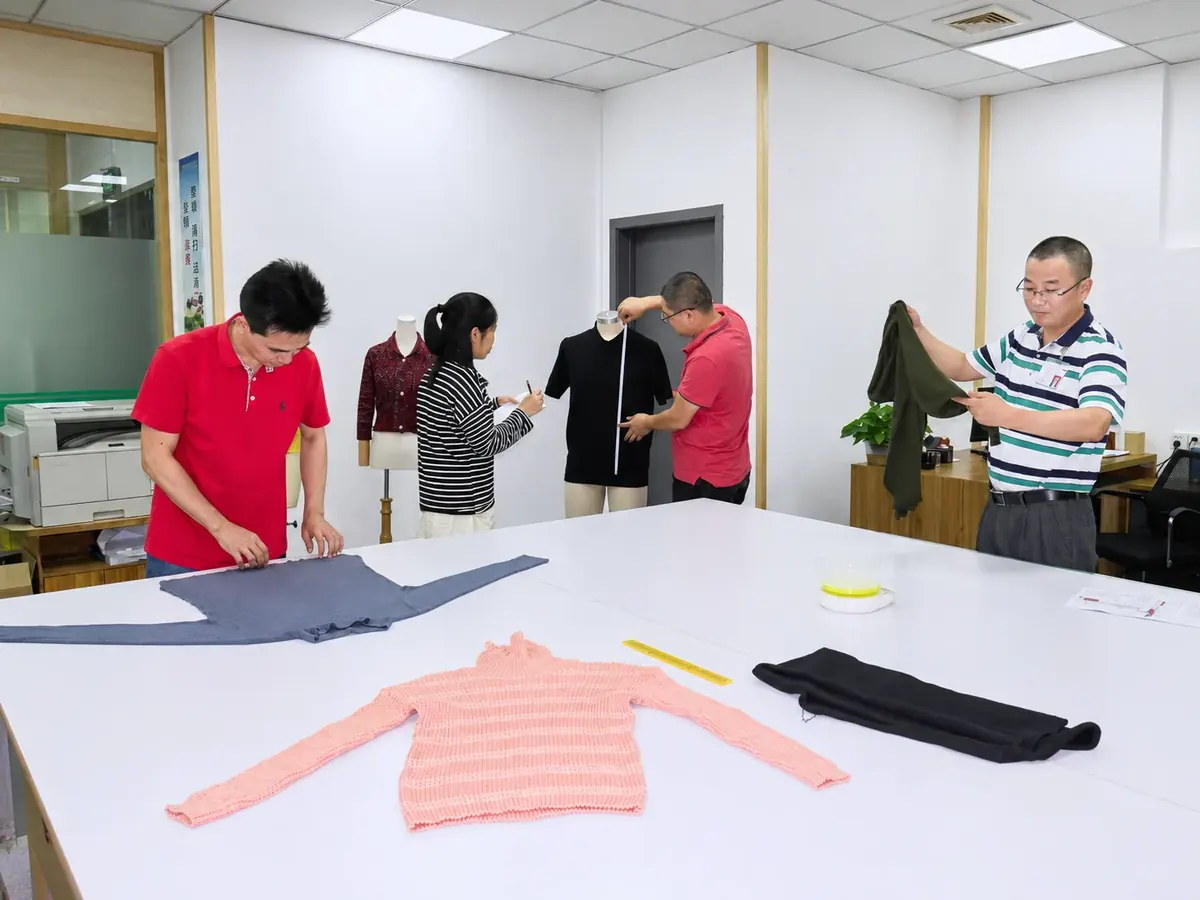
Confirm sample identity before reviewing
Check style number, color, size, sample stage, tech pack revision and date. A fit sample, color sample and pre-production sample may answer different questions. Mark what the sample is intended to approve and what remains open. This prevents a positive fit comment from being interpreted as approval of unconfirmed yarn, labels or a temporary trim.
Measure using one agreed method
Lay the garment as specified, allow any agreed conditioning time and measure every important point. Compare results with the current chart and write actual numbers, not only pass or fail. Review balance and fit together with measurements because two garments can share chest width while sitting differently due to shoulder, armhole or rib behavior.
Evaluate material and knitted structure
Confirm yarn reference or approved substitute, composition direction, gauge, stitch placement, garment weight direction and opacity. Look for unintended needle lines, holes, dropped stitches, uneven tension or distorted motifs. Check cables, jacquard and ribs at transitions and seams. If a technical change improved production feasibility, record it rather than leaving it visible only in the sample.
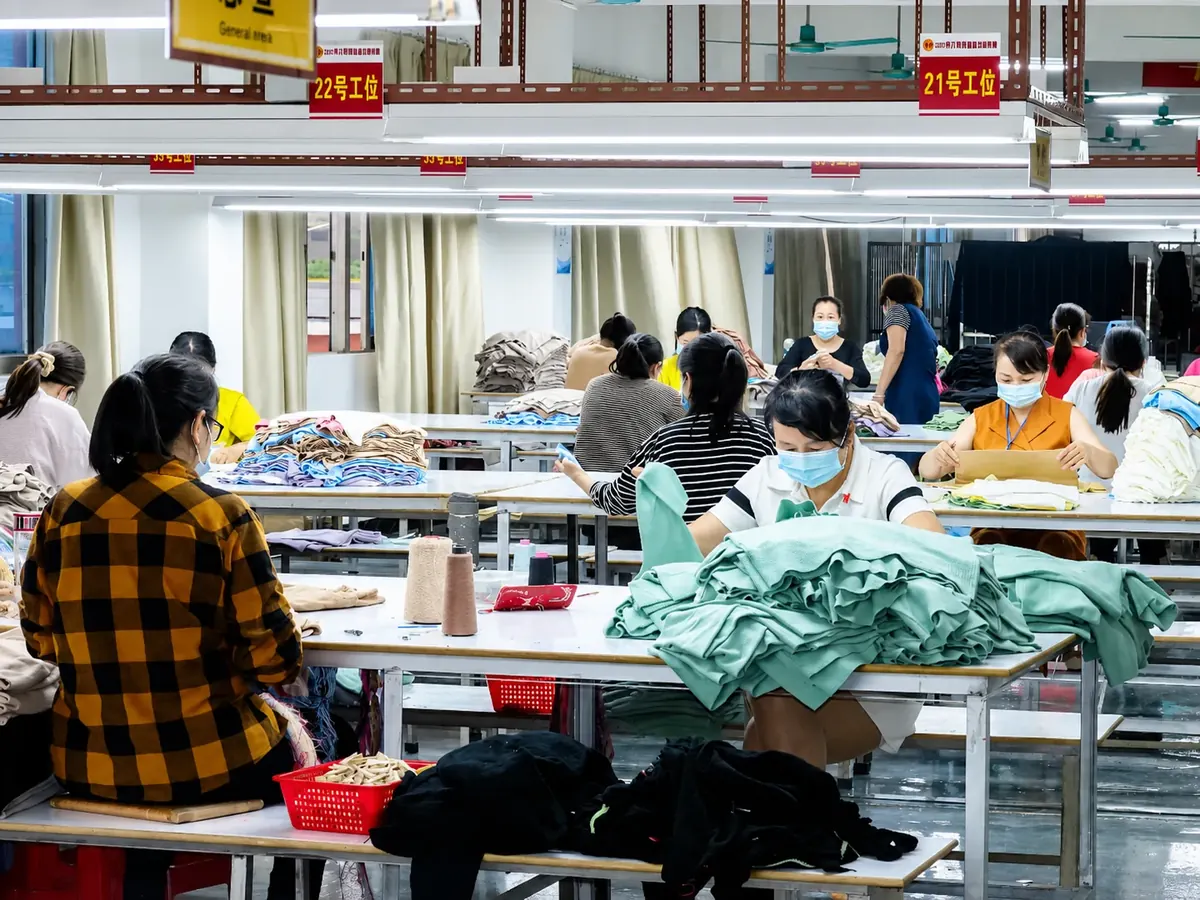
Review assembly, trims and finishing
Inspect linking or seams, neckline, armholes, side seams, buttons, zippers, embroidery, labels and loose ends. For washed, spray-dyed or tie-dyed styles, compare shade, placement, handfeel and acceptable variation with the approved reference. Measure after finishing when those are the intended final dimensions. Confirm that reprocessing has not introduced distortion or surface damage.
Write comments that can be executed
Use page references, arrows, measurements and clear actions: increase, reduce, move, replace, keep or approve. Separate mandatory corrections from preferences and questions. Avoid comments such as improve shape without identifying the problem. If a change affects another measurement or construction detail, ask the factory to flag the consequence before making the next sample.
Close the approval formally
Issue a dated approval, conditional approval or rejection. List open items and who owns each decision. Retain photographs and, where practical, a sealed physical reference. Update the tech pack before bulk begins so the approved sample and production document agree. Verbal approval creates unnecessary dispute if a later team interprets the garment differently.
Apply the decision to a real order
Review in two passes. First ask whether the sample expresses the design through proportion, drape, color, texture and character. Then ask whether it is production-ready through specification, measurements, construction, repeatability, labels and finish limits. A visually exciting sample may still be unsuitable for bulk.
Limit each revision to controlled changes when possible. If yarn, gauge, measurements and wash all change together, the result is hard to diagnose. Require a change log and recheck related areas: increasing body length, for example, may alter pocket position and overall balance.
Buyer checklist
- Style, size, stage and revision verified
- All points measured and recorded
- Yarn, gauge and stitch confirmed
- Construction and finish inspected
- Comments are specific and prioritized
- Final status and open items documented
Yushengda develops custom knitwear from 3GG to 16GG with an MOQ starting from 100 pieces per color for suitable projects. Sampling normally takes 7–15 working days and bulk production normally takes 25–45 days after the deposit, subject to the confirmed yarn, construction and finish. Review our OEM/ODM process, explore our custom knitwear range, or send your project for a practical quotation.
Check what each piece of evidence actually approves
A sample review can contain several useful records without proving that the complete garment is ready. Use this evidence check before signing approval; it is a suggested buyer workflow, not a claim about a completed Yushengda order.
- A yarn swatch: supports discussion of material and color, but does not show the finished garment's fit, seams or trim interaction.
- A photograph: records visible placement and obvious construction details, but cannot establish handfeel or reliable dimensions. Use the remote sample review guide for the limits of photo approval.
- A measurement sheet: should identify the actual sample and whether measurements were taken before or after finishing. A sheet from a different revision does not close the current fit review.
- A laboratory report: should identify the submitted item and test conditions. Check whether it concerns fabric or a complete garment before applying its conclusion to the order.
Ask a precise question when the evidence does not match
For example: “The report identifies a fabric specimen, but we are approving a finished cardigan with trims. Please confirm which finished-garment checks remain outstanding.” This is illustrative wording, not a customer case. AATCC distinguishes fabric dimensional-change testing (TM135) from garment testing (TM150). Neither method title establishes an acceptable result for your order; agree requirements and testing scope with the appropriate provider.
Record the unresolved evidence, the decision it prevents and the person responsible. Avoid replacing a missing result with a generic “approved” email. Keep this checklist as the review overview, and use the test-report guide or sealed-sample guide for the detailed next step. Send the sample stage and unresolved requirements when requesting a development review.