A distressed sweater uses intentional openings, frayed edges or worn-looking details as part of its design. For a clothing brand, sourcing one means specifying where those effects belong and what must remain stable after wear and care. Yushengda welcomes custom distressed knitwear enquiries for project-specific review, including yarn, construction, finish, quantity and sampling requirements. Approve the physical effect before committing to bulk production.
What makes a distressed sweater different from washed knitwear?
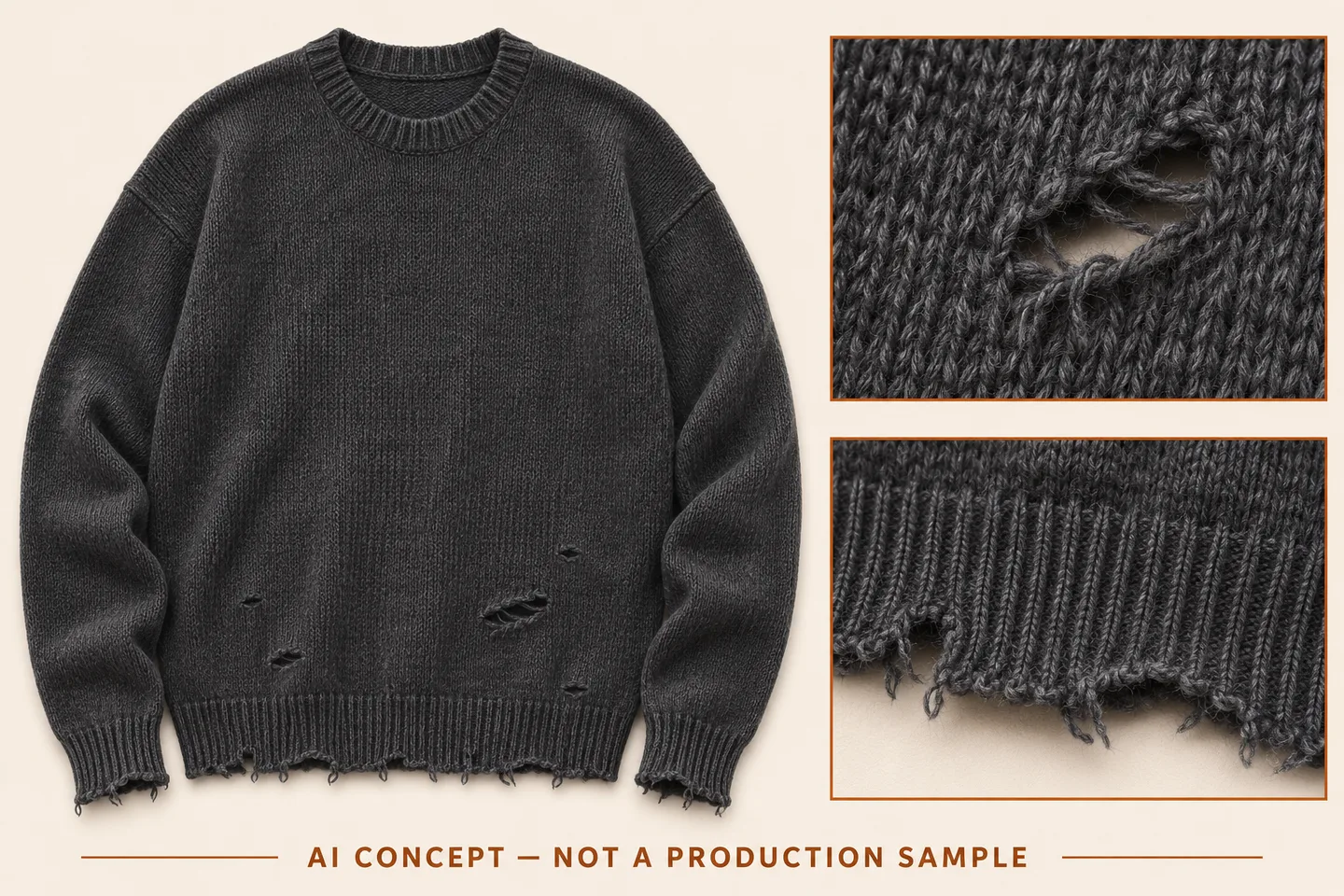
Distressed knitwear describes the intended worn or disrupted appearance. A ripped sweater may feature visible openings; a frayed sweater may concentrate detail around cuffs or hems. A washed sweater can have faded color and softened handfeel without any holes. These effects can appear together, but buyers should specify them separately.
Start with the silhouette: oversized crewneck, cropped pullover, cardigan or another shape. Then identify the design's focal points. An inspiration image communicates mood, but it does not define hole placement, edge stability, fit or acceptable variation. Avoid asking a factory to reproduce another brand's artwork or distinctive design without permission.
Turn the visual reference into a controlled specification
For custom distressed sweaters, mark each detail on front, back and sleeve drawings. Separate areas where distressing is permitted from areas that must stay intact. The following is a recommended development checklist, not a universal production standard.
| Detail | What to specify | What to review on the sample |
|---|---|---|
| Intentional openings | Location, shape, size range and number | Whether openings spread or expose more than intended |
| Frayed cuffs and hem | Permitted edge zones and loose-yarn appearance | Edge security, snagging and fit |
| Worn color effect | Shade reference and fade distribution | Color consistency and transfer risk |
| Protected construction | Seams, neck opening and other no-distress areas | Joining integrity and shape retention |
Give the manufacturer room to propose a workable construction route. The desired appearance may require a combination of knit development and finishing rather than simply cutting a finished garment. Ask how exposed loops and edges will be controlled; do not assume that a convincing photograph proves the garment will remain stable.
Choose yarn and gauge around the effect
Fiber, yarn structure, stitch density and gauge influence how clearly an opening reads and how the surrounding fabric behaves. Specify handfeel, weight, opacity and intended season alongside appearance. There is no single best yarn for every distressed knit sweater, and a material substitution needs a new review of the effect.
Yushengda's broader knitwear range covers 3GG–16GG and several fiber families, but this does not mean every yarn-and-gauge combination suits every distressed design. Send your reference for feasibility review. Our sweater gauge guide helps explain the construction choices.
Approve the effect after the proposed care process
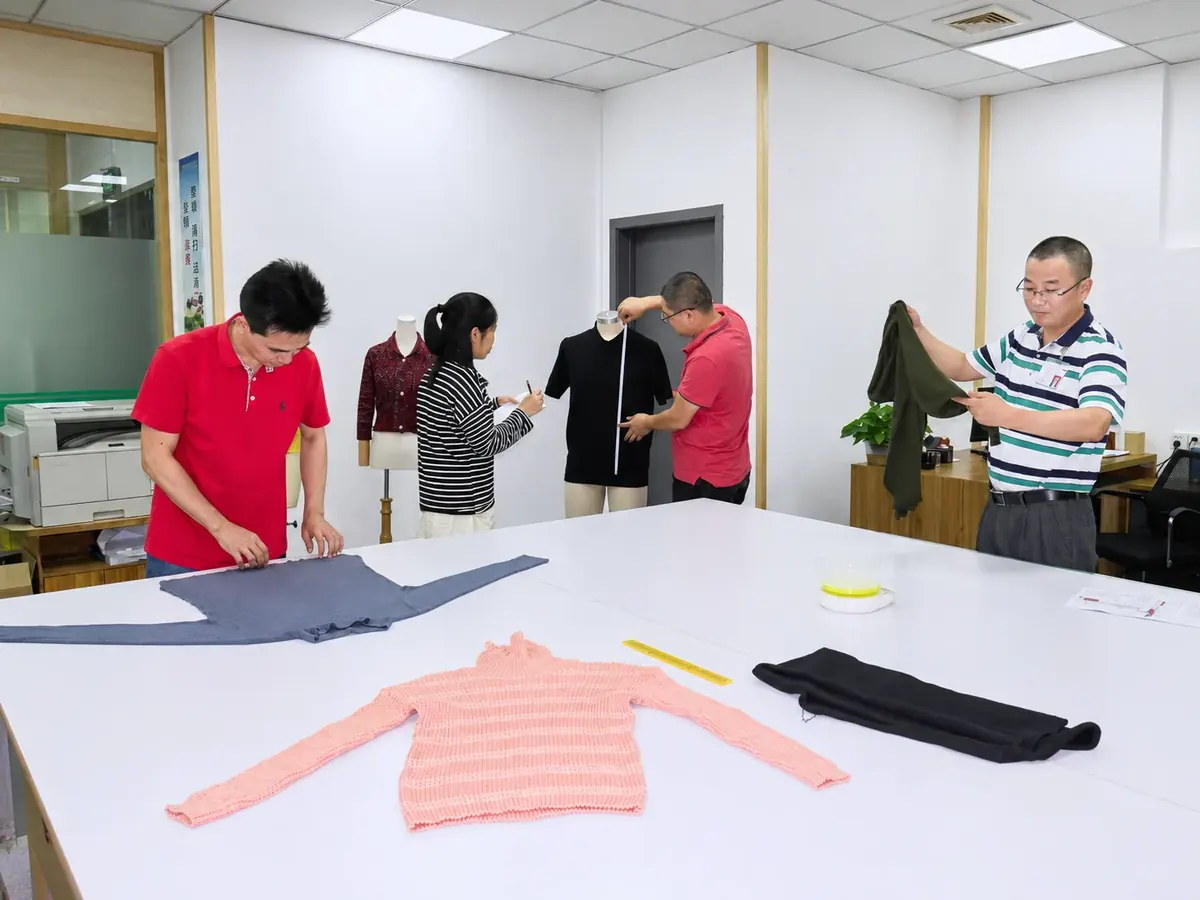
Review appearance and measurements before and after the agreed care procedure. Photograph the same distress zones under consistent conditions. Record whether holes enlarge, loose yarns extend, seams open or the silhouette changes. Decide what variation is intentional and what counts as damage before reviewing production pieces.
AATCC's official test-method directory distinguishes garment dimensional-change assessment (TM150) from apparel appearance after home laundering (TM143). Ask a qualified laboratory which methods and additional evaluations suit the actual construction. Neither method title supplies a universal acceptable hole size or proves a particular sweater's durability.
Keep the approved physical sample and close-up photographs together. Define any permitted garment-to-garment variation, inspection points and rejection conditions. See our sample approval checklist for the wider approval process.
Can a distressed sweater order have a low MOQ?
Discuss the design first. Yushengda's published standard MOQ starts at 100 pieces per color for suitable projects. Smaller proposed pilot runs can be reviewed individually; they are not a blanket 50-piece commitment. Yarn minimums, colors, handwork, trials, labels and packaging all affect feasibility and the quotation.
For a first collection, ask which choices could simplify development without losing the intended look. Read our 50-versus-500-piece guide before choosing quantity solely on unit price.
Request a custom distressed sweater quotation
Send a tech pack or annotated reference, yarn preference, color and size breakdown, distress map, branding, target budget and delivery destination. For a US launch, distinguish factory completion from your required warehouse arrival date. Ask for sample scope, costs, exclusions and bulk approval conditions in writing.
Yushengda is a knitwear manufacturer in Dalang, Dongguan, with a factory established in 2006. Explore our specialty-finished knitwear and private-label OEM/ODM development, then send your distressed sweater design for a feasibility review and quotation.