Garment washing, spray dyeing and tie dyeing can all create expressive knitwear, but they produce different effects and require different controls. Choosing the right process begins with understanding where the color sits, how repeatable it must be and how much variation the collection can accept.
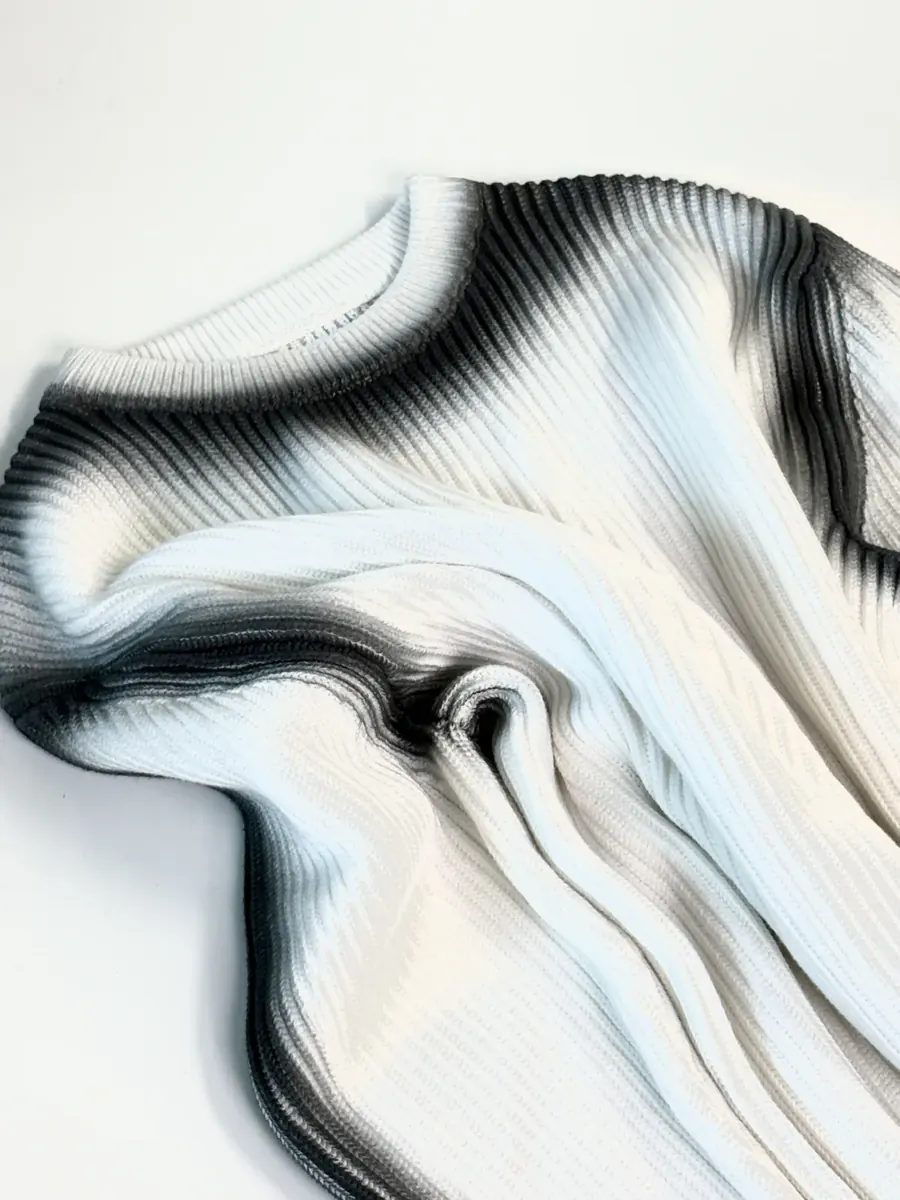
Garment-washed knitwear
Garment washing is applied after knitting and assembly. Depending on the fiber, dye system and treatment, it can soften handfeel, reduce color intensity, create worn edges and produce a vintage surface. Snow wash and controlled wash-down effects are common directions.
The main controls are shrinkage, measurements, shade range, abrasion and seam appearance. Because the whole garment enters the finishing process, trims and mixed materials must be tested together. Garment washing is well suited to collections that need an authentic, lived-in character.
Spray-dyed and airbrushed knitwear
Spray dyeing places color directionally onto selected areas. It can create smoky gradients, shadows, framed edges or deliberately uneven tonal transitions. Placement can be subtle or high contrast, and it is useful when a designer wants the garment to feel individually treated.
Buyers should approve placement maps, color intensity and acceptable variation. Bulk production needs clear visual references and operator standards. A development sample should show how the effect looks when the garment is worn, not only when it is laid flat.
Tie-dye and clouded effects
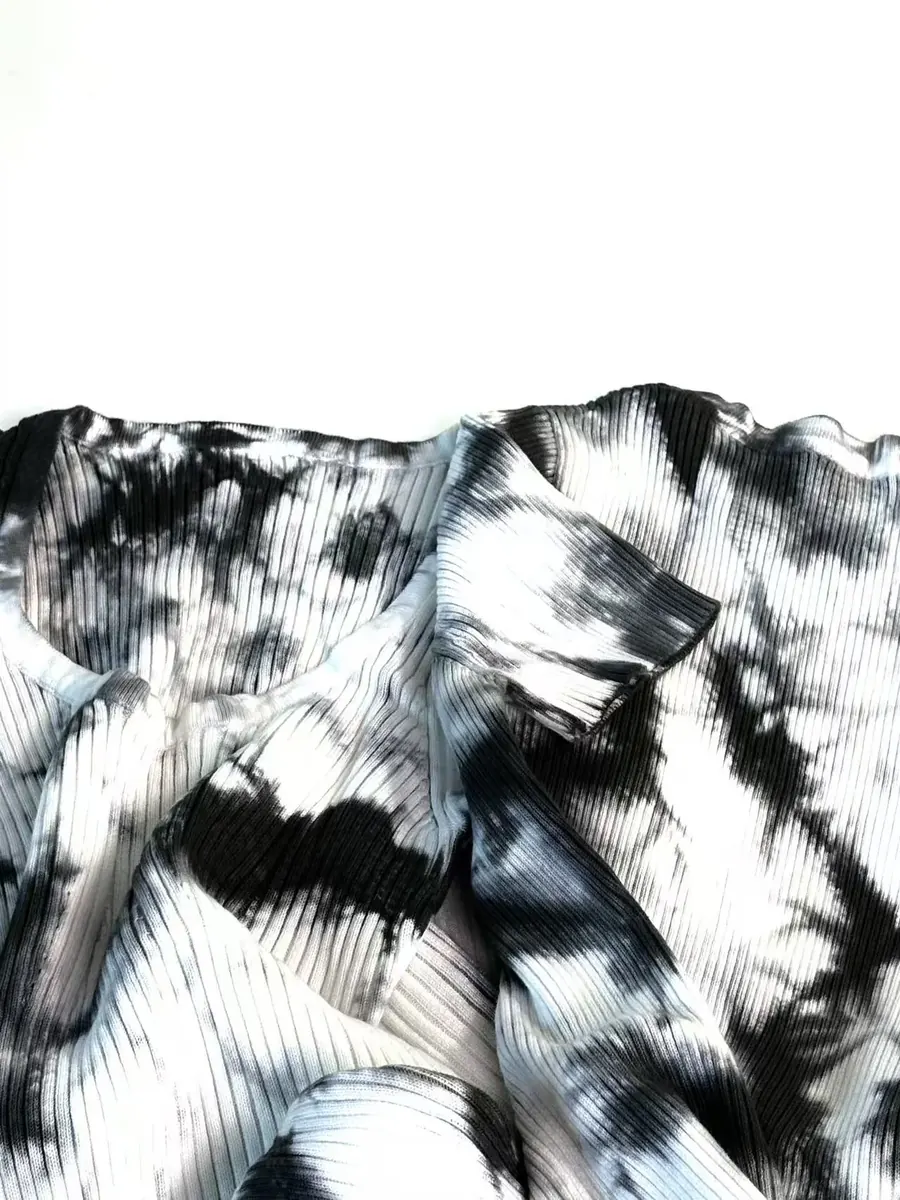
Tie dye uses folding, binding or controlled exposure to create organic patterns. The result can range from soft clouding to sharp, high-contrast marks. Exact motif placement is naturally less repeatable than printed artwork, so the buyer and factory should agree on the overall pattern density and acceptable differences.
Tie dye works best when the collection welcomes controlled individuality. For commercial orders, it is still essential to define unacceptable areas such as excessive blank space, unwanted color concentration or marks near key seams and logos.
How to choose the right finish
- Choose garment wash for softened handfeel, faded color and an all-over vintage effect.
- Choose spray dye for directional placement, shadows and controlled gradients.
- Choose tie dye for organic patterning and intentional piece-to-piece variation.
Cost and lead time depend on the yarn, garment construction, number of trials and production quantity. For all three techniques, the safest route is to approve a physical sample, a written tolerance and a bulk reference range before production begins.
Combining finishing with knit structure
Surface finishing is only one layer of the design. Gauge, rib, cable, jacquard and garment shape change how color is perceived. A gradient across a smooth 12GG surface will look different from the same process on a chunky cable knit. Development should therefore consider knitting and finishing together.
Yushengda develops specialty-finished knitwear from 3GG to 16GG and supports wool, cotton, acrylic, viscose, cashmere and blended yarns. Send us your reference images to discuss the most practical route.