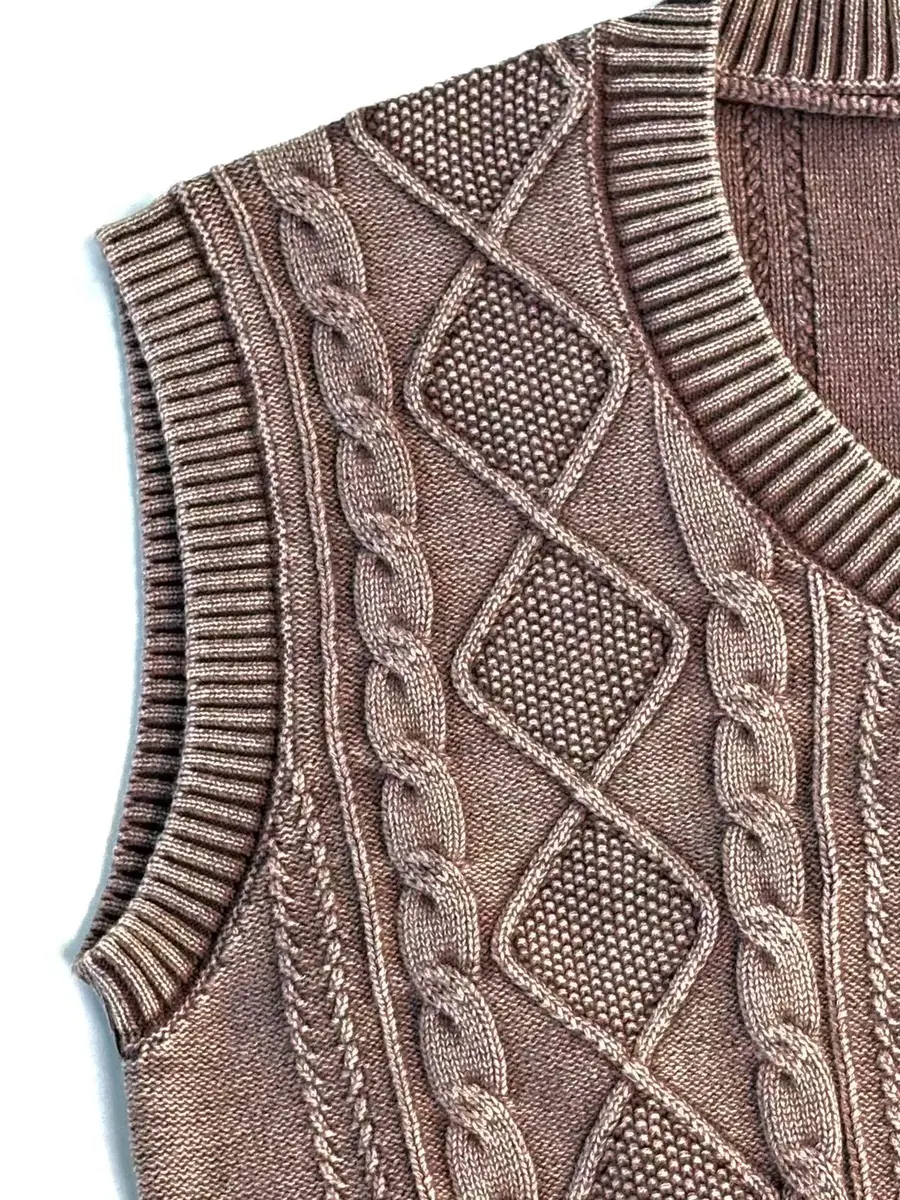
Washed knitwear can give a collection a softer handfeel, faded color and distinctive worn-in character. It also requires more development control than a standard solid-color sweater. Buyers should evaluate the factory’s knitting knowledge and finishing process together—not as two separate services.
Start with a clear visual target
Send a tech pack, flat sketch or reference garment showing the silhouette, stitch, color direction and desired surface effect. Terms such as “vintage,” “snow wash” or “faded” can mean different things to different teams. A reference image plus a short description of the desired contrast, handfeel and worn areas gives the factory a more useful target.
Fiber content matters. Cotton and cotton-rich blends usually respond differently from wool, acrylic, viscose or cashmere blends. Yarn construction, stitch density and garment weight also influence how the surface changes during washing.
Confirm the commercial framework early
Before sampling, confirm the order quantity, color count, size range, target price and delivery window. Yushengda’s MOQ starts from 100 pieces per color for suitable developments. A typical sample takes 7–15 working days, while bulk production normally takes 25–45 days from receipt of the deposit, subject to yarn availability and finishing complexity.
Our standard sample fee starts from US$30 and is refundable when the corresponding order reaches 100 pieces. This lets both sides test the construction and finish before committing to bulk production.
Approve more than one characteristic
A washed sweater sample should be reviewed for measurements, shrinkage, shade, handfeel, seam appearance and surface consistency. The approved sample is important, but an agreed tolerance range is equally important because specialty washing creates controlled variation rather than a mechanically identical result.
Ask the factory to identify high-risk areas before bulk production. Rib openings, plackets, zippers, mixed materials and contrasting trims can react differently during washing. These details may require construction changes or protective handling.
Control bulk production with a reference range
For character-rich finishes, a practical bulk standard may include an approved center sample plus acceptable lighter and darker limits. Production should be checked after knitting, after washing and again before packing. Measurements and appearance should be compared with the approved standard throughout the order.
Yushengda supports third-party inspection and works with EXW, FOB and DDP arrangements. Payment terms are normally 30% deposit and 70% balance before shipment.
Questions to ask a potential supplier
- Which fibers and yarn structures are suitable for the target wash?
- How will shade and shrinkage tolerances be approved?
- Can the factory reproduce the finish at the planned quantity?
- Which measurements are checked before and after washing?
- How are failed or out-of-range pieces handled?
A capable supplier should explain the limitations as clearly as the possibilities. That conversation is often the best indicator of whether a washed knitwear concept can be translated into reliable production.
A buyer's decision sheet: proceed, revise or hold
The following is a suggested purchasing workflow, not a customer case or a claim that a particular batch has passed testing. Keep each decision with the sample revision so a visual approval cannot accidentally authorize a different material or finish.
| Decision point | Evidence to request | When to hold |
|---|---|---|
| Before paying for development | Proposed yarn and finish route, sample scope, fee and exclusions | The supplier has priced a generic sweater without addressing the requested wash |
| Before approving appearance | Physical finished sample and agreed acceptable shade range | Only a retouched image or an unrelated garment is available |
| Before committing to bulk | Approved dimensions, measurement method, unresolved items and material availability | A temporary yarn or trim remains in the approved sample without a written replacement review |
| Before shipment | Inspection findings against the agreed reference and disposition of any exceptions | Out-of-range goods have no agreed correction or acceptance decision |
Separate the factory finish from the customer's care routine
A production wash creates the intended product appearance. Home laundering evaluates how the finished garment behaves under the intended care instructions. Do not use an attractive factory-finished sample as proof that subsequent customer washing will preserve its dimensions or shade. Ask a qualified testing provider to agree the relevant care procedure and acceptance limits for the actual garment. Retain the original results rather than replacing them with a marketing statement such as “shrink-proof.”
Compare the full purchasing commitment
Ask what the offer includes for development rounds, material changes, inspection, packing and transport. The U.S. International Trade Administration's total export price guidance explains why freight, insurance, tariffs and other costs matter beyond the product price. Use current destination-specific advice for an actual shipment; this guide does not quote duties or a delivered price.
For the next step, review our washed-knitwear manufacturing scope, prepare the RFQ information checklist and compare quotation inclusions. Send your design, quantity per color and intended finish for a project-specific review.