Specify a custom sweater as fully fashioned, cut-and-sew, or whole-garment only after defining the intended silhouette, yarn, gauge, stitch, seam locations and finish. “Knit sweater” is not enough for a comparable quote. Ask the supplier to show the proposed construction on a labeled panel or garment, state which pieces are shaped or cut, and identify every joining method. The right route is the one that delivers the approved product and risk controls—not a universal quality ranking.
Use construction words precisely
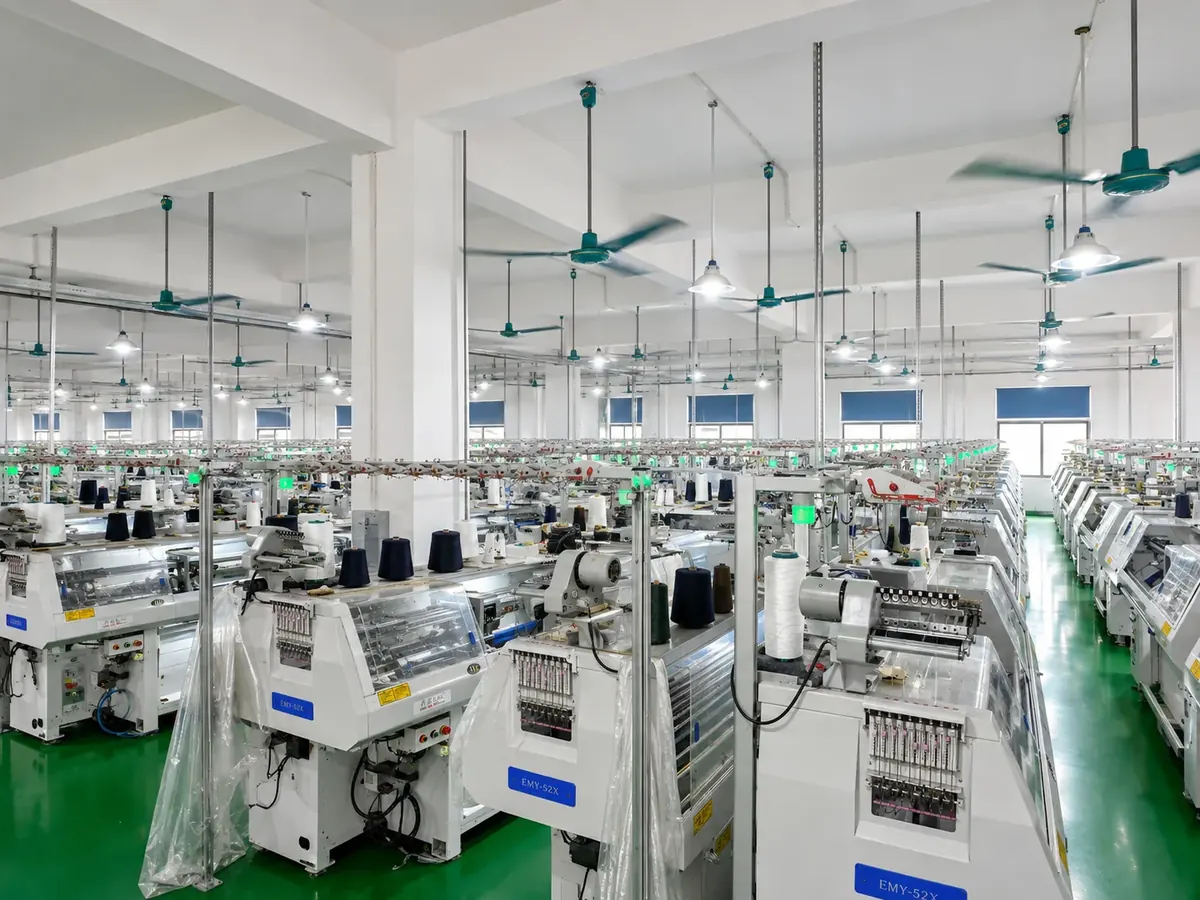
In a shaped-panel or fully fashioned route, the front, back, sleeves or other components are knitted toward their intended outlines through programme-controlled shaping, then joined. In a cut-and-sew route, knitted fabric or broad panels are cut to pattern pieces and sewn. Whole-garment or integral knitting is a separate route in which a more complete three-dimensional garment is formed on the machine, reducing some joining operations. Suppliers may use these labels differently, so the physical route matters more than a sales description.
The Woolmark Company describes fully fashioned knitting as producing shaped panels to predetermined sizes which are then linked together, and notes the fashioning marks that can appear alongside seams. That description is useful for identifying one established route, but it does not decide whether it is suitable for every yarn, structure or commercial programme.
Decide from the product, not the label
Start with the design questions that have physical consequences: Is the body or sleeve shape important? Must a cable, stripe, jacquard or texture align at a seam? Is the inside seam appearance important to comfort? Are pockets, plackets, collars or hoods part of the style? Does a wash, brush or spray effect change the component after assembly? Are the size range and quantity sufficient to support development and machine setup?
| Route | What the buyer should define | Evidence needed before bulk |
|---|---|---|
| Shaped panels / fully fashioned | Panel outlines, fashioning, seam locations, linking method and component alignment | Measured panels or garment, inside/outside seam views and approved programme route |
| Cut-and-sew knit | Fabric specification, pattern pieces, cut edge treatment, seam type and seam allowance | Fabric test or shrinkage evidence as needed, cut pattern, sewn sample and seam review |
| Whole-garment / integral knit | Garment zones, opening or closure route, silhouette, shape and intended low-seam areas | Representative garment, measurement and wearing review, plus defined finishing route |
Do not infer construction from the outside appearance alone. Two garments can look similar on a hanger but have different panel boundaries, seam methods, yarn consumption, development needs and repair risks. Request front, back and inside photographs as well as a flat measurement record, then inspect the physical sample where possible.
What fully fashioned can and cannot show
Shaped panels can help a supplier place shaping into the knitted component rather than cutting every outline from fabric. They still need make-up: panels may be linked or joined by another specified method, and ribs, neckbands, plackets or trims may have their own route. Fashioning marks, if visible, are a construction characteristic to approve or reject deliberately—not automatic proof of quality.
For a fully fashioned quotation, identify the panel set: front, back, left and right front where relevant, sleeve, collar, pocket, belt, hood, rib and any engineered placement. Mark shoulder, armhole, side, neckband and placket joins. State whether matching across a join is critical and whether the buyer prioritises outside appearance, inside comfort, stretch, cost or repairability if those goals conflict.
What cut-and-sew knit requires you to control
Cut-and-sew can be an appropriate route when the intended knit fabric, pattern-cutting flexibility, seam placement or product architecture supports it. It is not simply a shortcut. The buyer must define the fabric construction and finished condition, then evaluate cut edges, seam type, seam allowance, stretch recovery, bulk, abrasion, appearance after washing and dimensional change. A fabric swatch alone cannot prove the behavior of a sewn armhole, neckline or shoulder under wear.
Ask whether the fabric is made for the order, taken from approved stock, or sourced from a separate mill. Identify roll, lot and relaxation controls if they affect the style. If a quote combines knitted panels and cut-and-sew components, show exactly which parts follow each method so a later sample or inspection does not use the wrong reference.
Keep whole-garment claims bounded
Whole-garment technology can change the number and location of joins, but it does not remove the need for product approval. Openings, labels, trims, finishing, measurements, visual balance and care performance still require defined evidence. Do not treat “seamless” as a guarantee of comfort, fit, strength or no make-up work. Request the actual proposed garment and identify any joining, closing, reinforcement or post-knit operation that remains.
Make the quote comparable
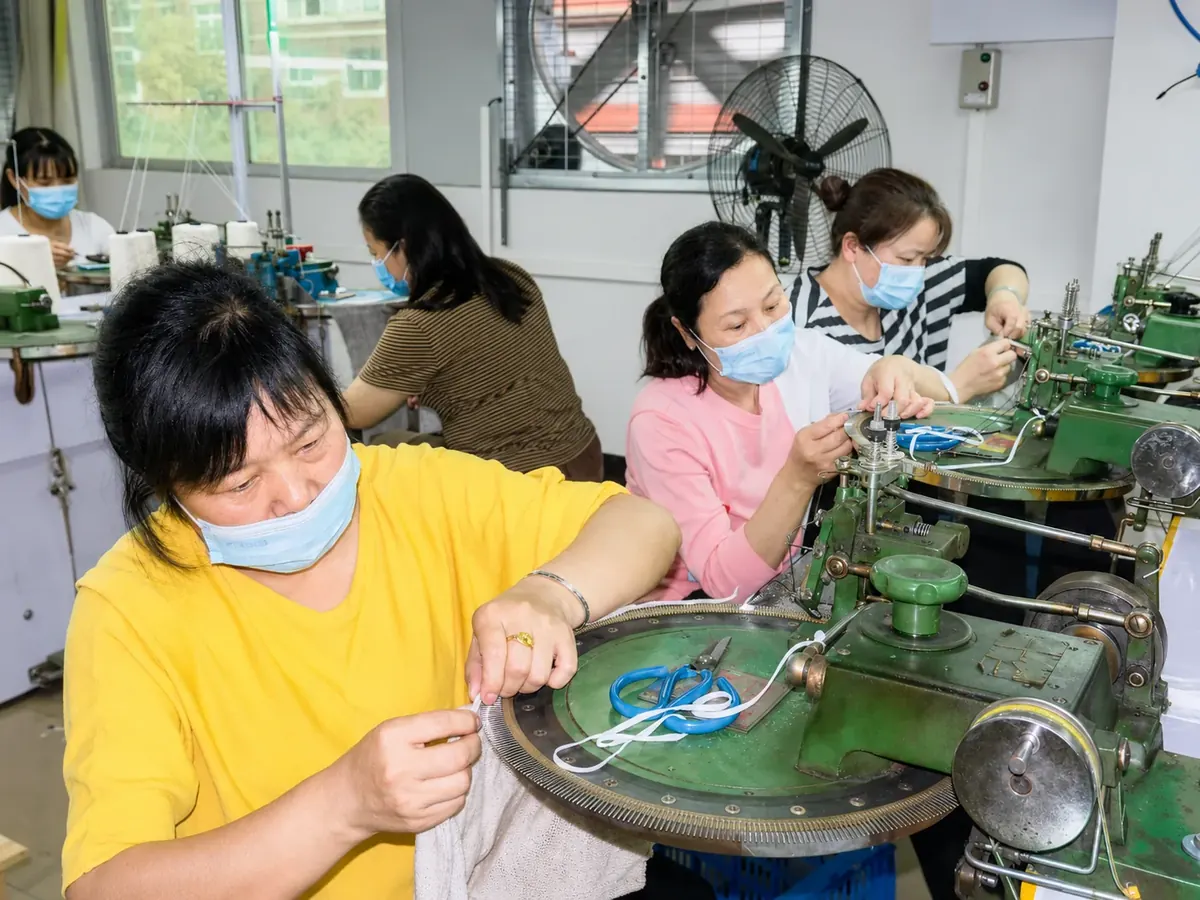
Construction choices influence yarn use, programme work, machine time, cutting, joining, finishing, inspection and yield. Their relative cost depends on the yarn, gauge, stitch, shape, quantity, size range, finish and supplier route. Do not accept a generic “fully fashioned premium” or “cut-and-sew saving” as an explanation. Ask each supplier to quote the same technical basis and identify the principal operations included.
Separate one-time development, sample iterations, yarn or fabric sourcing, programming, cut planning if applicable, linking or sewing, finishing, testing, inspection, labels, packaging and freight assumptions. If a supplier proposes a lower-cost construction change, require a changed sample or at least the evidence level appropriate to the risk. A different construction can change fit, seams, hand, appearance, durability and care behavior even when the color and silhouette look similar in a drawing.
Approve the construction through a controlled sample
Use a tech pack that names the route and its visible proof. For shaped panels, include panel sketches, joins, fashioning locations and linking direction. For cut-and-sew, include fabric and pattern details, cut edges and seam map. For whole-garment, define zones, openings and remaining make-up. Connect these documents to the current yarn or fabric identity, gauge, stitch, color route, finishing and measurement specification.
Review the sample flat, inside out and on body where fit matters. Check seam location, ridges, bulk, skipped loops, raw-edge security where relevant, shape balance, pattern alignment, extension and recovery. Repeat the review after the intended wash or finish when it can alter the garment. A photograph sent by phone can help discuss a problem, but it is not a controlled substitute for the physical construction reference.
Buyer construction checklist
- The route is named as shaped panels, cut-and-sew, whole-garment, or a disclosed combination.
- Yarn or fabric, gauge, stitch, color and finish are linked to the route.
- Every panel, cut piece, join and trim is shown on a construction map.
- Critical inside and outside seam appearance is defined.
- Pattern or artwork alignment priorities are written at each join.
- Supplier quotations use the same construction and scope.
- A physical sample proves the intended route, not a showroom example.
- Fit, measurements and seam behavior are checked after relevant finishing.
- Any construction change has an approval owner and evidence requirement.
- Bulk inspection follows the approved construction reference.
Yushengda can discuss custom knitwear development across 3GG–16GG and confirm the proposed construction only after reviewing the style, yarn, gauge, stitch, finish, quantity and sample requirements. This article does not claim that every construction or process is available for every project. Use the stitch-structure cost guide, linking seam guide and gauge selection guide, or send your sketch or tech pack for an order-specific construction discussion.
Primary reference: The Woolmark Company, Woollen-spun Knitting, for a description of fully fashioned panels, linking and fashioning marks. It is technical background, not an order specification or universal cost comparison. Competitor pages were reviewed only to identify buyer terminology, structure and content gaps; no wording, images, data, claims or examples were reused.